It is surely a sign of the times.
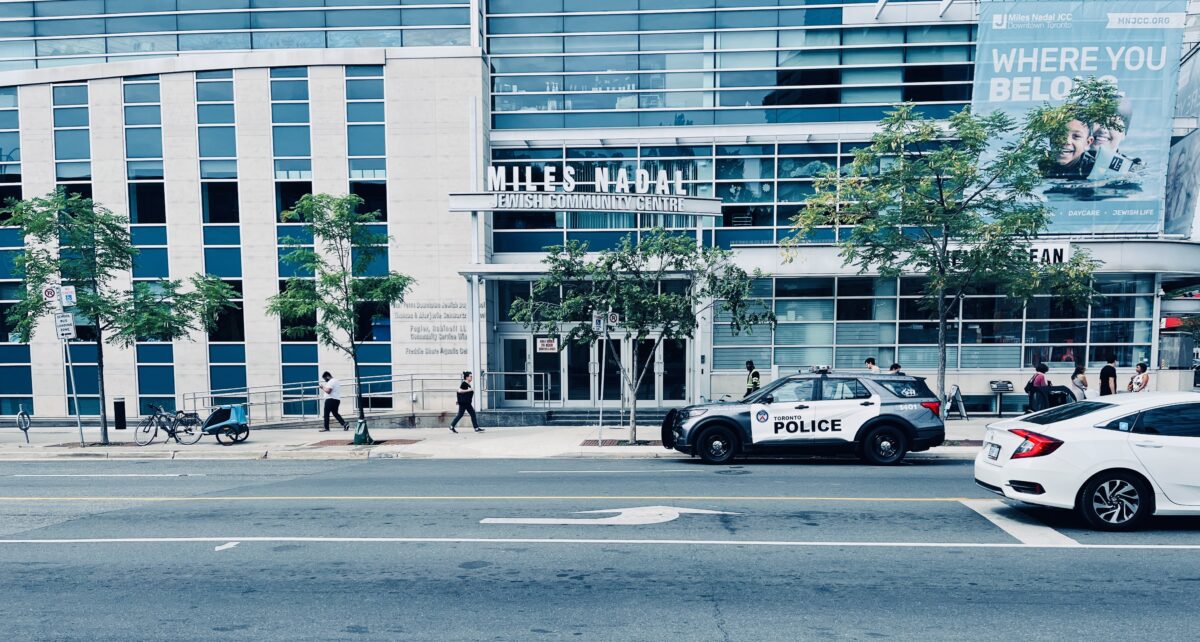
A police cruiser has been parked in front of the Jewish Community Center (JCC) in midtown Toronto for the past few months. I pass it whenever I cycle southward on my almost daily bike ride during the relatively short cycling season.
The vehicle is there to ward off antisemitic attacks. To the best of my knowledge, the tactic has worked. Jews in the city may no longer have to worry whether an anti-Jewish maniac will vent his spleen on the JCC. But the necessity of this security measure is indicative of a sea change in Toronto and Canada. The Jewish community in this country, one of the world’s largest, cannot take its safety for granted.
Years ago, when I regularly travelled to Germany on assignments as a reporter, I noticed that Jewish institutions and synagogues were guarded by armed police officers. This could only happen in Germany, I thought. Little did I know that the contagion of violent antisemitism would eventually reach Canada, a peaceful and stable nation of immigrants.
For the past three years, a torrent of antisemitic agitation, intimidation and violence has convulsed Canada, breaking all previous records.
On October 7, 2023, thousands of Hamas terrorists invaded southern Israel, killing roughly 1,200 people and kidnapping 251 Israelis and foreign nationals. These atrocities led to Israel’s invasion of the Gaza Strip, which was ruled by Hamas.
Israel’s fierce retaliatory military campaign lasted for two years, causing the deaths of 73,000 Palestinian civilians and fighters, leading to accusations of genocide against Israel, and triggering a wave of antisemitic agitation, intimidation and violence around the globe.
Across Canada, especially in Toronto and Montreal, Jewish schools have been struck by gunfire outside operating hours. Synagogues have been fired upon and vandalized with graffiti. Mezuzahs have been torn from the doorways of a Jewish seniors home.

Jewish-owned businesses have been damaged and picketed by pro-Palestinian protesters. Visibly Jewish-looking Orthodox Jews have been assaulted.
Earlier this summer, a gunman fired at the windows of Kiva’s Bagel Bar, a Jewish-owned bakery chain in Toronto, and a man smashed a window and tried to start a fire at Temple Emanu-El-Beth Sholom, a Reform congregation in Montreal.

Around this time, Canadian Prime Minister Mark Carney acknowledged in a frank speech at Holy Blossom Temple in Toronto that most religious-motivated hate crimes in Canada are directed at Jews. “Canada’s civic compact is failing Jewish Canadians,” he acknowledged in a devastating admission.
Statistics Canada recorded 788 hate crimes targeting Jewish people in 2025, down 16 per cent from 943 a year earlier. Incidents targeting Jews peaked at 959 in 2023, compared to 492 in 2021.
B’nai Brith Canada recorded 27 violent antisemitic incidents in the first six months of 2026 — nearly triple the amount for all of 2025.
In short, antisemitism in Canada has reached historic highs. Jewish Canadians are now the victims of about 70 percent of all religiously motivated hate crimes, despite comprising only one percent of the population. In plain language, Jews remain the single most targeted religious group in Canada.
These incidents encompass universities. A recent national survey of Jewish students at Canadian universities found that antisemitism is a pervasive feature of campus life. The Campus Antisemitism and Student Experiences report, commissioned by the federal government and produced by Jack Jedwab and Paul Holley of the Association for Canadian Studies and the Metropolis Institute, was released earlier this month.
It surveyed some 900 Jewish students and found that 95.7 percent had experienced or witnessed at least one antisemitic incident in the previous year, and that 84 percent said that antisemitism is now a serious problem on their campus.
Seventy percent of respondents said that their university does not take antisemitism seriously, while 68 percent said that their campus is not a safe and inclusive place for Jewish students. Fifty seven percent now avoid wearing or displaying Jewish symbols out of safety concerns.
The students spoke of hostile lecture environments, biased course content, and social exclusion connected to anti-Israel activism and vitriolic anti-Zionism. Social media platforms act as primary vectors for spreading conspiracy theories and harassment.
The report described the findings as pointing to “a troubling and urgent conclusion: antisemitism on Canadian campuses is not episodic or peripheral. It is persistent and proliferating, and on some campuses it has become a normalized and systemic feature of campus life.”
In conclusion, the authors wrote, “These accounts reveal a university culture that is both not welcoming to Jewish students and actively and systematically trying to exclude and vilify them.”
Another report, commissioned by Toronto Metropolitan University (TMU) and released on August 14, was written by Ontario Court of Appeal judge Mary Lou Benotto and lawyer Margot Finley.
Only two other universities in Canada, the University of Toronto and the University of Ottawa, have established committees to study campus antisemitism.

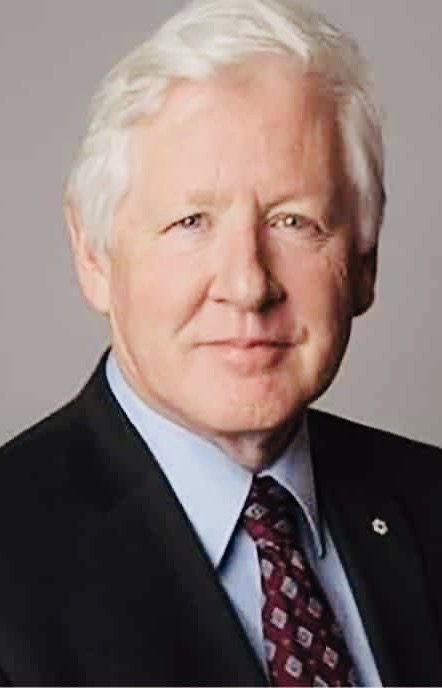
TMU president Mohammed Lachemi has appointed Bob Rae, Canada’s former ambassador to the United Nations, to review the findings and recommendations and deliver an “implementation blueprint” by next March.
Critics contend that TMU should implement the eight recommendations in the report rather than submit them to further review.
TMU’s report was commissioned in response to two incidents on the campus involving Jewish and Palestinian students in September and November 2025. “What began as a review and investigation into two specific events quickly revealed a broader institutional issue: a deeply polarized campus environment shaped by the aftermath of October 7, 2023, and the ongoing Israeli-Palestinian conflict.”
The two incidents, which led to the arrests of TMU students, were “symptoms of a deteriorating campus climate that, absent decisive institutional action, are likely to recur.”

The report concluded that the events of October 7 “fundamentally altered the experience of campus life for many members of the university community. Jewish students, faculty, and staff described hostility toward Jewish identity and Zionism that crossed into intimidation, dehumanization, and antisemitism. Pro-Palestinian community members described grief and trauma and expressed concern that advocacy relating to Gaza and Palestinian rights was increasingly viewed through a security and disciplinary lens.”
Jewish students learned that the word “Zionist” is associated with genocide, illegitimacy or moral condemnation. “So pervasive is this that students have said they are traumatized by the word. A student had to leave class in fear because of a Zionist sticker on a classmate’s laptop. Signs which appear at TMU and say ‘Zionists off Campus’ are experienced by many Jewish students as meaning ‘Jews off campus.’ This redefining of Zionism has been referred to as semantic drift growing into a pejorative semantic avalanche.”
Some Jewish students, staff, and faculty described experiencing or witnessing incidents they perceived as antisemitic. They “recounted seeing antisemitic graffiti in campus washrooms and common areas, including symbols and messaging found threatening. Some described incidents of harassment in public or campus-adjacent spaces, including being spat on, verbally targeted, or having objects thrown at them.”
The Globe and Mail, in an editorial, states that these incidents are symptomatic of “a poisoned environment.”
The report admits that “discrimination against Jews must be recognized to be addressed,” and that TMU has “not been immune from the national rise in antisemitism.”
It adds that much of the conflict on campus stems from “a lack of understanding of Zionism, and a lack of appreciation that the recognition of Jewish indigeneity and the right of Jewish people to self-determination in the land of Israel does not negate the right of self-determination for Palestinians.”
Several days before the release of these reports, police in Montreal were investigating a suspicious fire at Noam, a popular kosher restaurant that has since been forced to close.
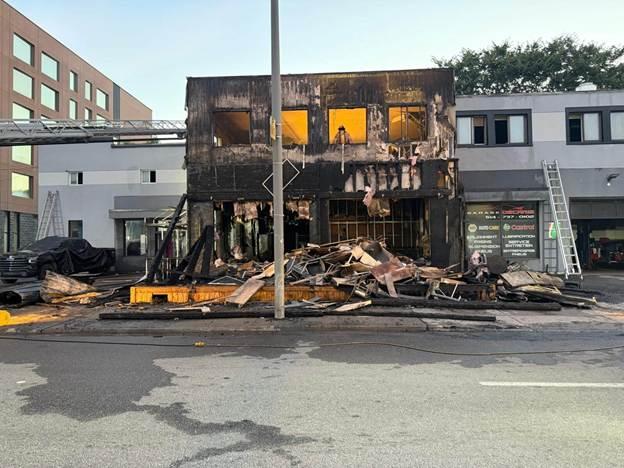
At this point, the fire is not being treated as a hate crime by the police. Anthony Housefather, a Liberal Party member of Canada’s parliament, has demanded that it be investigated as a hate crime. Marc Miller, the federal minister of identity and culture, appears to concur with Housefather’s description of the crime.
Public Safety Minister Gary Anandasangaree condemned the attack. “Antisemitism simply has no place in our society and we must do everything we can to eradicate it,” he said.
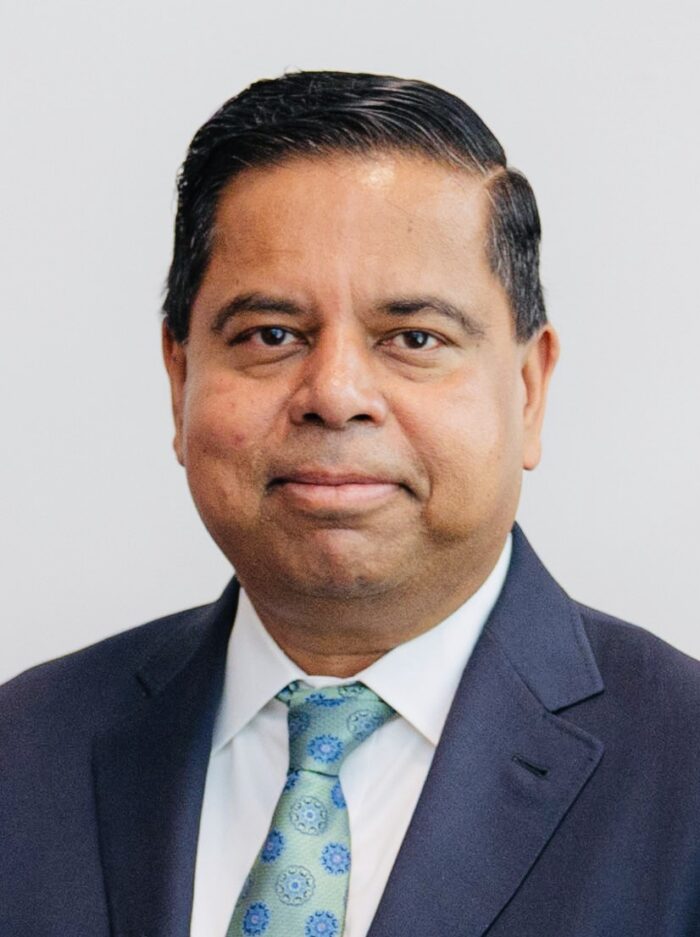
In a statement, B’nai Brith Canada said, “Jewish Canadians have heard enough condemnation and promises. Now we need action.”
B’nai Brith’s assessment cuts to the heart of the matter. Governments on the local, provincial and federal level need to be far more proactive to combat the world’s oldest hatred.
Ideally, there should be no need for police cars to be stationed in front of Jewish institutions. I want to stop seeing them as I ride past the JCC building.