The United States, having failed to squeeze Iran into submission by military means, is now trying to achieve this objective through economic means.
Its change in emphasis was underscored by three events in the past few days.
U.S. Secretary of State Marco Rubio acknowledged that the United States does not plan to launch new offensive strikes against Iran, though he did not rule out military action should Iran initiate a fresh round of hostilities.
In other sign that Washington has virtually ruled out a renewal of fighting, the U.S. State Department indicated that American diplomats who were withdrawn from the Middle East prior to the outbreak of the U.S.-Israel-Iran war on February 28 will return to their posts in countries such as Israel, Jordan, Lebanon and Saudi Arabia.
And in a third indicator of the U.S. shift, U.S. President Donald Trump said he intended to launch a concerted campaign of “economic warfare and isolation on an unprecedented scale” directed at Iran. He warned that any country caught assisting Iran would face “tremendous economic consequences.”
Currently, Iran’s largest trading partners are China, Turkey and the United Arab Emirates, which last week made it known that it would stop all commercial relations with Iran.
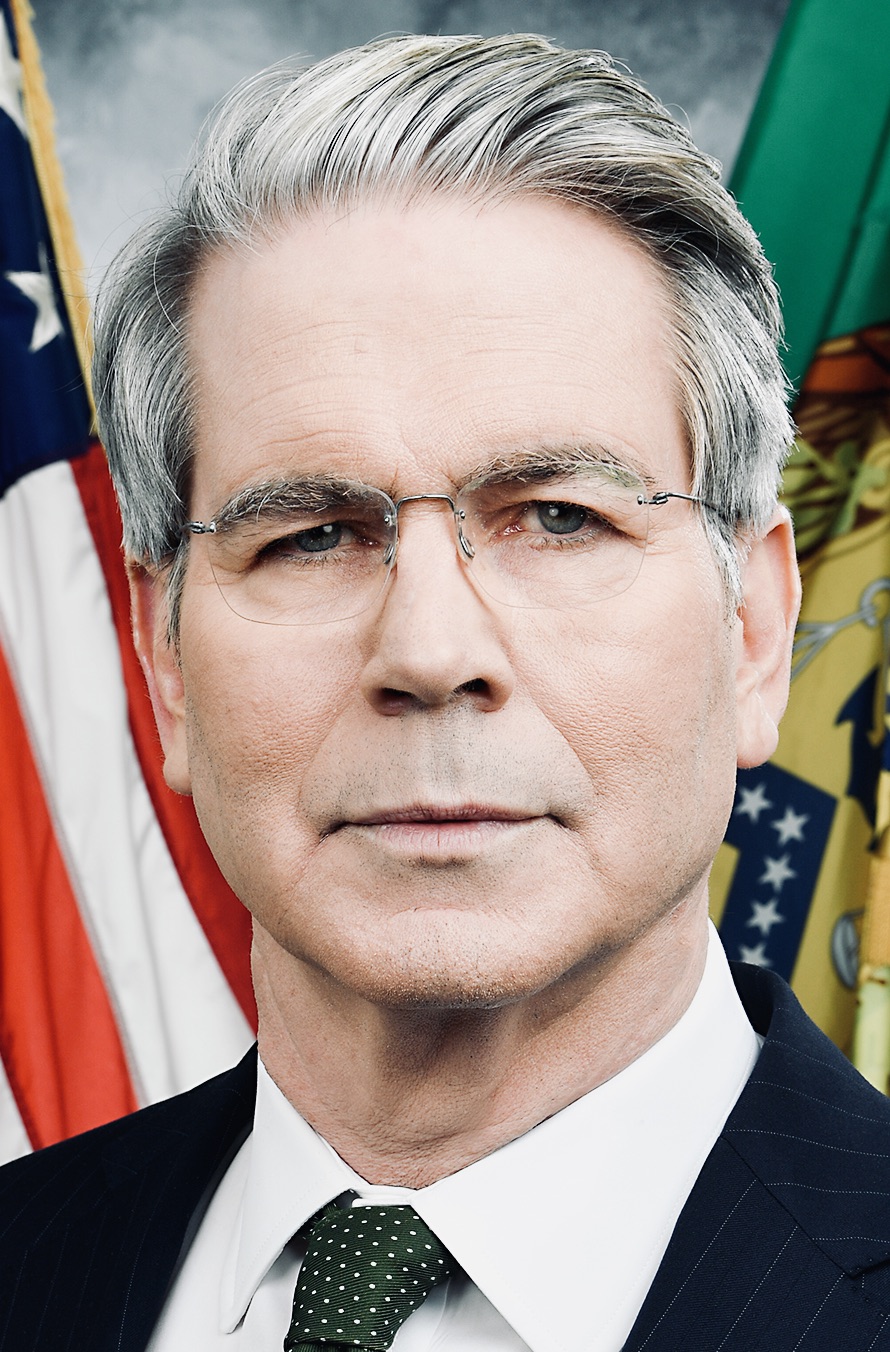
In the wake of Trump’s comments, U.S. Secretary of the Treasury Scott Bessent telegraphed the Trump administration’s intention to impose “the toughest sanctions in history” on Iran. On August 24, he made it official. Operation Economic Outcast, he said, is aimed at suffocating the Iranian economy.
Bessent said that more than 60 entities, individuals and institutions around the world that enable Iran to obtain illicit nuclear and missile technology, conduct cyber operations, and generate oil revenue have been sanctioned. In particular, he noted, Iran’s digital assets and aviation, shipping and gold industries will be targeted.
Disclosing that Washington will soon take additional steps to hammer Iran, he added that Operation Economic Outcast “will gather force with every day.”
In short, the United States will block every potential source of revenue that funds the Iranian government and the Islamic Revolutionary Guard Corps, which protects it and assists Iran’s proxies in the Middle East.
The Trump administration announced these measures as the U.S. continues to impose a naval blockade against Iranian ports in the Persian Gulf and as Iran grapples with serious financial problems.
Iran’s currency, the rial, has fallen to a record low level 2.02 million rials to one American dollar. Inflation is on the march and has reached about 66 percent. Ordinary Iranians are barely coping, having seen an immense decline in their purchasing power. Operation Economic Outcast is bound to further affect Iranians adversely.
The parlous state of Iran’s economy matters. It drove multitudes of Iranian protesters into the streets of cities, towns and villages last December and January. The protests were brutally crushed by the regime, resulting in the deaths of thousands of demonstrators. More than six months on, it is questionable whether Iranian civilians will risk life and limb in a fresh round of demonstrations. They are acutely aware that the regime, having already executed dozens of demonstrators who participated in anti-regime protests, will react violently.
When the United States and Israel jointly attacked Iran in air strikes last winter, Trump told Iranians that “help was on its way.” He did not fulfill his promise, much to their disillusionment. Trump assumed that the war would be swift and decisive and end within a six week span, enabling the Iranian people to rid themselves of the theocratic regime.
To Trump’s disappointment, the regime hung on, and the war has dragged on with no clear end in sight, raising gasoline and food prices at home and around the world and cutting into his popularity, even among Republican voters.
A memorandum of understanding signed in June by the United States and Iran was supposed to end the war and reopen the Strait of Hormuz, the critical Persian Gulf waterway through which about 20 percent of the world’s oil and natural gas flows. But the memorandum of understanding soon degenerated into a memorandum of misunderstanding. It collapsed, prompting the United States to launch new military operations in Iran.
These attacks, plus Iran’s reprisals against Arab Gulf States and Jordan, hardened the U.S.-Iran stalemate and encouraged Trump to return to his old strategy of trying to weaken Iran by harsh economic penalties.
To Iran, U.S. sanctions are nothing new.
With the seizure of the U.S. embassy in Tehran in 1979, the year of the Islamic revolution that brought down the pro-American Pahlavi monarchy, President Jimmy Carter imposed sanctions on the new regime.
The U.S. Congress, in 1996, passed the Iran Sanctions Act, which discouraged potential entrepreneurs to invest in Iran’s energy sector. In 2012, a U.S. congressional measure targeted Iran’s petroleum industry, cutting its oil exports in half.
During his first term, Trump unveiled a “maximum pressure” campaign to improve the 2015 Iran nuclear agreement, from which he unilaterally withdrew in 2018.
Today, Iran is subjected to more than 3,000 U.S. sanctions aimed at almost every aspect of its economy.
With difficulty, Iran has weathered the U.S. onslaught. While U.S. and European sanctions have bitten deeply into Iran’s economy, fuelling the inflation and unemployment that led to the mass protests earlier this year, Iran’s leaders have remained defiant and resilient.
By all accounts, the Iranian leadership believes it has more to gain from withstanding this pressure and maintaining control over the Strait of Hormuz than by making major concessions to the United States in negotiations.
Emboldened by its ability to absorb the U.S. and Israeli air campaign, Iran has issued a list of demands. They include the removal of sanctions, the release of frozen assets running into the billions, and the payment of war reparations.
The Trump administration, on the other hand, apparently thinks that substantial economic pain will eventually achieve more than air strikes and compel Iran to submit to U.S. demands regarding the strait, its nuclear program and its Axis of Resistance, its alliance of anti-American and anti-Israel regional surrogates.
Many analysts believe that Iran is more likely to lash out militarily than accept Trump’s demands to curb its nuclear program and reopen the strait. They are also skeptical that the U.S. will slap serious economic penalties on China, whose leader, Xi Jinping, is scheduled to visit Washington in the third week of September.
During his recent press conference, Bessent said that no country is exempt from Washington’s pressure tactics, but tellingly enough, he declined to answer questions about China’s trade relations with Iran.
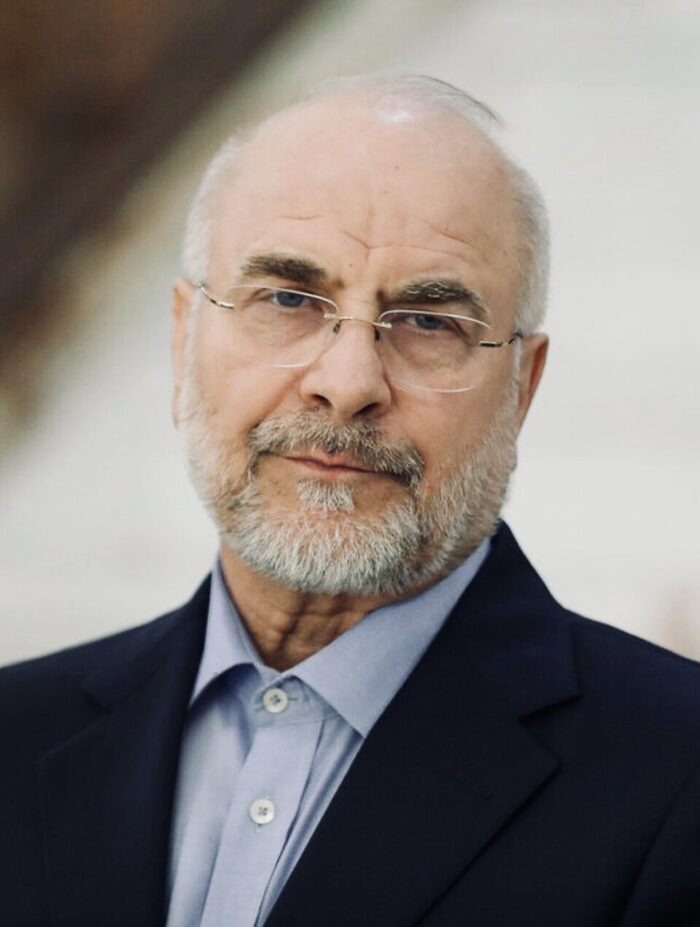
Prior to this, Mohammad Bagher Ghalibaf, the speaker of the Iranian Parliament, dismissed the U.S. effort as “bombast.” As he put it, “The United States is not in an economic position to further restrict its relations with other countries.”
Echoing his position, Iran’s Foreign Ministry spokesman Esmail Baghai declared that Tehran will not bow to U.S. pressure. The Trump administration, he said, was “repeating methods that have proven unsuccessful.”
Mohsen Rezaei, the secretary of the Supreme National Security Council, has threatened retaliatory steps against U.S. allies in the region. In any case, Iran appears to have blockaded some oil and gas exports via the strait. Iran has certainly fired missiles and drones at U.S. bases in Bahrain, Kuwait and Qatar.
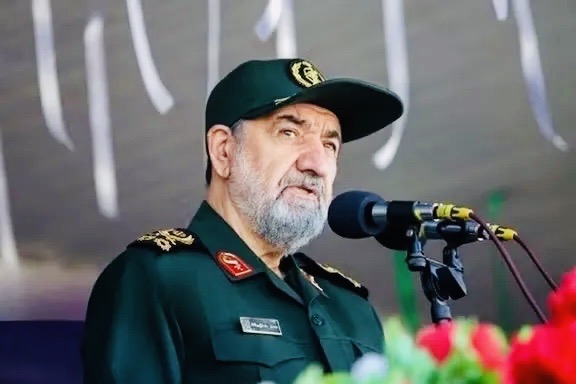
If the U.S. pressure campaign continues, he warned, “not a single drop of oil will be exported” from the region. “Iran will regard any country’s participation in or support for America’s economic war against the Iranian people as an act of war.”
Writing in Foreign Affairs, Nate Swanson conceded that Trump’s economic pressure campaign will most likely dent Iran’s already battered economy. “But it will almost certainly fail to force Tehran’s surrender. Rather than succumb to pressure, recent history suggests that Iran will use its missile and drone program to exact steep economic costs on the global economy — either in the Strait of Hormuz or against Gulf countries … The Islamic Republic believes it can outlast the United States’ will to exert economic pressure, just as it can survive U.S. military pressure.”
According to the Institute for the Study of War, there are no signs that pressure has softened Iran, even though “a group of Iranian officials responsible for managing the economy are increasingly warning that worsening economic pressure could threaten regime stability. These officials also appear to openly advocate ending the war to reduce the economic cost to the regime.”
In its estimation, two loose groups of Iranian leaders seem to wield influence at this moment.
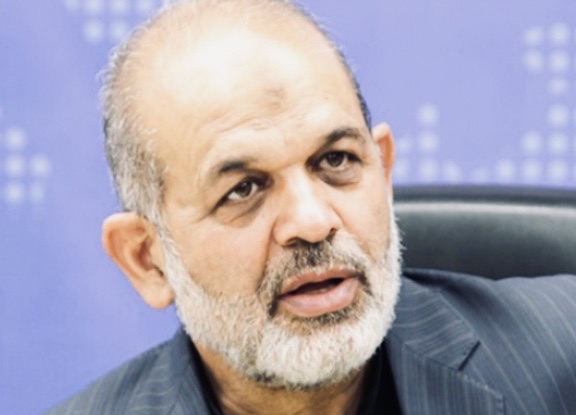
The pro-concessions camp, which is responsible for managing the economy, includes President Masoud Pezeshkian and Ghalibaf, among others. The second group, which encompasses the commander of the Islamic Revolutionary Guards Corps, Ahmad Vahidi, opposes concessions in negotiations and seeks full U.S. surrender. This group is supported by supreme leader Mojtaba Khamenei and is relatively stronger and more ideological than the first one.
Convinced that Trump has no stomach for continuing an unpopular war and exposing the United States to yet more economic shocks, particularly before midterm elections in November, Iranian leaders intend to pursue a hardline maximalist policy, regardless of American economic measures against Iran.