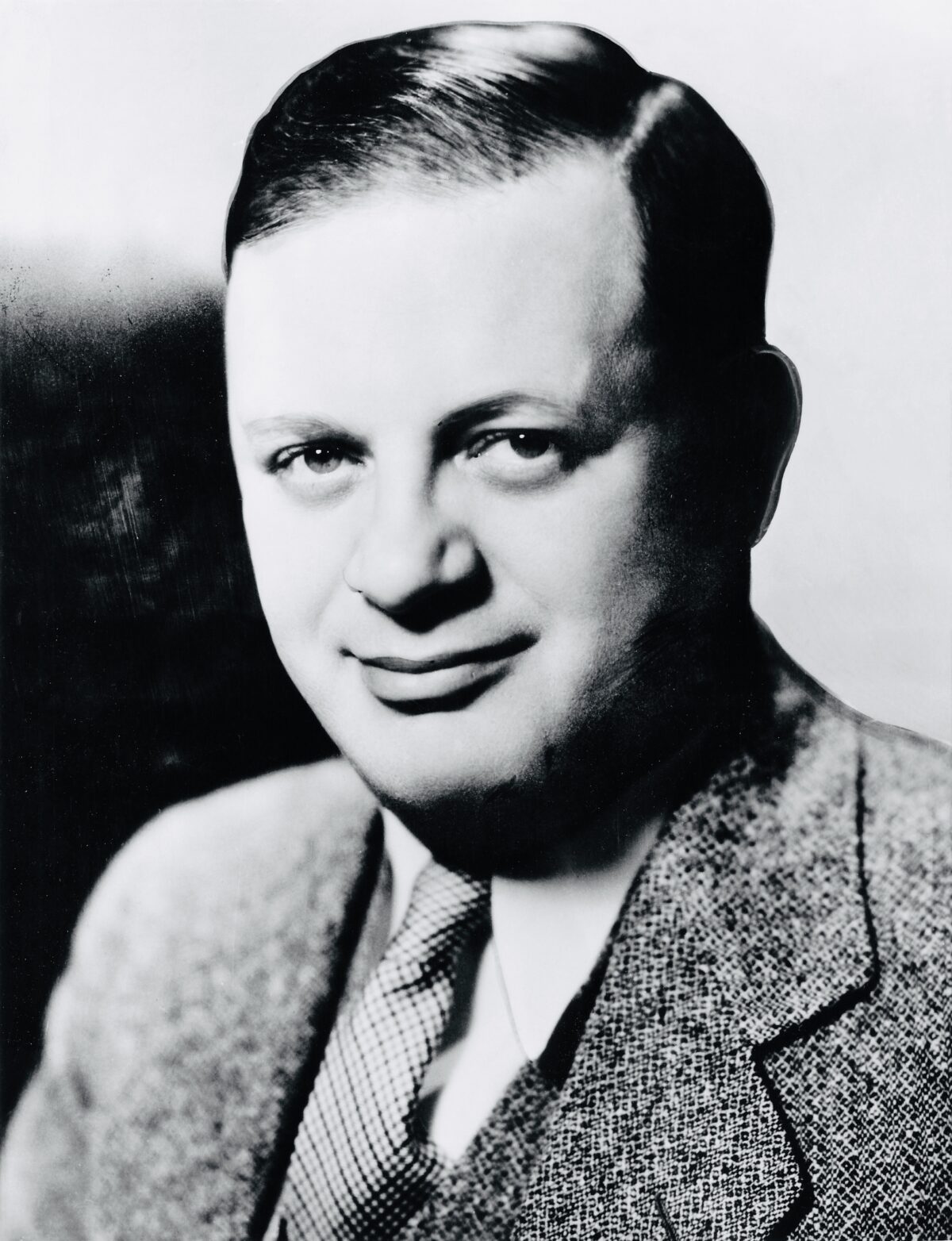
Shortly after Adolf Hitler’s accession to power as Germany’s chancellor in 1933, the noted Hollywood screenwriter Herman Mankiewicz wrote The Mad Dog Of Europe, an anti-Nazi script that, he hoped, could be turned into a movie.
As hard as he tried, he and his allies failed to convince studio moguls, many of whom were Jewish, to buy his hard-hitting screenplay. And much to his further disappointment, the Production Code Administration, which scrupulously policed the content of movies for lapses in taste and morality, opposed his project.
Mankiewicz’s frustrating and futile quest is explored in The Mad Dog Of Europe, an 83-minute documentary by Rubika Shah scheduled to open in theaters in Canada on November 3.
This well-crafted and fascinating film touches on a wide assortment of themes, from Mankiewicz’s biography and Hollywood lore to antisemitism in the United States and the attitude of Germany’s fascist regime to cinema. Steeped in effective archival footage and able to maintain a good pace, it is bound to arouse the interest of even viewers who are not especially interested in any of these related topics.
The film is bolstered by interviews with family members. Among them are his grandsons, Nick Davis, a movie producer, and Ben Mankiewicz, a commentator on the Turner Classic Movies channel.
As Davis observes, Mankiewicz was an iconic figure in Lotus Land in the 1930s and 1940s, despite his disdain for its celebrity culture. Born in New York City in the closing years of the 19th century, he was the son of German Jewish immigrants. A gifted writer, he was a theatre critic for The New York Times and The New Yorker. Secretly, he aspired to be a serious playwright.
Swayed by Hollywood’s allure, he moved to Los Angeles in the 1920s and became a title writer for silent films before branching into script writing. He convinced his friend, the famed Chicago journalist Ben Hecht, to join him in Los Angeles, assuring him that he would have no trouble establishing himself there.
By the 1930s, Mankiewicz was a highly-paid screenwriter, churning out a succession of frothy and forgettable movies such as Girl Crazy and Million Dollar Legs, but also working on classics like The Wizard of Oz. Despite his financial success, he often disliked his assignments, looking down on Hollywood’s fondness for popcorn entertainment. He aspired to write something far more substantial.
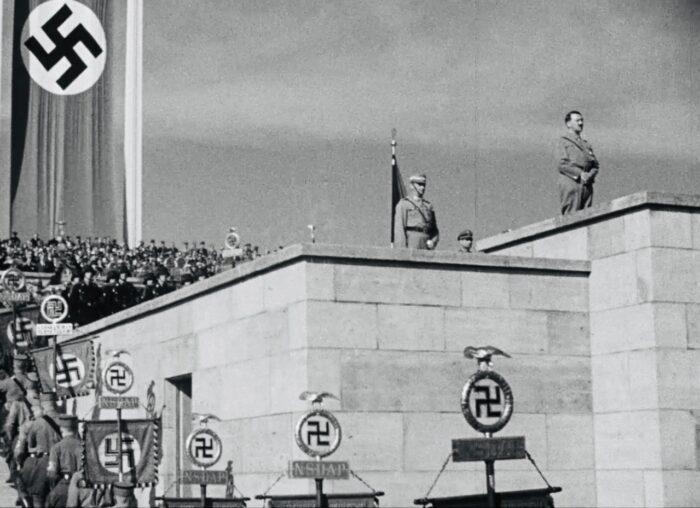
Hitler’s rise to power gave him that opportunity. Taking a leave of absence from Metro-Goldwyn-Mayer (MGM), one of Hollywood’s largest studios, Mankiewicz set out to produce a screenplay about the persecution of a Jewish family in Nazi Germany.
A keen observer of politics, he recognized that Nazism was a clear and present threat, not only to Jews but to neighboring countries. He was hopeful that The Mad Dog Of Europe, an implicit reference to Hitler, would turn the tide of European and American public opinion against the Nazi regime.
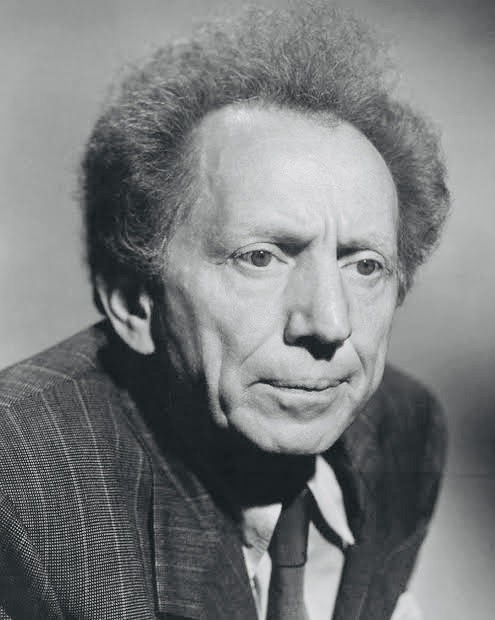
Mankiewicz enlisted the help of talent agent and producer Sam Jaffe to lift his project off the ground. Jaffe, a well-known figure in the industry, approached MGM chairman Louis B. Mayer to greenlight it, but Mayer rejected his overture. Like all his colleagues, he feared that an anti-Nazi film would anger and alienate the Nazis and prompt them to ban their movies in Germany.
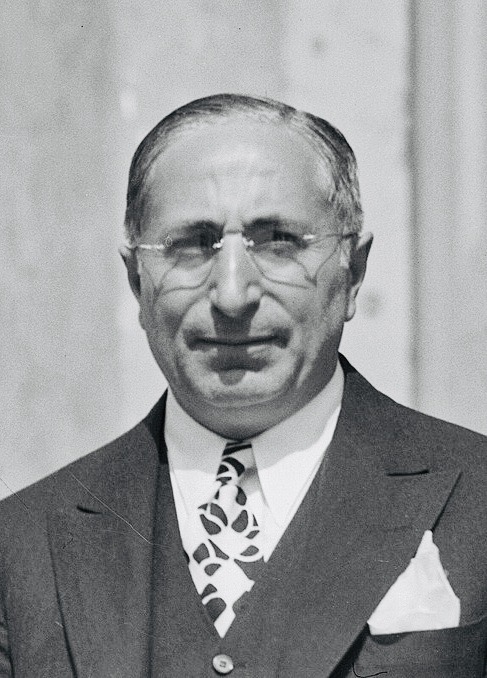
This overseas distribution of American films was no small matter. It was an exceedingly lucrative business, and Mayer and his associates had no intention of jeopardizing it. Mayer also believed that Hitler would double down on the persecution of Jews if his regime was the object of criticism in a Hollywood movie.
The Hollywood establishment was additionally constrained by Germany’s consul general in Los Angeles, Georg Gyssling, a German nationalist who, we learn, happened to be a closet anti-Nazi. Regrettably, this aspect of Gyssling’s personality is left unexplored. That being said, his mandate was to monitor Hollywood films and press for changes when they were critical of Germany. Being a loyal servant of the regime, at least outwardly, he disapproved of Mankiewicz’s screenplay.
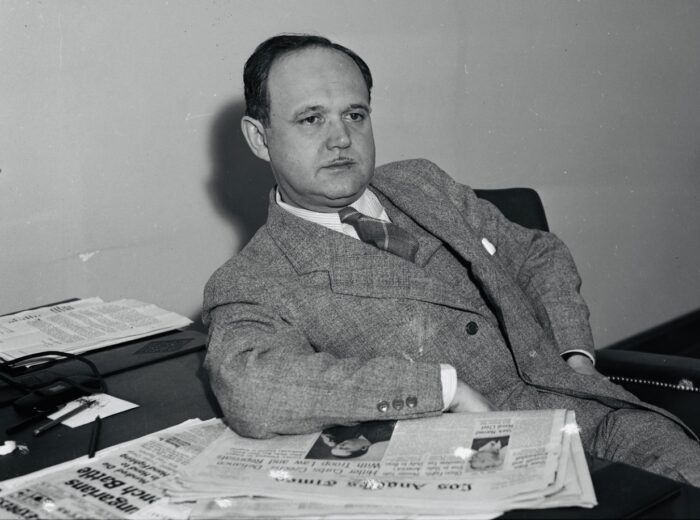
The Mad Dog Of Europe places the whole issue in historical context by stating that films during this era had become the global dominant art form, and that Hitler and his propaganda minister, Joseph Goebbels, were ardent movie fans.
“Midway through the documentary, Shah broadens the narrative by introducing two additional figures whose activities illuminate the political climate of the period: Leon Lewis, one of the founders of the Anti-Defamation League, and talent agent Al Rosen.”
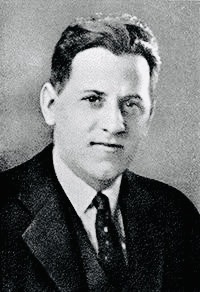
Lewis, a Hitler hater, sent out undercover operatives to spy on pro-Nazi organizations in Los Angeles. To his astonishment, he discovered that the police chief of Los Angeles thought that Jewish communists were more of a threat to America than Nazi sympathizers.
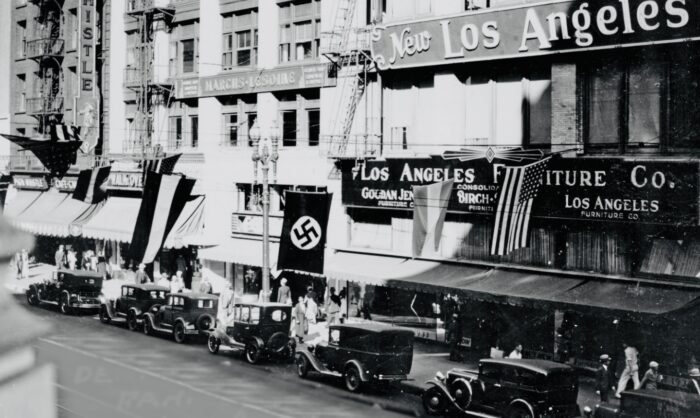
After reading Mankiewicz’s script, Lewis advised him to tone it down, relocate the locale to Transylvania, and omit Hitler from it. Mankiewicz listened to his advice, but was unable to sell the story to anyone in Hollywood who mattered. On the advice of his rabbi, Jaffe abandoned the project.
Rosen stepped in, but made no progress either after the Production Code Administration refused to grant The Mad Dog Of Europe its official seal of approval.
The film suggests that the Production Code Administration was headed by people who were not averse to antisemitism. This, of course, was richly ironic in an industry where Jews were so influential. Yet, as the film amply illustrates, anti-Jewish animus in the United States during that epoch was deep and widespread.
Much to Mankiewicz’s everlasting sorrow, his screenplay was never converted into a feature film. And to add insult to injury, the Nazi regime in 1935 banned the export of all films on which he had toiled.
On the heels of Kristallnacht, Hollywood began moving, albeit cautiously, toward confronting Nazism. Warner Bros. released Confessions of a Nazi Spy in 1939, one of the industry’s first major anti-Nazi features. MGM followed in 1940 with The Mortal Storm. Many more such films would follow, particularly after Germany declared war on the United States in December 1941.
The demise of The Mad Dog Of Europe did not upend Mankiewicz’s career. He burnished his reputation after sharing the Academy Award with Orson Welles for best original screenplay for Citizen Kane, which is still a classic after 85 years.
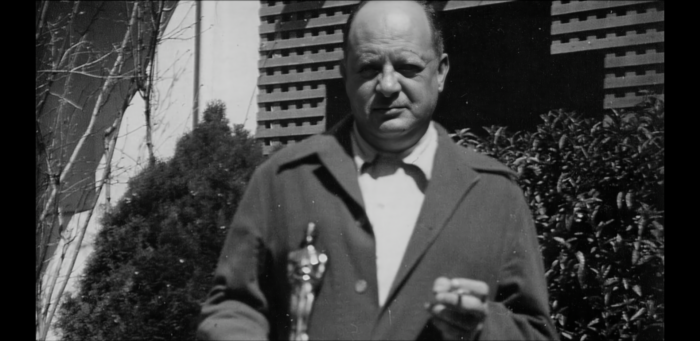
Much like his screenplay that withered on the vine, Citizen Kane is about power and the abuse of power. Sadly enough, this landmark picture was as close as Mankiewicz ever got to fulfilling his dream of converting The Mad Dog Of Europe into a movie.