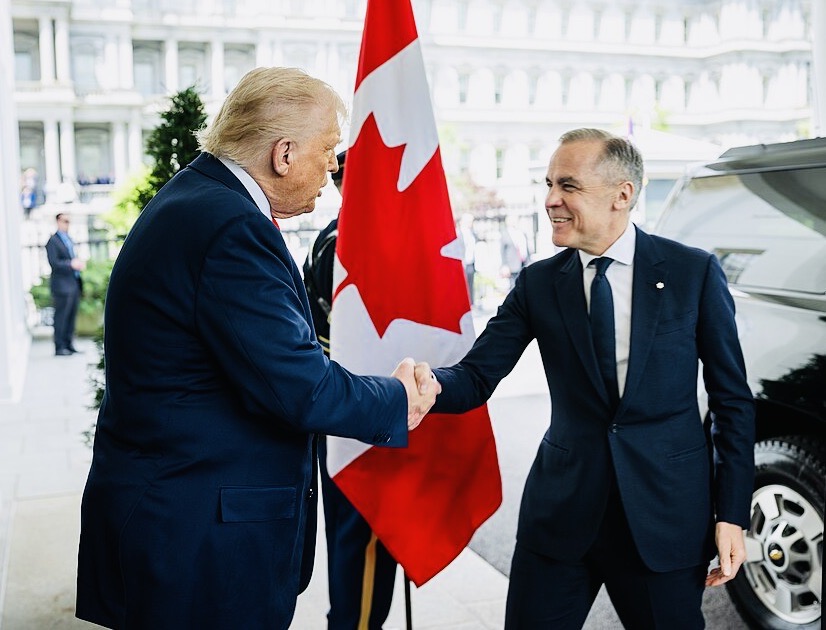
With the midterm elections in the United States only a day away, the U.S. embassy in Ottawa is sticking to its implausible claim that Canada has been interfering in its democratic process.
To the best of my knowledge, this marks the first time in the annals of Canada-U.S. relations that such an incendiary allegation has been made.
Canada and the United States have been good neighbors, allies and trading partners for a very long time and share the world’s longest undefended border. From this perspective, the recent “fact sheet” distributed by the American embassy alleging that Canada was trying to sway the midterm elections on November 3 is rather surprising.
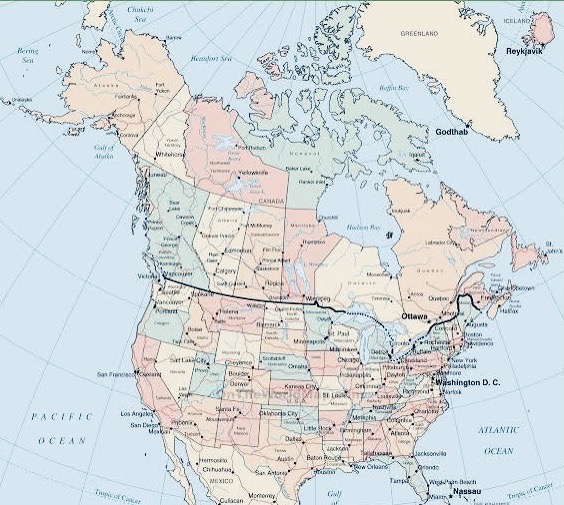
But in this day and age, with the White House occupant being President Donald Trump, Canadians should expect the worst from its southerly neighbor.
Unlike his predecessors in at least the past century, Trump is demonstrably hostile to Canada. His aggressive and bullying behavior is unprecedented.
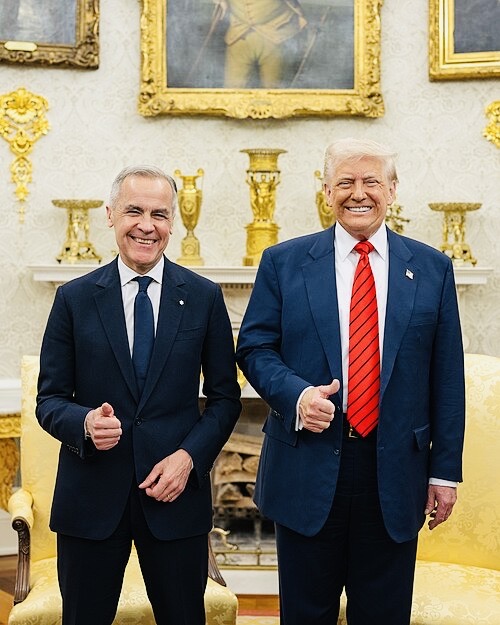
He has imposed tariffs on Canada and thereby started a costly trade war that will adversely affect Canadians and Americans. He has displayed disrespect toward Canada by bullying it to join the U.S. as the 51st state. He has often referred to Canadian Prime Minister Mark Carney as “governor,” as if he governs a U.S. state. And he has officially renamed Lake Ontario as Lake America.
“Trump has poisoned the relationship between the two countries,” writes Gary Mason in the October 30 edition of The Globe and Mail. “On midterm campaign stop after midterm campaign stop, he has tried to justify his destructive and inflationary tariffs by attacking the countries he’s used them against. And there has been no bigger target than (Canada).”
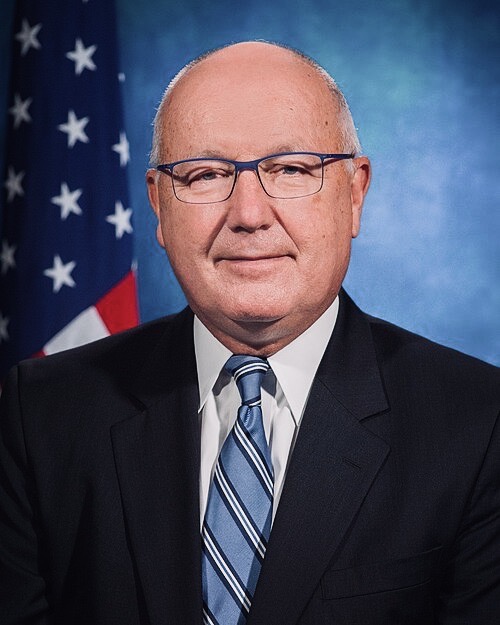
Pete Hoekstra, the U.S. ambassador to Canada and Trump’s loyal mouthpiece, has accused several Canadian politicians, notably Industry Minister Melanie Joly, of interference as well.
Peter Navarro, Trump’s trade advisor, has repeated this accusation in far more coarse and pugnacious terms.
Perhaps they are concerned that the Republican Party, having lost the confidence of some Americans due to the deepening cost-of-living and affordability problem in the country, faces a string of defeats at the hands of the Democratic Party in the forthcoming elections.
To his credit, Carney has not remained silent in the face of these unfounded accusations.
“We have lots of interaction with American companies, citizens and stakeholders more broadly, and we’re very careful to not be seen to interfere,” he said recently. “We have no intention of interfering with their democratic processes.”
In a reference to Hoekstra, Carney expressed disappointment with his “unsubstantiated claims.”
Carney’s rebuttal sounds perfectly reasonable under the circumstances, and I have no reason to believe that Canada is the aggressor.
Carney is doing more than simply telling the unvarnished truth. He is diversifying Canada’s trading relationship with the rest of the world so as to be less reliant on the United States during the protectionist and unpredictable Trump era.
Under the Plan For A Stronger Canada, a strategy paper that was released on October 30, the federal government will work to “maintain a relationship with the United States based on mutual respect, national sovereignty, and shared responsibility for the security of North America.”
In addition, Canada is expanding ties with the European Union with the objective of attaining associate membership with all its economic benefits.
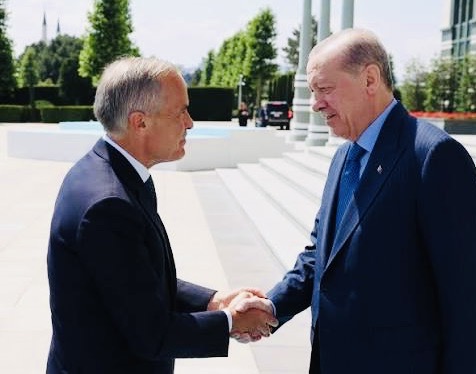
Canada, too, announced a partnership with Turkey in trade, energy, defence and joint ventures after Carney became the first Canadian prime minister to make a dedicated trip that country. During his visit, he held talks with Turkish President Recep Tayyip Erdogan.
Last but not least, Canada has signed a free trade agreement with the United Arab Emirates, one of four Arab countries that normalized relations with Israel under the 2020 Abraham accords.
Canada reached agreements with Turkey and the United Arab Emirates despite their illiberal regimes and problematic human rights records.
“Engagement does not mean endorsement,” said Carney, who noted that Canada will refrain from “lecturing from afar,” even when it disagrees with another nation’s conduct.
Canada’s willingness to deepen economic and diplomatic ties with countries whose governments have questionable human-rights records raises an obvious question about the consistency of its foreign policy.
If Carney is prepared to engage pragmatically with Turkey and the United Arab Emirates despite their shortcomings, there is no compelling reason why Israel — a key regional player, a close Western ally with a thriving economy and considerable technological and strategic assets, and a free trade pact with Canada — should be treated differently.
That being the case, Carney should also visit Israel. Carney, having visited a whole host of nations since the start of his premiership last year, should refrain from shunning Israel simply because he disagrees with its hardline approach to the unresolved Palestinian imbroglio.
Canada would be remiss to sideline Israel.