
Judging by the recent arrest of three young Muslim men in Toronto charged with hate crimes, Canada’s immigration system needs to be fixed as expeditiously as possible.
Last month, the Toronto Police Service and the Royal Canadian Mounted Police announced that Osman Azizov, 19, Farad Sadaat, 19, and Waleed Khan, 26, faced almost 80 charges related to kidnapping, sexual assault, possession of firearms and conspiracy.
Khan has also been charged with terrorism offences in connection with allegations that he is a supporter of Islamic State, a global jihadist organization that has wreaked death and destruction in the Middle East and Europe in the past decade.
Azizov is not personally charged with terrorism, but is accused of attempting to violently kidnap three women at gunpoint in league with Khan. In the meantime, Azizov has been released on bail under court-imposed conditions.
According to the authorities, the trio were partially motivated by “hate-motivated extremism” when they tried to target “women and members of the Jewish community.”
In light of the antisemitic rampage in Sydney, Australia, in December that claimed the lives of 15 people, the case in Toronto raises valid questions about public safety and Canada’s immigration policy.
The arrests underscore the need for federal and provincial governments to address the central issue of national security, said Noah Shack, the chief executive officer of the Centre for Israel and Jewish Affairs, on December 19.
As he put it, “There’s a serious problem in this country of radicalization, of extremism in this country.”
“In Australia, it took the murder of a 10-year-old girl and 14 other people for their government to wake up and start taking action,” he added. “We can’t afford to pay that cost here in Canada. It’s an absolute matter of urgency for our governments at all levels to work with law enforcement to take the steps necessary to prevent not just the crimes that were announced, but to get to the root cause of this heinous violence that’s on the rise and this extremism that’s running rampant across Canada.”
Which brings us back to Azizov and his parents. Citizens of Azerbaijan, they illegally crossed into Canada from the United States near Lacolle, Quebec, in 2017.
The Immigration and Refugee Board rejected their asylum claim, while the Refugee Appeal Division also denied it. In 2019, a federal court declined to review their case. It is unclear why they were allowed to remain in Toronto and not deported after their bid for refugee status failed.
In 2024, they applied to stay in Canada on humanitarian and compassionate grounds, and their appeal was successful.
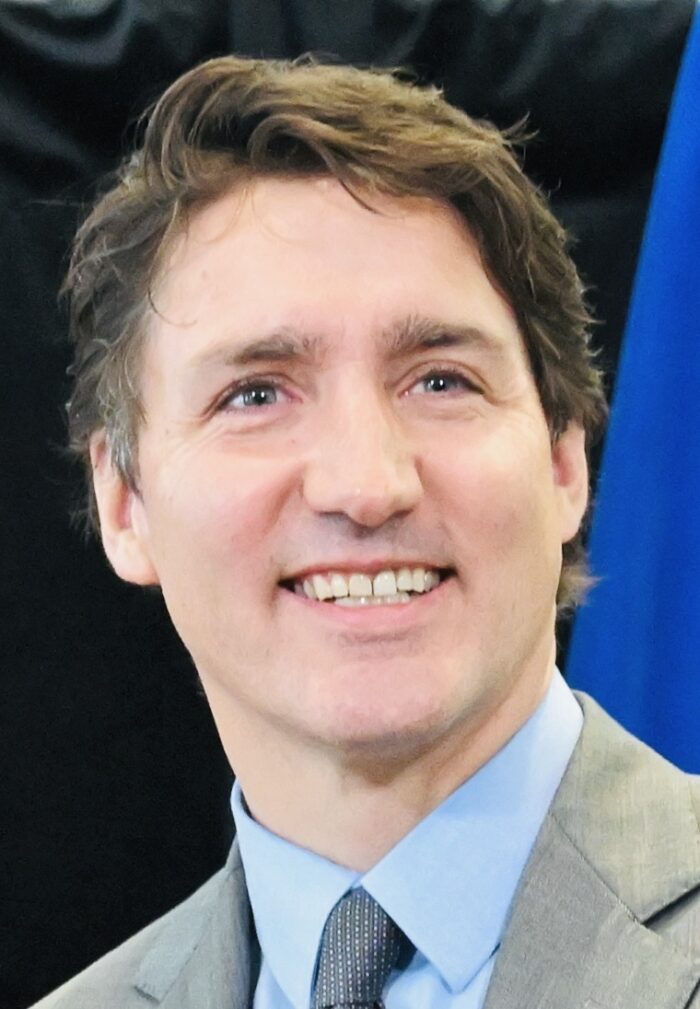
The leniency they were granted may be rooted in events south of the Canadian border. Shortly after Donald Trump’s inaugural as U.S. president in 2017, he imposed a ban on refugee admissions from six Muslim-majority countries. By way of reaction in a social media post, Canadian Prime Minister Justin Trudeau declared that refugees “fleeing persecution, terror & war” would be welcomed to Canada “regardless of your faith.”
Trudeau’s burst of generosity, which was panned in Canada, emboldened migrants and was certainly consequential. Within a short period of time, a steady flow of foreign nationals streamed into Canada illegally from the United States to claim asylum.
By the end of that year, border officials reported that about 76 people were illegally crossing into Canada on a daily basis. By all accounts, they were economic migrants rather than refugees fleeing political or racial persecution.
In his haste to burnish his record as a progressive, Trudeau had opened a Pandora’s Box.
While illegal migrants poured into Canada in an unregulated manner, potential immigrants who had meticulously followed the rules and gone through normal channels to apply for citizenship were presumably penalized by probably having been unfairly pushed to the back of the queue.
It appears that the Azizov family exploited this unsettled situation, as the Conservative Party’s immigration critic, Michelle Rempel Garner, wrote on X recently. In her statement, she said that Azizov’s permanent residency in Canada on “humanitarian” and “compassionate” grounds would have required the approval of the federal immigration minister.
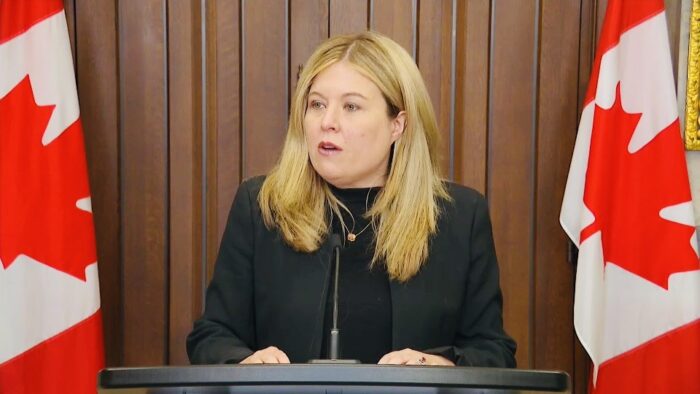
This Liberal Party cabinet minister would have been required to ensure that this foreign national was not “a danger to the security of Canada” was not “engaging in terrorism” or “acts of violence that would or might endanger the lives or safety of persons in Canada.”
“Which Liberal minister gave this extremist sanctuary in Canada?” Rempel Garner archly asked.
This legitimate question has yet to be answered, in the view of Conservative Party leader Pierre Poilievre. In a direct reference to Azizov, he wrote on X, “This guy’s phoney refugee claim was rejected almost a decade ago and he’s still in Canada causing chaos. The Liberals will never fix immigration or the border — they broke both.”
Poilievre’s accusation needs to be investigated thoroughly by Prime Minister Mark Carney’s Liberal government.
This case is not about partisan politics, but about national security.
If Carney is seriously interested in heading off terrorist incidents of the kind that convulsed Australia last month, he and his ministers need to reform the Canadian immigration system to ensure that the wrong people do not enter Canada.
Canada’s national security is at stake here.
As for Azizov, he should be deported to his native land as soon as possible. Canada cannot afford fake refugees like him.