July is a month to remember in the annals of Iranian-inspired terrorism against Jews.
On July 18, 1994, a massive explosion tore through the Jewish community center in Buenos Aires, killing 84 people and wounding more than 300, in the deadliest antisemitic incident since the Holocaust. Israel and Argentina blamed Iran and its proxy, Hezbollah, for the blast.
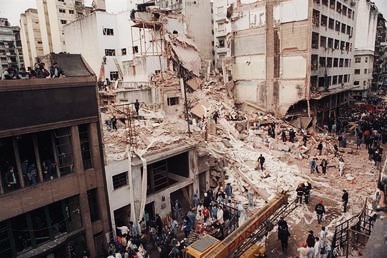
It occurred two years after the Israeli embassy in Buenos Aires was bombed, killing 29 people and wounding 242 in the worst assault on an Israeli diplomatic office abroad. Hezbollah, under the direction of Iran, is widely believed to have carried out the bombing.
On July 18, 2012, a bus carrying Israeli tourists in Burgas, Bulgaria, was targeted by a terrorist affiliated with Hezbollah. Five Israelis and one Bulgarian were killed.
Fourteen years on, this problem lingers on.
Last week, the British government accused an Iranian surrogate, the Islamic Movement of Companions of the Right, of orchestrating a wave of attacks against European Jews. These attacks have occurred since the outbreak of the war in Iran on February 28.
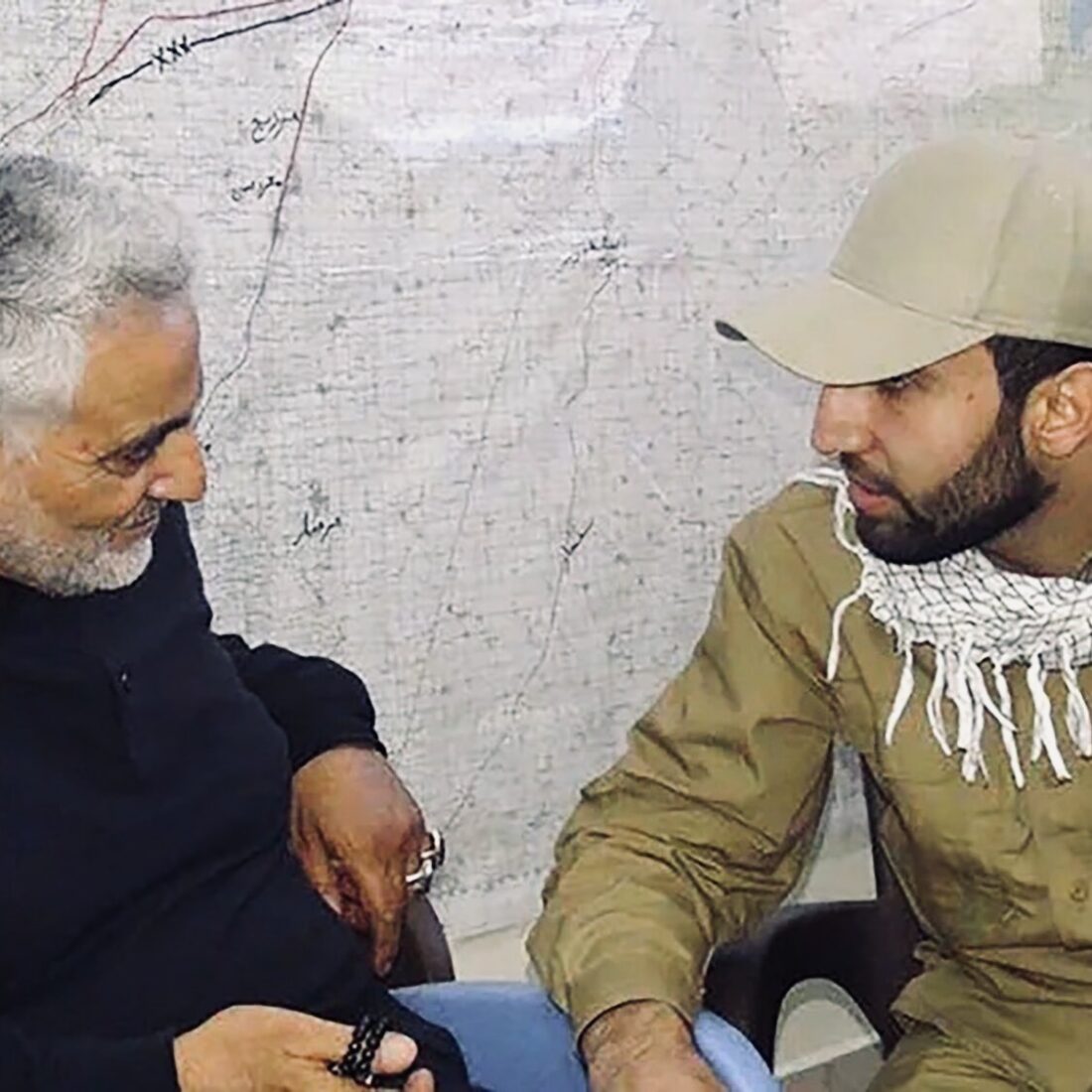
The Islamic Movement of Companions of the Right supposedly takes its orders from the Quds Force, an arm of Iran’s Islamic Revolutionary Guards Corps. Qassem Soleimani was the commander of the Quds Force until his assassination. He, along with Abu Mahdi al-Mohandes, the commander of Kata’ib Hezbollah, an Iranian-sponsored Shiite militia in Iraq, were both killed by a U.S. drone strike in Baghdad in January 2020.
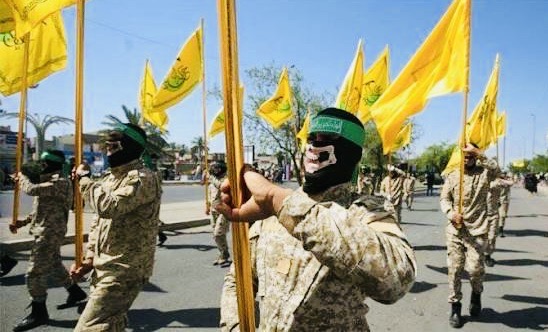
Last month, U.S. federal prosecutors in New York City charged an Iraqi citizen with attempting to recruit individuals online to attack Jewish communities in North America and Europe. He reportedly has close ties to Iran.
According to Western intelligence services, these incidents illustrate the degree to which Iran has altered its operational methods over the past decade.
In Buenos Aires and Burgas, the Quds Force reportedly relied on Hezbollah operatives to attack Jews and Israeli interests. Of late, however, the Quds Force has increasingly turned to local organized crime groups, contract criminals and proxy organizations to target synagogues, rabbis, Jewish day schools, Israeli diplomats and Jewish businessmen.
This approach gives Iran greater deniability while allowing it to project violence abroad. Intelligence agencies in Germany, Sweden, Britain, France, the Netherlands and Azerbaijan have all publicly accused Iran of using this model.
Britain, in pointing a finger at the Islamic Movement of Companions of the Right, listed an attack on ambulances belonging to a Jewish volunteer emergency service in London.
These attacks, which unfolded during a two-month period from March until May, heightened fears in Jewish communities already on high alert following an alarming spike in antisemitic incidents since the eruption of the war in Iran.
The outgoing British prime minister, Keir Starmer, tried to assure the Jewish community. “We will never let Britain be a playground for states who want to spread fear, division and violence on our streets,” he said.
Britain claims that Iran’s proxy, Kata’ib Hezbollah, spearheaded an Iranian retaliatory campaign to strike Jews to avenge U.S. and Israeli air strikes in Iran. An Iraqi national, Mohammad Baqer Saad Dawood Saadi, was accused of planning some 20 operations in Europe, the U.S. and Canada on behalf of Kata’ib Hezbollah.
Saadi, 32, recruited criminals to carry out attacks, says Matthew Levitt, the director of the Counterterrorism and intelligence program at the Washington Institute for Near East Policy. Some of his recruits were unaware that they were working for Iran or Kata’ib Hezbollah.
Levitt told The Forward, a Jewish English-language newspaper, that Saadi was not a lone wolf operator. As he said, “It stretches the limits of credulity to think that plots like this in the United States could be done without very senior top-down instructions” from the Iranian regime.
Last month, in a Manhattan federal court, Saadi pleaded not guilty to charges linking him to attempts to recruit operatives to firebomb synagogues in New York, Los Angeles and Scottsdale, Arizona.
Oren Segal, the vice president of the Center on Extremism at the Anti-Defamation League, claims that Saadi also tried to kill Ivanka Trump, President Donald Trump’s daughter. She is a convert to Judaism who is married to Jared Kushner, Trump’s former advisor.
In the past few years, the Quds Force, apparently working with criminal proxies, has been involved in a series of attacks aimed at striking Jewish communities in Europe.
A few examples will suffice.
Gun fire was directed at the Old Synagogue in Essen, while a Molotov cocktail was thrown at a shul in Bochum. German prosecutors concluded that these assaults were organized on behalf of the Islamic Revolutionary Guards Corps.

Swedish security services have repeatedly accused Iran of recruiting local criminal gangs to monitor and attack Jewish sites and Israeli diplomatic facilities.
French intelligence agencies have also uncovered such Iranian networks. Their plots did not reach the execution phase due to government intervention.
Authorities in Belgium and the Netherlands are investigating a wave of attacks on Jewish institutions ranging from an explosion outside a synagogue in Liege to the firebombing of a synagogue in Rotterdam.
Azerbaijan, an ally of Israel which shares a border with Iran, has foiled several Iranian plots against Jews and the Israeli embassy in Baku.
Police in Peru arrested an Iranian national alleged to be a member of the Quds Force. According to prosecutors, he recruited local criminals to assassinate an Israeli businessman in Lima.
In Mexico, American and Israeli intelligence reportedly disrupted a Quds Force plot to assassinate Israel’s ambassador in Mexico City.
These incidents underscore the lengths to which Iran and its proxies will go to harm Jews and Israel. The threat they pose is ongoing and should not be underestimated.
Thirty-two years after the bombing in Buenos Aires and 14 years after the Burgas attack, Iran’s methods have evolved, but its objective has not. By increasingly relying on criminal proxies instead of Hezbollah operatives, Iran has made attribution more difficult while ensuring that Jewish communities and Israeli interests abroad remain under threat.