Has Iran constrained Israel’s freedom of action in Lebanon?
That’s the burning question observers have asked following Israel’s latest clashes with Iran on June 7 and June 8.
The events that led to these flareups began when Hezbollah, Iran’s chief proxy in the Middle East, fired rockets and drones into the Galilee. Israel then bombed the Dahiyah district of Beirut, a Hezbollah bastion.
Iran, widely regarded as Israel’s deadliest enemy, responded by issuing an evacuation order for the residents of northern Israel. Subsequently, Iran launched ballistic missiles at Israel. The Israeli Air Force swung into action, bombing military and economic assets in Iran. Iran fired another another missile barrage at Israel.
Israel was poised to attack Iran again, but Prime Minister Benjamin Netanyahu called off further air strikes when U.S. President Donald Trump forced Israel and Iran to stand down. However, Netanyahu stated that Israel would “respond forcefully” to future Iranian attacks.
Trump fears that the fighting in Lebanon will interfere with his efforts to reach a peace agreement with the Iranian regime in the wake of the recent war, which broke out on February 28 after the United States and Israel attacked Iran in a joint operation.
Iran is now attempting to link Israel’s war against Hezbollah with its broader confrontation with the United States. Iran recently warned that Israel will face “much more severe and crushing measures” if the Israeli army and air force continue to conduct operations against Hezbollah in Lebanon.
As the Institute for the Study of War noted, Iran values Hezbollah as a key pillar of its deterrence strategy vis-a-vis Israel and the United States
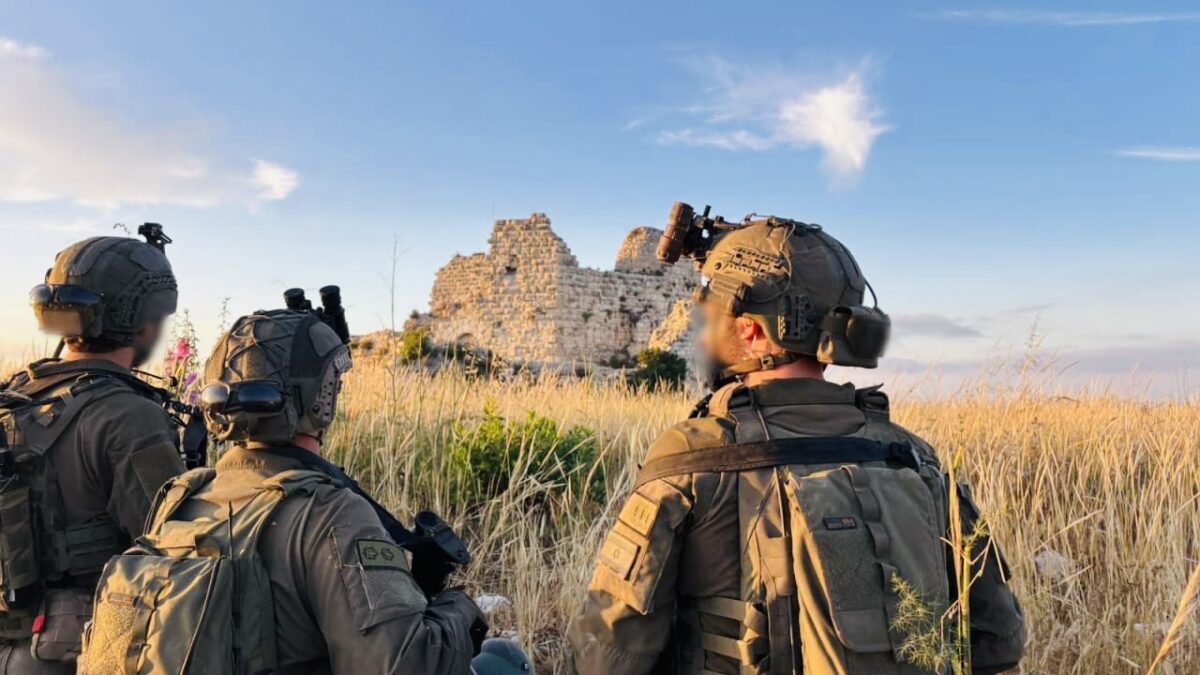
As a result, Iran is carefully monitoring the current war between Israel and Hezbollah, which erupted on March 2 after Hezbollah fired rockets into Israeli territory. Israel then invaded southern Lebanon, setting off its second war with Hezbollah since 2024.
Since then, Hezbollah has fired some 6,000 rockets at Israeli troops inside Lebanon, as well as around 2,700 at Israel. In addition, Hezbollah has launched around 300 drones, of which 25 struck Israel, according to the Israel Defence Forces.
Israel believes that Hezbollah still possesses thousands of short-range rockets, along with hundreds of longer-range missiles.
In the past three months, Israel has carved out a buffer zone south of the Litani River, compelled most of its inhabitants to leave, and displaced more than one million people throughout the country
The war has claimed the lives of 3,700 Lebanese civilians, upwards of 2,500 Hezbollah fighters, 30 Israeli soldiers and two Israeli civilians.
The conflict shows no signs of abating, despite a formal ceasefire.
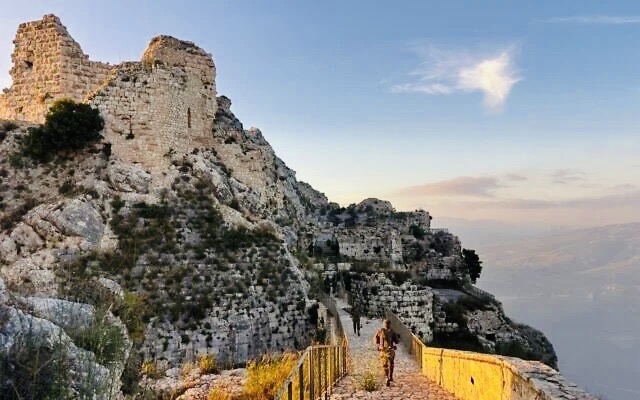
Since June 8, Israel has intensified its campaign in southern Lebanon. Israel has captured Beaufort, the Crusader fortress overlooking the Galilee, and is currently thinking of advancing on the nearby town of Nabatieh. In accordance with its policy of emptying southern Lebanon’s population, Israel recently issued an evacuation order for Tyre, a city of roughly 100,000.
Pushing back against Iranian ambitions to control Lebanon, Netanyahu said that Hezbollah and Iran are trying to limit Israel’s freedom of action, which is “intolerable and unacceptable.”
Senior Israeli officials recently told the Israeli daily Haaretz that Israel will not allow Hezbollah and Iran to deter Israel from striking Hezbollah targets in Lebanon, and that Israel will strike Beirut yet again should Hezbollah fire on Israeli communities in the Galilee.
Judging by the latest Israeli operations, it would appear that Iran has not deterred Israel from striking Hezbollah.
However, Iran’s threat to react militarily to future Israeli attacks targeting Hezbollah, especially in Beirut, may well have injected a measure of uncertainty into Israel’s calculations.
Israeli defence officials fear that Israel’s operational flexibility, a key strategic asset in Lebanon, may be curtailed by the Trump administration, Haaretz reported. Yet it remains to be seen whether Iran has really created a new strategic equation in the Middle East.
On the eve of these events, Israel and Lebanon conducted their fourth round of direct talks in Washington since March and renewed the tenuous ceasefire, which went into effect on April 16.
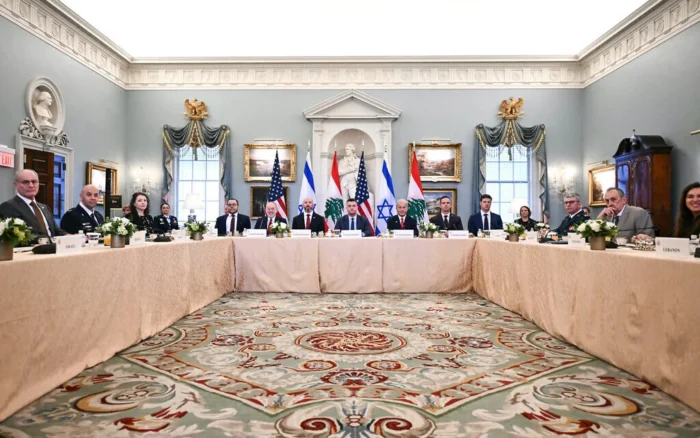
In a joint statement, the two sides said that the truce “is contingent on a complete cessation of Hezbollah fire, the evacuation of all Hezbollah operatives” from areas south of the Litani River, and the deployment of the Lebanese army in this region.
“These steps will enable progress towards a comprehensive peace and security agreement,” the statement said. It added that “the future of the relationship between Israel and Lebanon must be decided by the two sovereign governments,” and that “any attempt, by any state or non-state actor, to hold Lebanon’s future hostage” would be resisted.
Hezbollah Secretary General Naim Qassem rejected the ceasefire, dismissing it as a “humiliating” attempt to force Lebanon’s submission and Hezbollah’s surrender.
Qassem said that a truce must include Israel’s full withdrawal from Lebanon, a prospect that appears very dim at this moment. “As long as the occupation continues,” he said, “the resistance will continue.”
Hezbollah’s rejection of the ceasefire prompted Lebanese President Joseph Aoun to accuse Iran of exploiting Lebanon for its own political ends and of using it as a “bargaining chip” in its negotiations with the United States. “This is not your country,” he said in a curt reference to Iran. “It’s our country.”
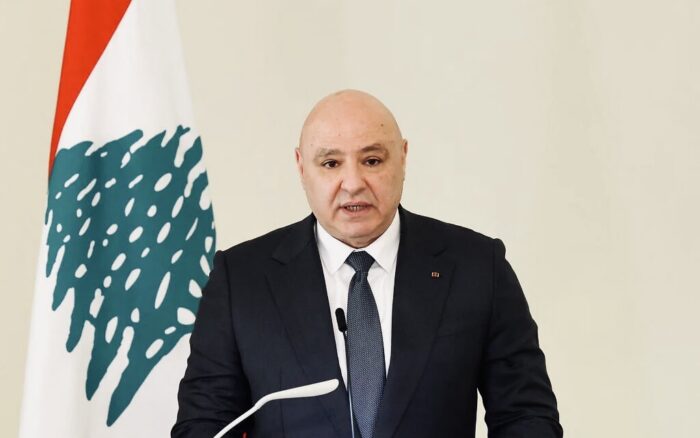
Subsequently, Aoun disclosed that his government would be ready to sign a non-aggression pact with Israel if it pulls out of Lebanon. A full-blown peace treaty could be next, he suggested.
According to the American Task Force on Lebanon, the Lebanese government will be hard-pressed to rein in and disarm Hezbollah, which functions like a state-within-a-state: “Hezbollah is not simply another regional militia, it remains Iran’s most capable and strategically important proxy, with deeply entrenched military, financial, and logistical networks that operate outside Lebanese state authority.”
Wary of Hezbollah’s strength and haunted by memories of the Lebanese civil war, which lasted from 1975 to 1990, the Lebanese government is reluctant to forcibly seize its arsenal of weapons.
To be fair, Lebanon has taken preliminary steps to weaken Hezbollah.
The Lebanese government has decommissioned almost 10,000 rockets and almost 400 missiles, according to U.S. Central Command. It has regained control over Beirut’s airport, which had been a key node in Hezbollah’s smuggling network. It has deployed troops to the eastern border with Syria. It has removed pro-Hezbollah Lebanese army officers from key roles. And Lebanon’s central bank has imposed unprecedented bans and regulatory crackdowns on Hezbollah’s parallel banking institution, Al-Qard al-Hasan.
Nevertheless, some commentators are skeptical that Hezbollah will relinquish its weapons unless Iran’s regional influence is meaningfully curtailed. “Lebanon will have to wait for change in Tehran before it can turn a page regarding Hezbollah’s defiance of the Lebanese national interest,” Lina Khatib, a visiting scholar at Harvard University, told The New York Times.
In the meantime, Israel’s presence in southern Lebanon has elicited criticism from all but one member of the United Nations’ Security Council. While France, Britain, Russia and China have condemned the scale of Israeli military operations, the United States has blamed Iran and Hezbollah for the current situation.
The non-permanent members of the Security Council — Bahrain, the Democratic Republic of Congo, Pakistan, Denmark, Liberia and Colombia, which holds the rotating presidency this month — have called on Israel to deescalate and expressed concern that more air strikes, displacement of civilians and destruction will undermine any chances of a lasting peace.
Israel’s ambassador, Danny Danon, has denied that Israel covets Lebanese territory and has argued that Hezbollah and Iran are at the root of the problem in Lebanon.
The vast majority of Israelis believe that Israel has no alternative but to pound Hezbollah relentlessly.
The Israeli American scholar Shira Efron zeroed in on this point in a piece in Foreign Affairs: “The reality is that Netanyahu’s government faces immense public and political pressure to intensify its campaign in Lebanon in response to Hezbollah’s lethal use of first-person-view drones, a highly anticipated tactic for which Israel was embarrassingly ill prepared. Israelis want security, and they dismiss the role that a peace process can play in delivering it.”
Efron acknowledges that Israel has made impressive military gains since March. Israel has killed nearly 3,000 Hezbollah operatives and several high-level commanders. Israel has destroyed a long Hezbollah tunnel network, seized scores of weapons caches, demolished rocket launchers and terror infrastructure in homes and other facilities in Lebanese villages, and captured land extending up to about ten kilometers from its border.
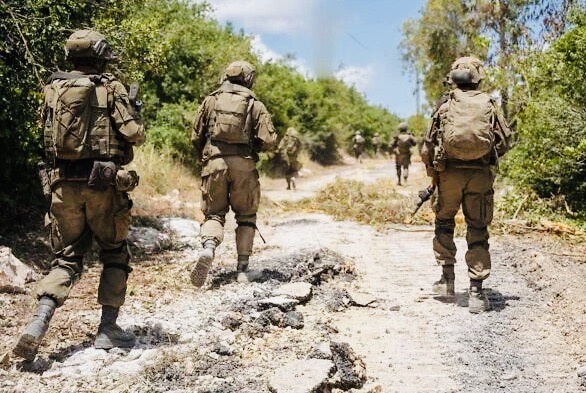
Yet, she points out, there is no military fix for the problem that Hezbollah poses. “A buffer zone can stop cross-border invasions and short-range antitank fire, but it is not effective in preventing rocket attacks or dismantling Hezbollah cells farther north. In mid-March, the IDF’s own reporting showed that most rocket launches affecting northern Israel originated from north of the Litani River, beyond the area that Israel could realistically hold without fully occupying Lebanon.”
Israel is well within its rights to defend itself against aggression from Hezbollah and Iran, both of which seek Israel’s destruction. But its military campaign in southern Lebanon carries immense risks and costs, as Israel painfully discovered during its occupation from 1982 until 2000.
At the end of the day, the recurring and gnawing problem facing Israel in Lebanon can only be resolved through a feasible diplomatic process that involves Lebanon, the United States, Hezbollah and Iran.
Israel cannot unilaterally dictate the outcome of this geopolitical struggle through military means alone. Yet it remains to be seen whether diplomacy will be helpful.