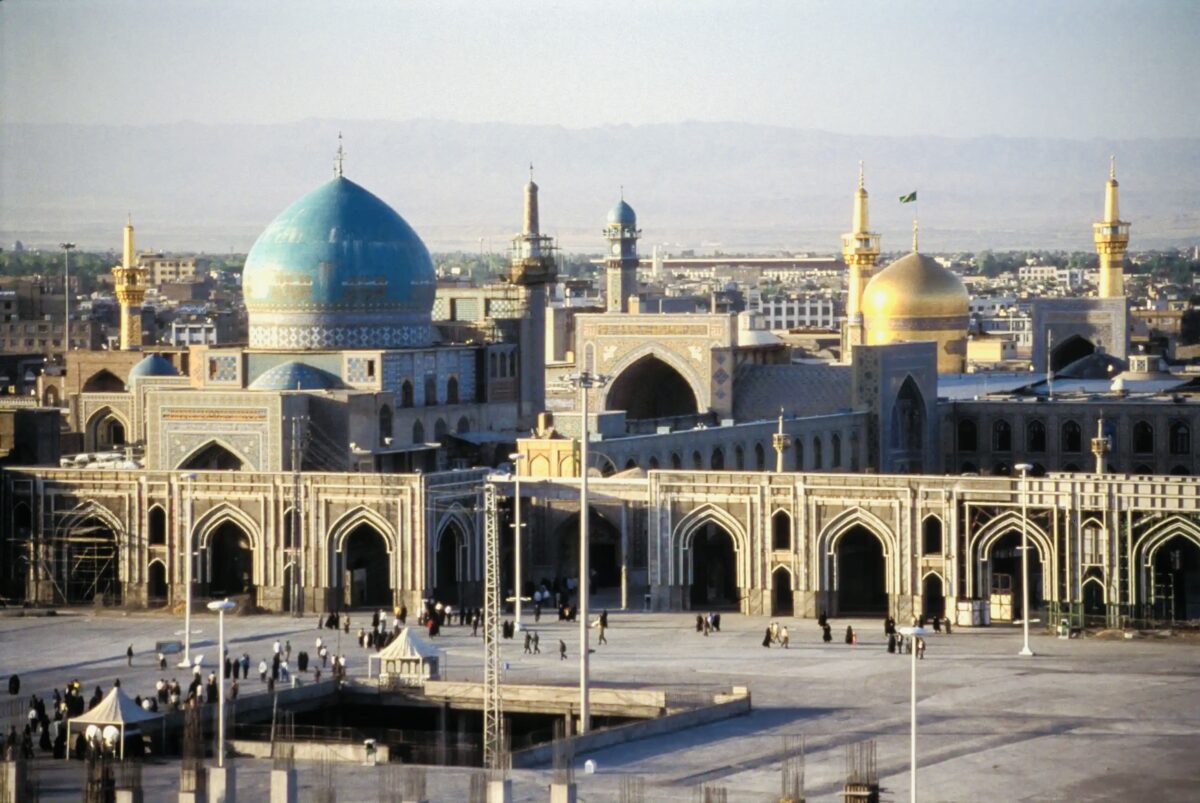
Mashhad, situated in the northeast corner of Iran, is Iran’s second largest city after Tehran. A Muslim place of pilgrimage, with a population of 3.4 million, it attracts 25 million visitors a year.
Despite its renown, Mashhad harbors an embarrassing secret, as the short film, Mashhad, points out.
On March 26, 1839, a few days before Passover, a pogrom erupted there, claiming the lives of eight Jews. Known as the Allahdad, it threw its relatively small Jewish community into a frenzy of profound angst.
Faced with the prospect of further waves of violence, the Jews of Mashhad, numbering in the vicinity of 300 families, were forced to convert to Islam. The converts would be referred to as Jadid al-Islam, or new Muslims.
In conformity with their reconfigured status, they adopted a dual identity. On the outside, they passed themselves off as Muslims. Inwardly, they secretly practiced Judaism, thereby living a life of duplicity. They resembled the Jews of Inquisition Spain, who had been compelled to convert to Christianity hundreds of years before, but who clung to Judaism behind closed doors.
Mashhad, a 19-minute film written and directed by Sarah Solimani and now available on the ChaiFlicks streaming platform, is set about 100 years after the pogrom.
The central character, Leila (Ainaz Azarhouch), is a young Jewish mother who keeps faith with the rituals of Judaism while pretending to be an observant Muslim.
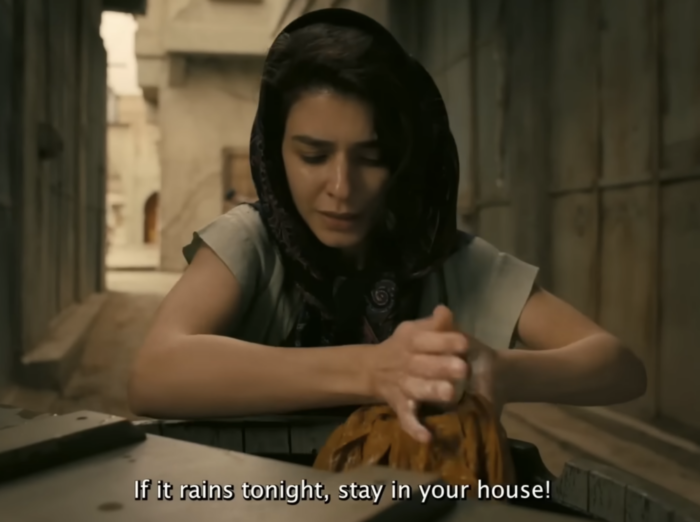
The film is supplemented by animated sequences and unfolds at night within the boundaries of a neighborhood bisected by narrow streets and characterized by low buildings. The atmosphere is thick with tension.
In one of the first scenes, Leila walks into the local Muslim butcher shop to buy a kilogram of lamb. As payment, she drops coins into a bowl of water, ensuring that they will not be contaminated. The message is obvious. Coins handled by new Muslims must be cleansed before Muslims may touch them.
Similarly, they are forbidden to leave their homes during rainy weather. They are bound by this prohibition due to the widespread belief that droplets of water dripping from their skin will cause contamination.
Despite their conversion, the Jadid al-Islam were regarded as “impure” by many of their Shi’a Muslim neighbors.
It is unclear why they were the objects of such suspicion and animosity. After all, they submitted to conversion. Did the hatred stem from ingrained antisemitic myths disseminated by Shi’a clergy? Or was it because most common folk regarded Jews with a jaundiced eye?
The film neglects to explore this important issue, with Solimani leaving it to the discretion of viewers to mull over this question.
No such ambiguity exists in Mashhad’s portrayal of Leila’s attachment to Judaism. She is Jewish to her fingertips, lighting Sabbath candles as she and her family recite Jewish prayers and chant traditional Jewish songs. In their homes, the Jadid al-Islam are defiantly Jewish.
Yet, as the film suggests, they are manifestly vulnerable. A telling scene toward the end of the movie illustrates this unsettling truth. Chatting with a group of women, Leila discovers that they fear another pogrom. The reason is clear. A local mullah has called for the death of Jews.
These very brief snapshots of the Jadid al-Islam are all we get. Mashhad literally has no time to delve into the complexities and intricacies of the challenges that they faced in 19th century Persia.
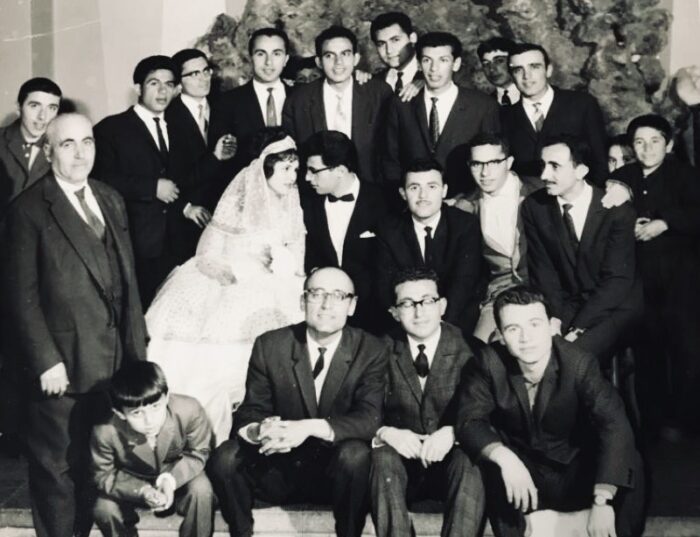
What we do know is that Mashhad’s Jewish community no longer exists, its inhabitants having left as a result of persecution, insecurity, and better employment opportunities elsewhere. During the 19th and 20th centuries, they either relocated to Tehran or immigrated to Israel, the United States and other Western destinations.
I have no idea why Solimani thought she could present viewers with an acceptably comprehensive picture of Mashhadi Jews in so truncated a film. This is a richly-layered topic that deserves far greater attention. Her fleeting look at it barely scratches the surface.