
October 7, 2023, a day of infamy when hordes of Hamas terrorists invaded Israel in an unprecedented attack, was Marsha Lederman’s “last normal night.”
Lederman is a child of Holocaust survivors from Poland who grew up haunted by nightmares of being hunted by Nazis. This “ludicrous, irrational fear came to life” as Hamas gunmen wreaked death and destruction in southern Israel.
“The Nazis of my nightmares had turned into Hamas terrorists,” she writes in her impassioned book, October 7th: Searching For The Humanitarian Middle (McClelland & Stewart).
The atrocities that several thousand heavily-armed Hamas operatives from the Gaza Strip perpetrated on that Saturday morning and afternoon nearly two years ago left an indelible impression on Lederman, a columnist for The Globe and Mail newspaper.
“I began to exist in a state of tremendous anxiety and fear,” she admits.
Lederman referred to these visceral emotions in her previous book, Kiss The Red Stairs: The Holocaust, Once Removed, a bestseller about “intergenerational trauma.” Hamas’ onslaught “went even deeper” than that.
Overall, the invasion triggered the still ongoing Israel-Hamas war, a tsunami of pro-Palestinian activism and advocacy, and a wave of antisemitism that “reached a level I never would have expected to witness in my lifetime.”
The outpouring of anti-Jewish rhetoric, she muses, has robbed her of the “feeling of safety and security.”
In this volume of her newspaper columns from before, during and after October 7, Lederman reflects on these tumultuous developments in an unadorned, understated and accessible style.
“What I have written was informed not just by the horrible events, but by my own background and history,” she explains.
Born in Toronto, and now a resident of Vancouver, Lederman was brought up in a Jewish neighborhood, studied at a Hebrew school, and raised on an “idyllic idea” of Israel as a “magical place” and “our ancestral homeland.” At the age of 18, she spent a summer on a kibbutz and travelling around Israel.
The Holocaust was etched into her identity because her parents spoke often about their wartime experiences.
Her father, Jacob Meier, hailed from Lodz. He survived part of the war on a farm in Germany under a false identity as a Polish Catholic laborer. His parents and siblings perished in a Nazi extermination camp. Her mother, Gitla (Jean), a native of Radom, spent about two months in Auschwitz-Birkenau and then worked in a German munitions factory in Lippstadt, a sub-camp of Buchenwald.

In writing this book, she says, she tried to deal with this nightmare from the “humanitarian middle.”
“More important to me than ideology and land are the people who are suffering,” she says in a reference to Israelis, Palestinians and Jews in the Diaspora. “More than a Jewish person, a journalist, someone who was brought up to love Israel … I am a human being, a mother who cares about other human beings.”
This is the tolerant, restrained and accommodating spirit in which October 7th unfolds.
In her introduction, Lederman describes herself as a pragmatist, a humanist, a progressive/liberal Jew and a Zionist. She believes in a two-state solution and hopes that Israelis and Palestinians can achieve peace, dignity and security. While she strongly defends Israel’s right to exist as a sovereign state, she dislikes the Israeli government of Prime Minister Benjamin Netanyahu, objecting to Israel’s occupation of the West Bank and its network of settlements there.
Conversely, she abhors the Hamas terrorists who killed roughly 1,200 people, raped countless women, and kidnapped 251 Israelis and foreigners. She is infuriated that these monsters are revered as “freedom fighters” and that their acts of violence are regarded as “noble resistance.”
She adds, “The celebrations and glorification of the murders have been the hardest to take.” This “great betrayal” has been “shattering.”
Lederman seems equally opposed to Israel’s ferocious military offensive in Gaza, which has so far claimed the lives of some 62,000 Palestinians, including about 22,000 Hamas and Islamic Jihad combatants.
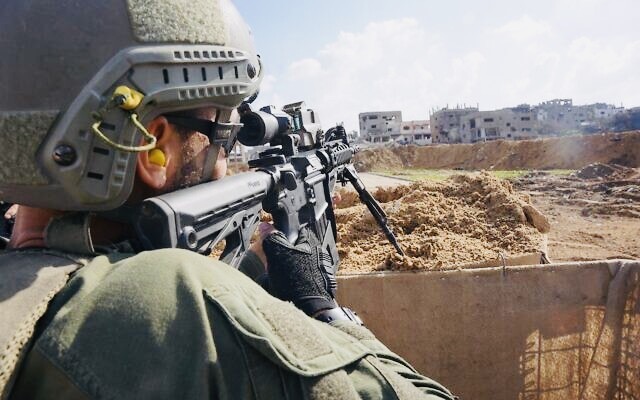
“A desire for revenge is understandable,” she writes in one of her first post-October 7 columns. “But Israel should be — needs to be — better than that. Hamas is a terrorist organization. Israel is a democratic state. And a full-scale invasion of Gaza will lead to horrific consequences, both humanitarian and geopolitical.
“I’m obviously not a military strategist, but I am a human being. And I cannot see the benefit of bombing public infrastructure and apartment buildings, of forcing all those people out of their homes.”
She acknowledges that Hamas uses Palestinian civilians as human shields and sacrifices them in a public relations strategy to stir up anti-Israel animosity. Yet in one of her earliest pieces, she cannot accept the inevitability of a fierce, and justifiable, Israeli response.
“If Israel invades and occupies Gaza, it will only lead to more death, more strife, more hatred — and then how can we ever hope for peace?” While she is not suggesting that Israel had no right to react to Hamas’ murderous rampage, she wonders “how far will this go?”
Lederman voices distress that antisemites have come out of the woodwork, that synagogues have been attacked, that Palestinians have mounted demonstrations in front of Jewish-owned businesses, and that vandals all have torn down posters of Israeli hostages.
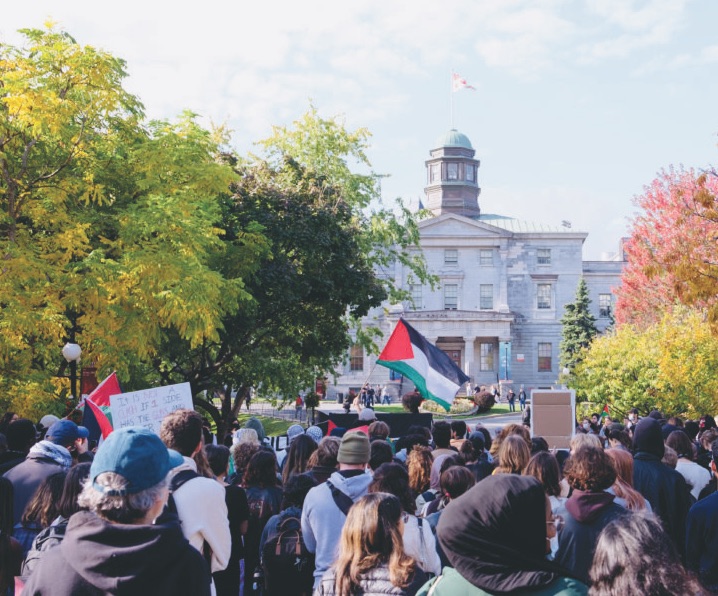
“This is not just repulsive. For some of us, it is terrifying. Our cellular memory has been activated by currents events. The intergenerational trauma in our genes is raging.”
Anti-Israel sentiment has washed up in circles where many Jews, until very recently, would have felt very much at home. “The idea that Jews everywhere should be made to answer for (Israel’s) actions is in itself racist,” she says. “The antisemitism that has arisen … has further traumatized us. Jewish Canadians are feeling vulnerable and scared … Canadians who happen to be Jewish are feeling unwelcome in many spaces. Spaces that once welcomed us can now feel hostile. Sometimes it’s school, sometimes work … For many of us, aggressive posts from colleagues, friends and acquaintances … are a major source of distress.”
While Lederman has no objections to pro-Palestinian demonstrations per se, she is critical, in particular, of a protest that targeted Mount Sinai Hospital in Toronto. “People have every right to protest this bloodbath of a military operation,” she says in reference to Israel’s offensive in Gaza. “But doing it outside a hospital, any, hospital, is wrong, and won’t help the cause.”
Lederman rejects the comparison between Israel and Nazi Germany, or the claim that Israel has committed genocide in Gaza.
“As catastrophic as Israel’s actions in Gaza are, equating them to what the Nazis did is inaccurate and, to many, offensive. Israel is not systematically herding every Palestinians it can find to their death as an end unto itself. As devastating as this is, that does not necessarily mean it is a genocide.”
She saves one of her toughest critiques for Netanyahu, who, she believes, has been a “disaster” for both Palestinians and Israelis. “The horrific October 7 attacks happened on his watch. Since then, he has failed the hostages, their families, the Israelis he has sent to war … and anyone who cares about the State of Israel.”
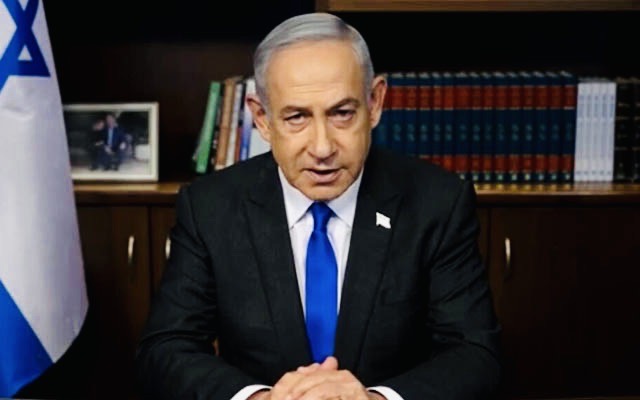
Lederman accuses him of having aroused global fury, destabilized support from even Israel’s greatest allies, and inspired ill will toward Israel and Jews.
In an open letter to Netanyahu, she writes, “Israel could be a progressive state working for a two-state solution, which you are on record as opposing. Instead, (Israel) has become an international pariah.”
And in a column marking the first anniversary of the Israel-Hamas war, she vents frustration, anger and sorrow.
Reminding readers that “incidents of antisemitism and Jewish-targeted hate crimes have soared in Canada” since October 7, she writes, “I never would have predicted that to mark the anniversary of the brutal murders in Israel — of small children and elderly Holocaust survivors and everyone in between, the kidnappings, rapes, beatings, burning of homes and possessions — people in this country would hold events celebrating the ‘resistance.’ The absolute gall.”
Lederman summarizes her credo in a few well chosen words: Israel has a right to exist and the Palestinians deserve “safety and security in their own country.”
Lederman, in October 7th, tries to empathize with the desires, hopes and traumas of both sides. To a remarkable degree, she succeeds. This is a book that should appeal to fair-minded readers.