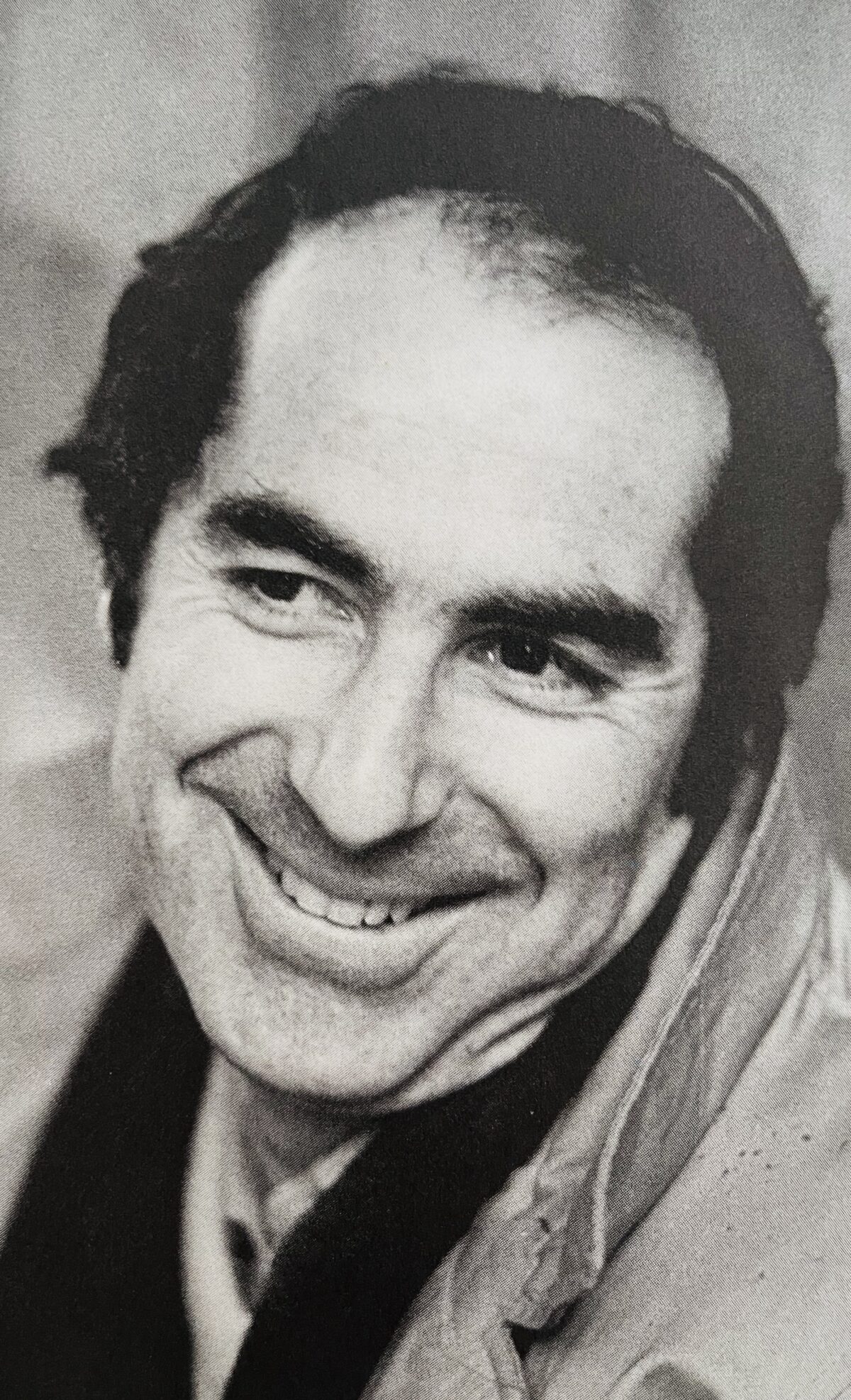
Philip Roth, the late Jewish American novelist and short story writer, was consumed by four related topics — the Jewish community, Israel, the Holocaust and antisemitism. His interlocking preoccupations were reflected in his breakout novella, Goodbye, Columbus And Five Short Stories and in intense novels such as The Counterlife, Operation Shylock and The Plot Against America.
At a gathering of writers in Israel, he admitted the obvious. “I won’t deny that I’m passionately interested in (Jews) as they manifest themselves in the lives that I know, in Jewish life for which I have a great deal of feeling and, I hate to admit it, a good deal of affection.”
As Steven J. Zipperstein sagely observes in his analytically fine literary biography, Philip Roth: Stung By Life (Yale University Press), Roth was drawn to Jews despite his limited acquaintance with Judaism. “His knowledge of the Jewish religion was, as he readily admitted, sparse. His interest in Judaism was passing at best. Yet he would probe nearly every aspect of contemporary Jewish life … Israel, the diaspora (and) the Holocaust.”
It was hardly coincidental that Holocaust survivors/writers were among his closest friends: the Italian Primo Levi, the Israeli Aharon Appelfeld, the Romanian Norman Manea, and the Czech Ivan Klima.
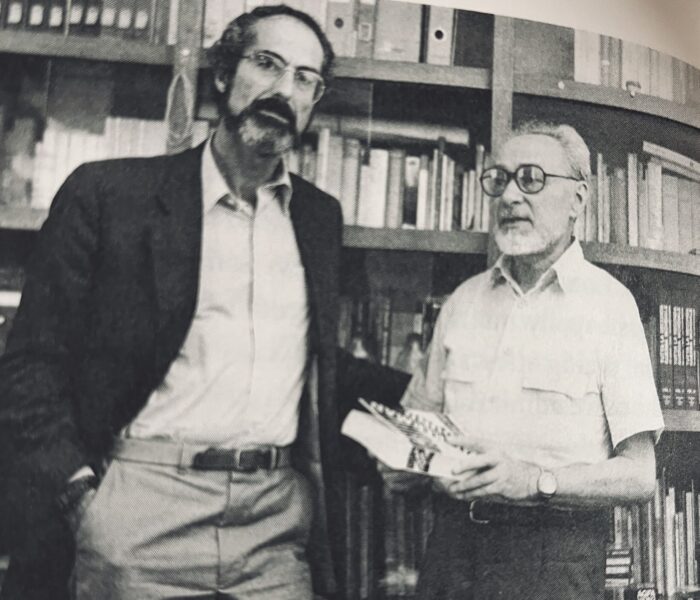
Long before he achieved fame, he was attracted to Jewish themes. The first novel he tried to write was about an American Jewish businessman who wanted to kill a German in Frankfurt in an act of revenge. He sought to write about Anne Frank, the Dutch Jewish diarist. He sold a script to Playhouse 90 about Jacob Gens, the controversial head of the Nazi-appointed Vilna Jewish Council. He wrote a short story about a Jewish refugee that was converted into an episode of Alfred Hitchcock Presents.
Zipperstein, a professor of Jewish culture and history at Stanford University, engaged Roth in lengthy conversations before his death in 2018. And he spoke to many of his friends and examined extensive archival materials. Having steeped himself in Roth lore, he appears to know him on a deeper level.
Yet, given the arc of Zipperstein’s academic interests, which range from the origins of Zionism and the development of Russian Jewry to the early twentieth century pogrom in Kishinev, it is perhaps surprising that he chose to immerse himself in the career of one of America’s most illustrious novelists.
Zipperstein begins his inquiry in the gritty New Jersey city of Newark, where Roth was born in 1933 and which provided “potent inspiration for his fiction.”
A major manufacturing center, and where French toast was supposedly invented, Newark was also the home of Abner “Longy” Zwillman, a seasoned Jewish gangster and one of the leading figures in Murder, Inc., a notorious criminal organization.
Zipperstein skillfully weaves this information into his dense narrative about Roth and his family. Herman and Bess, his parents, lived in Weequahic, a heavily Jewish neighborhood. When Herman’s shoe store failed, he worked at odd jobs before Metropolitan Life hired him as an insurance agent.
Due to Herman’s travails, he notes, Roth came of age attuned to “the vagaries of wealth” and “the differences between the classes.”
Soon after his graduation from high school, Herman urged his son to study Spanish so that he might prosper in the banana trade in Latin America, which was then dominated by Jews. Instead, Roth enrolled at Bucknell, a university with Baptist roots. This is where he considered the possibility of a career in academia and where he published his first short stories. The acclaim they garnered persuaded him that fiction was his forte.
Having completed an MA degree in English literature at the University of Chicago, Roth enlisted in the army, which assigned him to writing press releases at the Walter Reed Medical Center in Washington, D.C. There he produced Goodbye, Columbus, which won the National Book Award for fiction. “Here, as so often in his fiction, Roth borrowed promiscuously from his own life and the lives of those close to him,” says Zipperstein.
Defender of the Faith, one of the short stories in the collection, aroused the fury of Jewish readers who thought its portrayal of Jews was unflattering. Despite the flak, Roth was on a roll. By the mid-1960s, his stories had appeared in Harper’s and Esquire.
Zipperstein describes Roth’s first novel, Letting Go, as an “impressive achievement.” Portnoy’s Complaint, his blockbuster bestseller, was published in 1969 when, as the critic Adam Kirsch notes, “America’s fascination with Jews and Jewish humor was at its peak.” Three million copies were printed and it was translated into 31 languages.
The Ghost Writer, a subsequent novel, was a masterpiece, he claims, packed with penetrating insights about artistry and the Holocaust.
At this point, Zipperstein segues into his romantic interludes. While married to the British actress Claire Bloom, he had an affair with the Swedish-born physical therapist Maletta Pfeiffer. She was one of his many lovers.
In passing, he mentions Roth’s medical ailments, notably his excruciating back pain problem and his quadruple bypass surgery.
Zipperstein, too, delves into his preoccupation with Israel. It was stoked by his close friend, Bernard Avishai, the author of The Tragedy of Zionism, and by his conversations with, among others, the journalist Amos Elon and the novelist Yael Dayan, the daughter of Moshe Dayan, the ex-Israeli general.
In Zipperstein’s estimation, Operation Shylock was Roth’s “most explosive” book since Portnoy’s Complaint, “a self-consciously conflicted meditation on Israel, Jewish identity and the perpetrators of Nazism.” Its most articulate figure, he says, is a Palestinian intellectual modelled after the academic/activist Edward Said.
Roth also won the National Book Award for Sabbath’s Theater, which, Zipperstein writes, was Roth’s favorite novel.
His last major work and his first best-seller in years, The Plot Against America, documents an attempted fascist coup in the United States. It unfolds as Charles Lindbergh, an American hero, defeats Franklin Roosevelt in the 1940 presidential election and proceeds to cozy up to Nazi Germany and intimidate American Jews. Zipperstein calls it Roth’s “most transparently” Jewish novel.
Roth’s health, such as it was, took a serious turn for the worse in 2018 when his heart was found to be working at about 40 percent of capacity. Once it was clear he was dying, he accepted his fate relatively stoically.
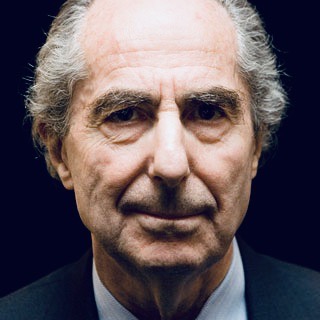
No writer in the English-speaking world commanded as much attention following his death, Zipperstein says.
The New York Times, in a front page obituary, hailed him as “prolific, protean and often blackly comic novelist who was a preeminent figure in 20th-century literature.” Newsweek praised him as an “addictive storyteller” who elicited laughs and touched hearts.
Judging by his probing and sympathetic portrayal of Roth, Zipperstein shares these assessments. In Philip Roth: Stung By Life, he has produced a nuanced biography that critically examines him both as a vital person and an amazing novelist.