Free speech, a fundamental pillar of democracy, is under fire at American universities. Once a sanctuary of open inquiry, they have become embroiled in a broader cultural war over the boundaries of free expression, a process that is reshaping higher education in the United States in particular and in the West in general.
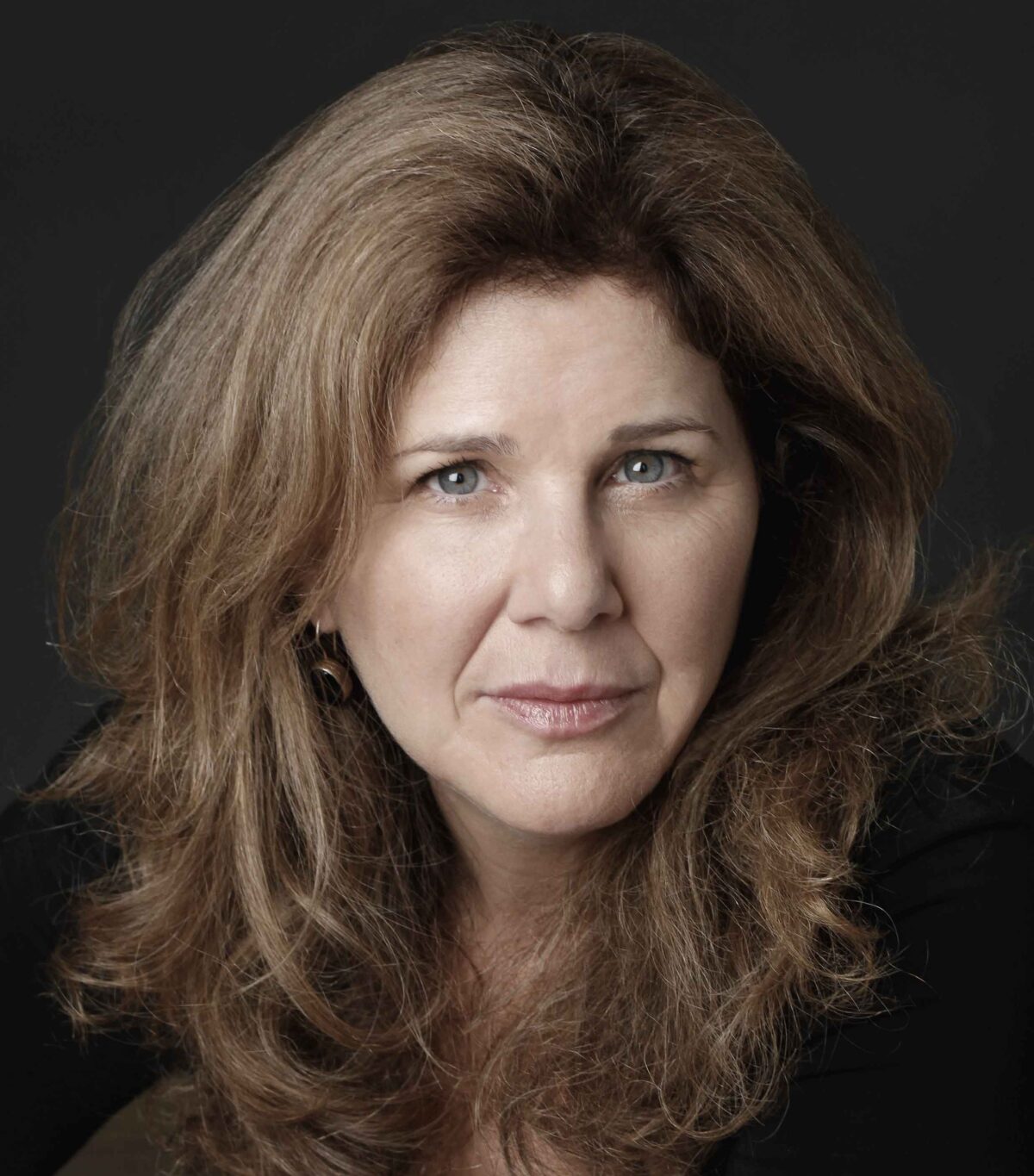
Ric Esther Bienstock, an Emmy Award-winning filmmaker from Canada, examines this devilishly complex problem in Speechless, an impassioned and thoughtful two-part documentary currently streaming on Gem, a Canadian Broadcasting Corporation platform.
In one of her introductory comments, she labels her film as perhaps “the most dangerous” of her lengthy career and compares it to “going back to school.”
She was drawn to this charged topic, she explains, because her children were about to begin their university studies. This was a source of concern to her. Universities were once places where students and faculty members wrestled with ideas, she notes. But in recent years, universities have begun to shuck off this role in the name of social justice.
A lifelong progressive, Bienstock started her journey as a neutral observer. But as she delved deeper into this issue, she grew progressively disillusioned with woke “progressives” on campus, many of whom cannot tolerate diversity of views.
Visiting universities around the country, she encountered “disruptive thinking” among students and faculty. This led her to believe that students are under pressure to “watch every word” they utter. It also led her to the disheartening conclusion that she had entered a “parallel” world in which freedom of speech is not necessarily accepted and the right to voice different ideas may be considered subversive.
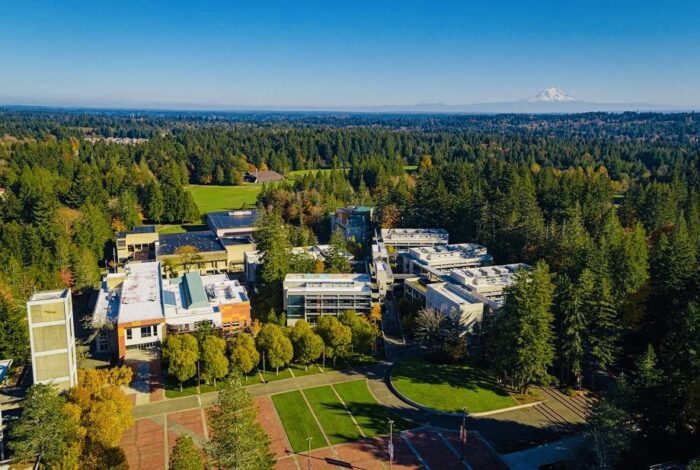
During her travels, Bienstock stopped at, among other universities, Evergreen State College in Washington, York College and Penn State University in Pennsylvania, Stanford University in California, and Cornell University in New York.
In her film, almost a decade in the making, she sets out the intellectual parameters in which universities have evolved.
Once underpinned by classical liberalism, they are increasingly guided by ideas steeped in critical theory, post-modernism and DEI (diversity, equity and inclusion), all of which have tended to suppress notions of traditional debate.
DEI, which has degenerated into a tool to enforce rigid beliefs and ideological conformity, has become entangled in the hiring of faculty, she points out. As a result, university campuses are being pulled apart.
Professors who reject the new party line jeopardize their careers. Erec Smith, a professor of rhetoric at York College, is a prime example of an academic who fell afoul of woke. Having rejected its premises, he found himself isolated and in danger of losing his job.
In her estimation, the battle lines at U.S. universities were further altered following Hamas’ one-day invasion of Israel on October 7, 2023. A wave of campus protests blamed Israel for the attack, while progressives framed it as a reasonable form of Palestinian “resistance.”
A conflict thousands of miles away thereby polarized American academia.
Christopher Rufo, a conservative commentator interviewed by Bienstock, described October 7 as “a barbaric act of savagery and brutality,” but academics on the left and far left disagreed with his assessment.
At Cornell University, a historian hailed the massacre of 1,200 Israelis and foreigners as “exhilarating.” He portrayed it through the lens of “anti-colonial resistance,” thereby exonerating Hamas, an Iranian proxy.
The anti-colonial theories that he and like-minded academics espouse have aligned with antisemitism, she warns. However, she believes that U.S. President Donald Trump has “weaponized” his condemnation of antisemitism as a device to uproot liberal ideas on campuses.
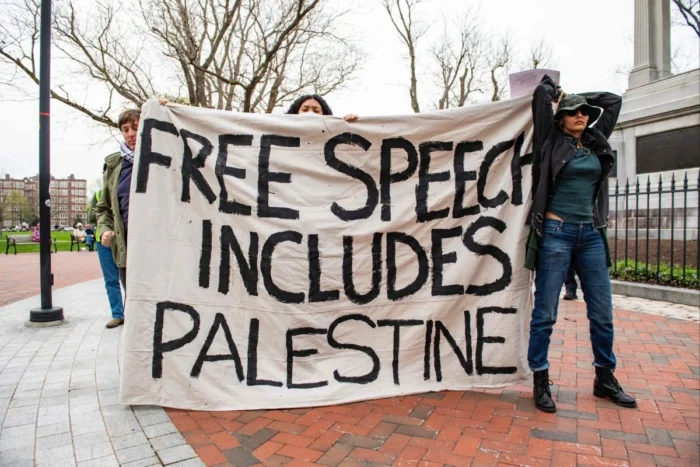
To Bienstock, professors of this ilk have created a hostile anti-Zionist environment, which has unsettled most Jewish students. Pro-Palestinian protesters who built encampments on the grounds of universities in 2024, in violation and contempt of their regulations, left no room for dialog, she argues.
Although she does not explicitly identify as a Zionist, Bienstock seems concerned that Zionism has been converted into a dirty word by Palestinians and their supporters. She also calls attention to the fact that many Jewish students feel threatened by the phrase “globalize the intifada.”
Bienstock appears to have no patience for a double standard version of morality whereby progressives are free to voice their opinions, while pro-Zionist Jewish students are forbidden to do the same.
In closing, she issues an urgent appeal.
Free speech must be defended to preserve democracy and normal conversation. “That’s what at stake,” she warns. “So we better start talking again.”
Bienstock’s implicit message is clear. Campus zealots must not be allowed to gain the upper hand in this ideological struggle, which has yet to run its course.