
Philippe LeGuay’s The Story of Annette Zelman is a wrenching, heart-felt drama about the intersection of love and betrayal in Vichy France. Now available on the ChaiFlicks streaming platform, it is based on real events.
During the Nazi occupation from 1940 onward, a Jewish fine arts student named Annette Zelman (Ilona Bachelier) fell in love with Jean Jausion (Vassili Schneider), a Catholic from a conservative, Vichy-leaning family. Their relationship was frowned upon by Jean’s antisemitic parents, Hubert (Laurent Lucas) and Christiane (Julie Gayet), creating a frisson of friction.
France, the first Western European country to grant Jews full civil rights, rescinded its emancipatory measures with the emergence of the pro-German Vichy regime under the leadership of Henri Philippe Petain. As a result, Annette and her family were subjected to an array of discriminatory restrictions that rendered them second-class citizens.
The anti-Jewish edicts in France were not implemented at once, as the film suggests in an early scene. Annette and her fellow classmates, mostly non-Jews, socialize in a cafe, as if nothing is amiss. The focus is on Annette’s brief dalliance with Claude, a dashing young man who tries to seduce her.
Attractive and vivacious, she is really interested in Claude’s friend, Jean, a quiet, soft-spoken budding novelist. Their fairy tale romance seems far removed from the disaster imperilling the Zelmans and the Jewish community of France. The first tangible hint of what lies ahead is dropped when Annette learns that she and other Jewish students in the course have been expelled.
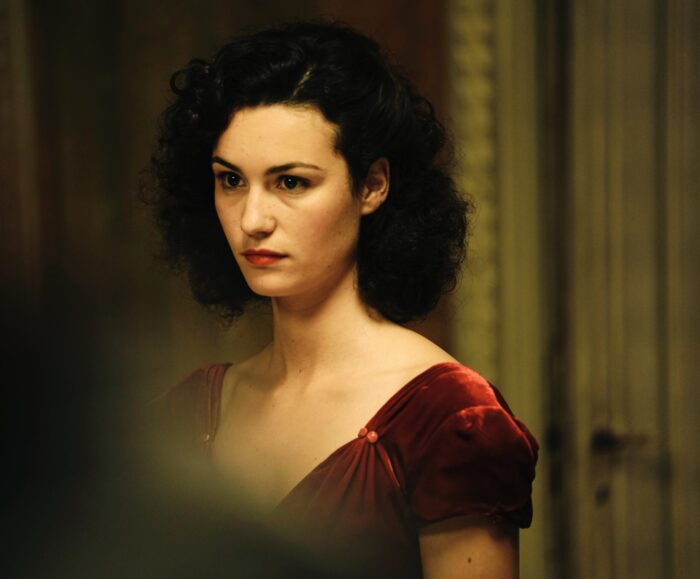
Yet antisemitism is not her sole problem. Before she introduces Jean to her working-class parents, Moishe and Kaila, she teaches him a few choice phrases in Yiddish on the assumption that they will soften the blow of her serious liaison with a Christian. Moishe and Kaila have already registered their disapproval of the “goy” she is dating, and Annette thinks she can disarm them if Jean mouths a few nice sentences in Yiddish.
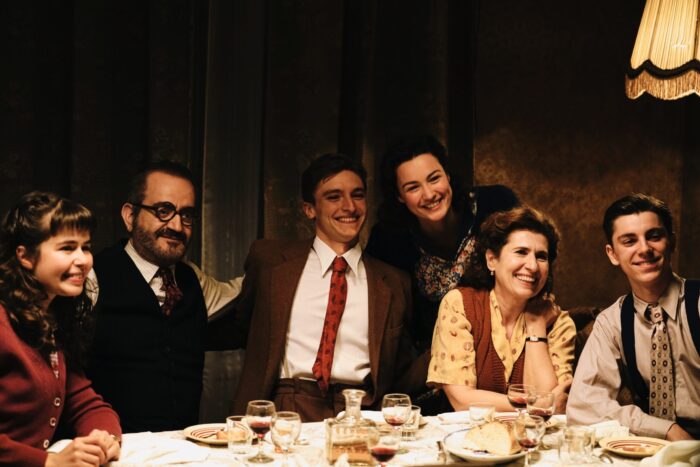
It’s a clever, though facile, tactic, yet it works. Annette’s warm-hearted parents are suitably impressed with Jean. The scene where he meets them for the first time unfolds against the backdrop of a notorious exhibition in Paris in which Jews were defamed, belittled and marginalized. LeGuay’s juxtaposition contributes weight, immediacy and a sense of menace to this arresting film.
Bachelier’s portrayal of Annette is spot on. She knows that Jews are endangered, yet she tries to drown her sorrows in the hope that conditions will somehow improve. Schneider delivers a fine performance, but Bachelier overshadows him.
LeGuay adds another layer of tension and uncertainty to the narrative when Annette meets Jean’s snotty, upper-class parents. Hubert and Christiane are clearly disappointed that their beloved son’s girlfriend is Jewish.
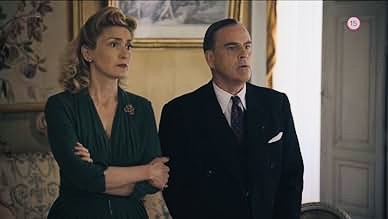
At a dinner party at their home, the air is thick with antisemitic insults. Jean is embarrassed and assures Annette that he despises their bigotry. Buoyed by his assurance, she accepts Jean’s marriage proposal. His parents are less than thrilled. They fear that their social position will be jeopardized and that their son’s career will be ruined.
In the meantime, the Nazi/Vichy oppression of French Jews continues at full force, prompting Annette’s parents to leave Paris for a safer locale. She stays behind with Jean, assuming that his parents will protect her.
In a sequence attesting to the temper of the times, Jean’s well-connected father attempts to win a racial exemption for Annette, but his Gestapo interlocutor refuses to budge. Mixed marriages threaten the Aryan race, he argues, slamming the door in Hubert’s face.
Hubert, as played superbly by Lucas, is a tragic figure. On the one hand, he and his wife subscribe to Vichy’s antisemitic ideology. On the other hand, he sympathizes with Annette’s predicament and tries hard not to alienate his son.
In due course, she is arrested and informed that she is under investigation for “subversive activities,” an obviously trumped up charge. She writes a letter to Jean in which she expresses the suspicion that his parents were involved in her incarceration.
Confronting his mother, he asks her point blank whether she dislikes Jews. His question, of course, is superfluous, but she offers an explanation. Jews are “different,” and he will not be happy with Annette, she replies.
As the situation grows increasingly dire for Jews, Jean threatens to disown his father if he does not free Annette. By this juncture, she has been moved to camp outside Paris where Jewish women are held in captivity.
On the advice of a Vichy official, Jean annuls his engagement to Annette. He has been told that it will lead to her release.
There are no grounds for optimism in The Story of Annette Zelman. Jews are doomed by both Vichy France and Nazi Germany. In accord with this reality, LeGuay presents a realistic picture of a horrible interregnum in modern French history.