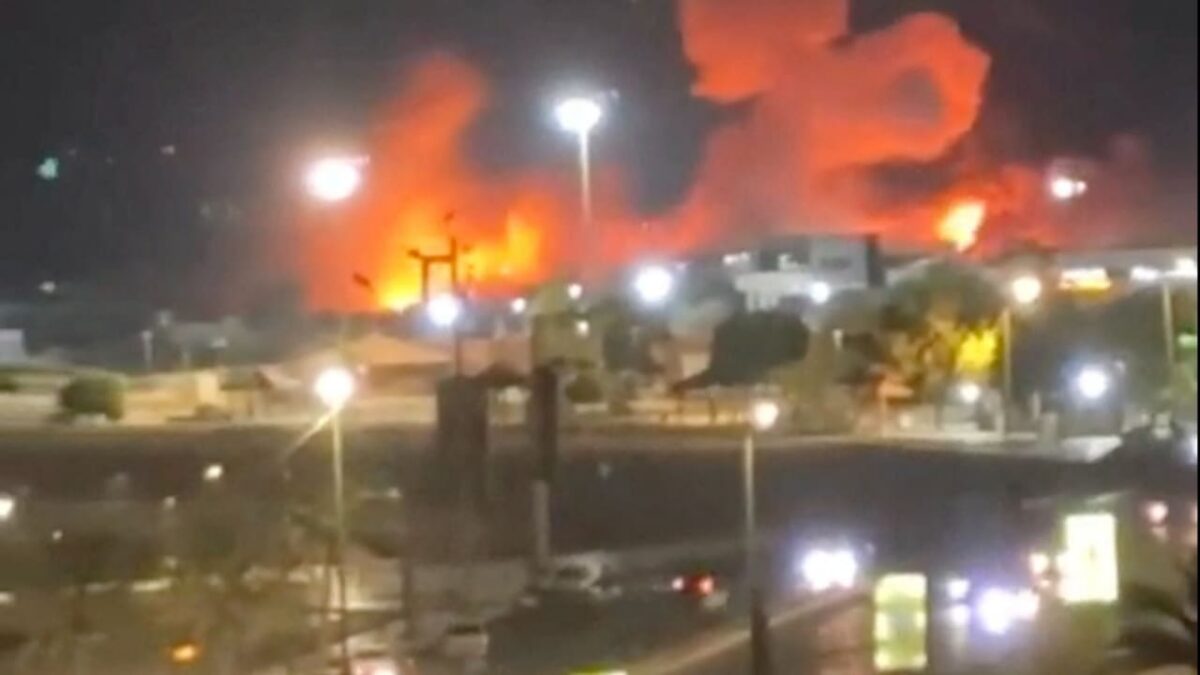
The latest tit-for-tat skirmishes between the United States and Iran, plus the bitter war of words these battles have set off, point to one inescapable conclusion. The memorandum of understanding these longtime adversaries signed last month is falling apart and may crumble altogether.
As the five-day state funeral of Iranian supreme leader Ayatollah Ali Khamenei concluded, the U.S. accused Iran of firing at commercial vessels in the Strait of Hormuz and violating the memorandum of understanding, a vaguely-worded document open to various interpretations.
Iran, which seeks control of the strait, has denied the accusation and claimed it is diligently fulfilling its commitments under the memorandum of understanding, which provides a 60-day window for both sides to negotiate a permanent end to their war.
Having broken out after the United States and Israel struck Iran in joint air strikes on February 28, it wound down following a ceasefire in April and the signing of the memorandum of understanding in mid-June.
Since then, there have been periodic U.S.-Iranian clashes in and around the Persian Gulf.
U.S. President Donald Trump hoped that diplomacy would lead to the full reopening of the strait, which Iran blockaded after the war erupted. This international waterway is vital for the global economy because about 20 percent of the world’s oil and liquefied natural gas flows through it.
Iran, having signalled its intention to upend the status quo ante and impose tolls or service fees on ships using the strait, has warned the United States not to interfere in its management of the waterway.
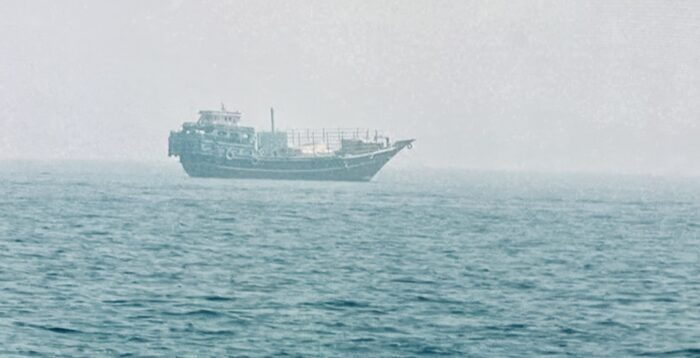
In the past 48 hours, Iran reportedly fired projectiles at three ships in the strait, two of which are registered with Qatar and Saudi Arabia. They were struck near Oman, which has set up a temporary transit corridor hugging its coastline. Iran has condemned the Omani arrangement. Its opposition is based on its demand that all ships must use the designated route in its territorial waters.
Iran has denied responsibility for the attacks, condemned the U.S. strikes as an “overt act of aggression,” and vowed to inflict “a crushing response.”
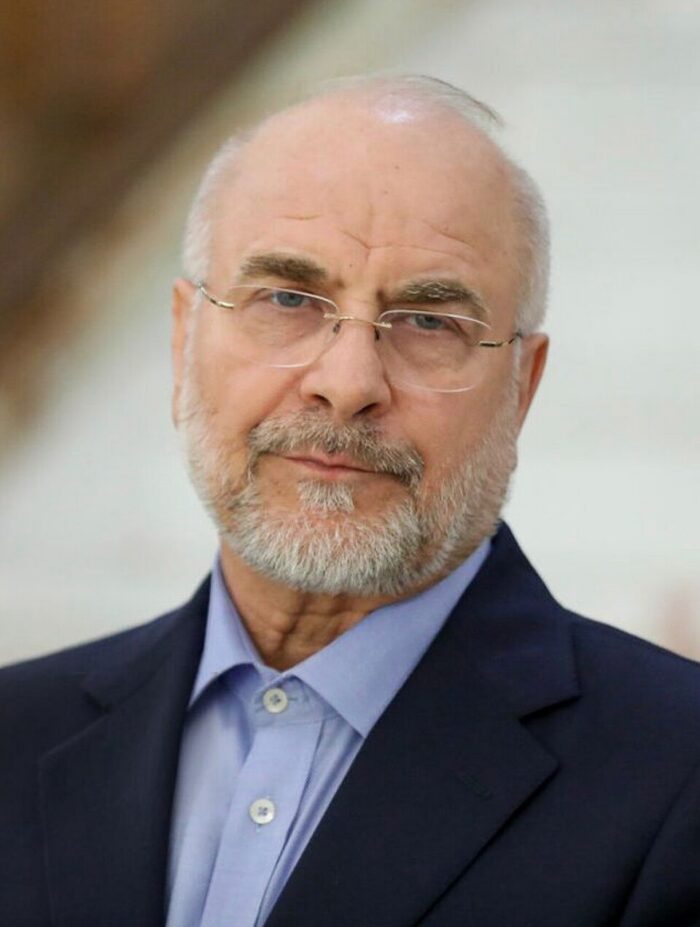
Mohammad Bagher Ghalibaf, Iran’s top negotiator and the speaker of its Parliament, has accused the United States of violating the memorandum of understanding.
During the first round of hostilities, U.S. forces struck Iranian air defence and coastal surveillance systems, surface-to-air and anti-ship cruise missiles, and drone sites in the southern cities of Sirik and Bandar Abbas.
Iran hit back, with the Islamic Revolutionary Guards Corps striking 85 U.S. military sites in Bahrain, including the U.S. Fifth Fleet’s naval base, the Ali Al Salem Air Base in Kuwait, and the port of Khalifa Bin Salman in Bahrain. In addition, Iran claimed to have downed an American MQ-9 drone.

Following these exchanges, Trump denounced the Iranian leadership and said that the memorandum of understanding was effectively dead.
“I think it’s over. I don’t want to deal with them anymore,” he said at a NATO summit in Ankara, Turkey. “They’re scum …. They’re … vicious, violent people. And if they had a nuclear weapon, they’d use it. As far as I’m concerned, it’s over.”
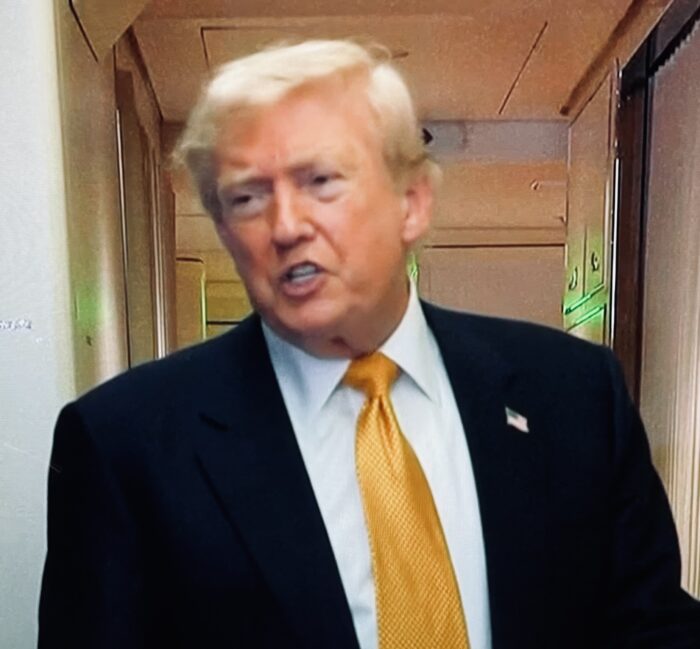
“They’re liars, they’re cheats, they’re sick people,” he added. “Frankly, I don’t want to waste my time with them.” But in a conciliatory aside, he said he would allow intermittent U.S. negotiations with Iran to continue. As he put it, “I’ll let our wonderful negotiators keep talking if they want, but I don’t see it. I don’t like these people.”
In line with his anger, Trump announced he would withdraw a U.S. Treasury concession that had allowed Iran to sell oil in international markets. He also threatened to reinstate the U.S. blockade of Iranian ports and warned of imminent air strikes to thwart Iran’s ability to threaten ships in the strait.
On July 9, U.S. aircraft struck a section of the railway line connecting Tehran to the northeastern city of Mashhad, where Khamenei was due to be buried on July 9. In its latest reprisals, Iran struck U.S. bases in Qatar, Kuwait, Bahrain and Jordan.
Hardliners in Iran sent a harsh message to Trump through the Iranian media. Fars, in an editorial, blasted the memorandum of understanding and called for the cancellation of future talks. The Tasnim news agency urged Iranian officials to burn the memorandum of understanding.
Both of these outlets are close to the Islamic Revolutionary Guards Corps, which effectively has ruled Iran since Khamenei’s assassination by the U.S. and Israel on the first day of the war.
Iranian Foreign Minister Abbas Araghchi, meanwhile, warned Trump that his threats will force Iran to pull out of negotiations. Trump recently threatened to “finish the job” if the U.S. and Iran fail to sign a peace agreement.
Despite the most recent clashes, the U.S. and Iran may press on with their on-again, off-again negotiations. Trump claims that Iran is very interested in resuming talks.
For a variety of reasons, neither side wants to restart the war. Yet the level of trust between them is so low that periodic clashes are bound to occur in the near future, causing angst throughout the Middle East.
It is doubtful whether they will be able to resolve their deep-seated differences, which turn on a variety of issues ranging from Iran’s nuclear program to its support of regional proxies like Hezbollah and Hamas.
And it is debatable whether the hazy memorandum of understanding will facilitate this complex process.
The United States and Iran, which have been at loggerheads since the late 1970s, seem destined to be enemies for the foreseeable future, dooming all hopes that their last war may lead to peace.