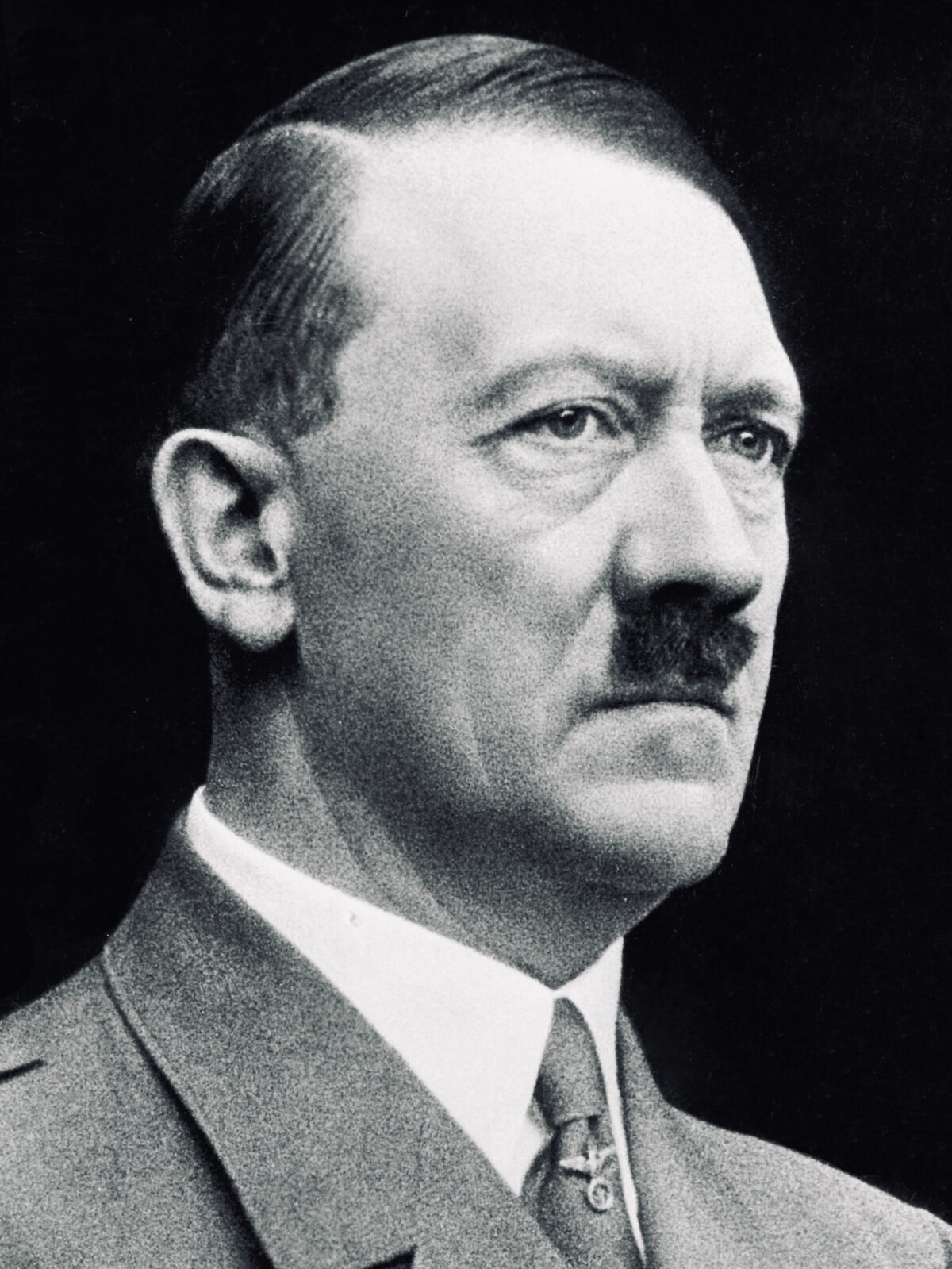
Richard J. Evans, in Hitler’s People: The Faces Of The Third Reich (Penguin Press), focuses on a rogue’s gallery of Nazis who created a fascist dictatorship and drove Germany into war, genocide and defeat in World War II.
“Only by examining individual personalities and their stories can we reach an understanding of the perverted morality that made and sustained the Nazi regime,” writes Evans, a distinguished historian and scholar of modern Germany.
His biographical approach, which was unfashionable after the war, is modelled after Joachim Fest’s classic work, The Face Of The Third Reich, published in 1963. It’s a sound method, enabling readers to better understand the mindset of the Third Reich’s elite.
Evans’ book is divided into four segments. The first part examines Adolf Hitler, the leader of the Nazi Party and Germany’s chancellor from 1933 to 1945. The second one focuses on his circle of subordinates. The third zeroes in on the enablers and executors of national socialist ideology. The fourth and last section surveys Hitler’s followers among ordinary Germans.
Evans, a former professor of history at Cambridge University, succeeds in drawing vivid and incisive portraits of “otherwise normal” Germans who carried out or approved unprecedented atrocities against Jews during the Holocaust. Evans has a masterful grasp of his topic and writes in a fluid and accessible style that both general readers and experts are likely to appreciate.
Unsurprisingly, he leads off with Hitler, without whom, he correctly notes, there would have been “no Third Reich, no World War II, and no Holocaust.” Which is precisely why Hitler has been the subject of countless biographies ranging from Alan Bullock’s Hitler: A Study In Tyranny to Volker Ullrich’s two-volume Hitler: A Biography.
Evans launches into his introductory essay with a bold assertion: “For the first thirty years of his life, Adolf Hitler was a nobody.”
An aspiring artist rejected by the Academy of Fine Arts in Vienna, Hitler as a young man led an aimless existence, subsisting on his mother’s inheritance, an orphan’s pension, handouts from relatives, and the sale of paintings copied from postcards. “Of all the Nazi leaders, he was the most declasse,” Evans says.
Although an Austrian by birth, he enlisted in the German army, signing up for service only two weeks after the outbreak of World War I. A dispatch runner, he won an Iron Cross for exceptional bravery. He took control of what would be the fledgling Nazi Party due to his exceptional oratorical skills.
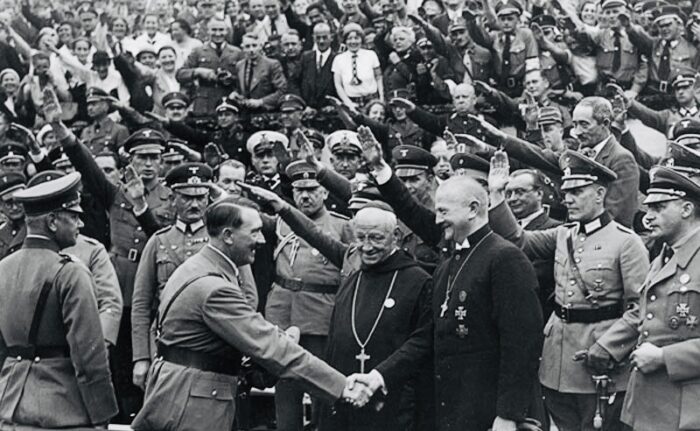
Hitler’s obsessive antisemitism was formed in Vienna, as he claims in Mein Kampf, his turgid manifesto that would become a bestseller and earn him wealth. As Evans expertly explains in voluminous detail, Germany’s ignominious defeat in the war exacerbated his antipathy toward Jews.
The Nazi Party never won more than about a third of the vote in elections. Yet its status as the party with the greatest plurality prompted the aging president, Paul von Hindenburg, to appoint Hitler as chancellor. He and his fellow conservatives mistakenly thought they could control and sideline him. Instead, Hitler proceeded to create a dictatorship.
Evans suggests that Hitler sought not only to reestablish Germany as a great power after the humiliating Treaty of Versailles, but to rule the world. The “moment of Hitler’s greatest triumph” occurred when France abjectly submitted to unconditional surrender in 1940 in the same French railway carriage as Germany had surrendered in 1918
Hitler’s genocidal campaign against Jews unfolded first in occupied Poland, where the major extermination camps were built, and then in the rest of Europe. Hitler was truly manaical. Evans quotes him as saying in 1942 that he would be satisfied only with only the “absolute extermination” of European Jews.
Evans breaks no new ground in rehashing the assertion that Hitler committed his biggest strategic errors in 1941, firstly by invading the Soviet Union and secondly by declaring war on the United States. Yet they are cardinal points well worth repeating.
Even as German losses in the war mounted to catastrophic proportions, Hitler blamed the setbacks on “the Jewish international world conspiracy.”
Evans’ conclusion is clear and persuasive. Hitler’s “ideological obsessions” provided the “essential foundation” for everything that happened in Germany from 1933 onward.
Hermann Goring, Hitler’s second in command, was unusual among Nazi supporters inasmuch as he hailed from a cosmopolitan background (his father was a career diplomat) and his godfather, Hermann von Eppenstein, was of partial Jewish descent.
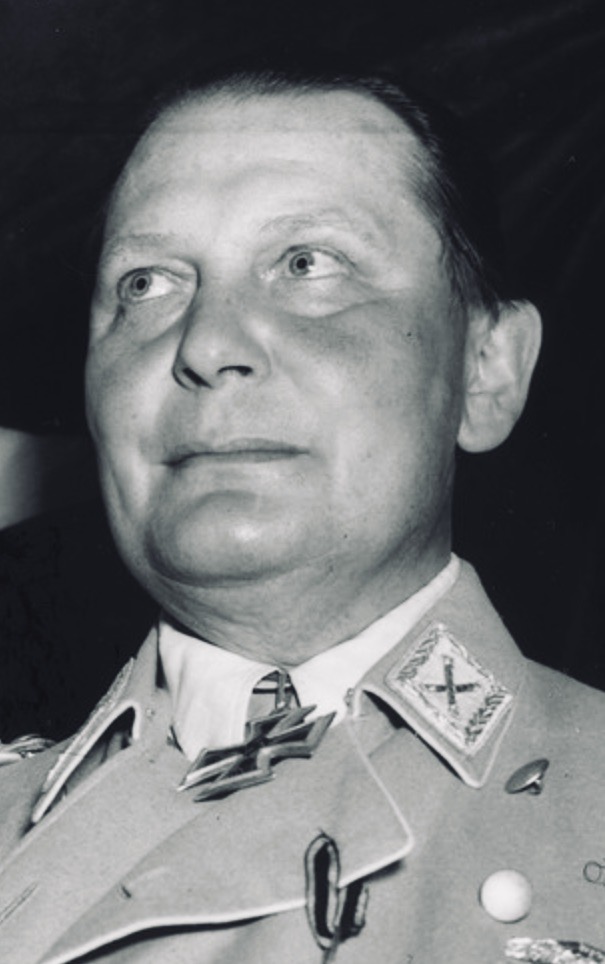
An opportunist, he joined the party after hearing Hitler delivering one of his trademark fiery speeches. Prior to 1939, he prepared the economy for the war, commanded the Luftwaffe, and played a central role in the disenfranchisement of German Jews. Evans claims that the antisemitism in his early writings were “perfunctory and conventional.” Nevertheless, he was instrumental in the implementation of the Holocaust.
Joseph Goebbels, the minister of propaganda, fulfilled his mission by whipping up antisemitic fervor through the media. He secured Hitler’s approval for Kristallnacht, the nation-wide pogrom in 1938. He was heavily involved in the expulsion of Jews from Berlin. He took a personal interest in the development of two viciously anti-Jewish films, Jud Suss and The Eternal Jew.
As Evans notes, the diaries he left behind are his legacy. “They reveal him to have been unscrupulous, violent, murderous … and above all deeply committed to the paranoid antisemitism that led to the extermination of European Jews.”
Like nearly every high-ranking Nazi, Heinrich Himmler — the head of the SS police force and the chief architect of the Holocaust — formed his noxious views following Germany’s defeat in the war and the economic crisis that afflicted the country in the early 1920s. As a member of an extreme right-wing paramilitary unit, he was involved in the 1922 assassination of Walther Rathenau, Germany’s first and only Jewish foreign minister.
Expressions of antisemitism in his early letters and speeches were relatively rare, but Himmler was nonetheless a fanatical antisemite. Speaking to senior SS officers in Posen in 1943, he likened the mass murder of Jews to a “glorious page in our history” and commended its perpetrators as “decent” and “tough.”
Alfred Rosenberg, the editor of the party’s daily newspaper, Volkischer Beobachter and the official in charge of German policy in Nazi-occupied Eastern Europe, provided “a systematic underpinning” for the regime’s antisemitism. He believed that the Protocols of the Elders of Zion, a Czarist forgery, expressed the unvarnished truth about Jewish “subversion, and that the Weimar Republic marked the triumph of Jewish power. In 1943, he spoke of the necessity of exterminating “the last remains of Jewish thought and existence.”
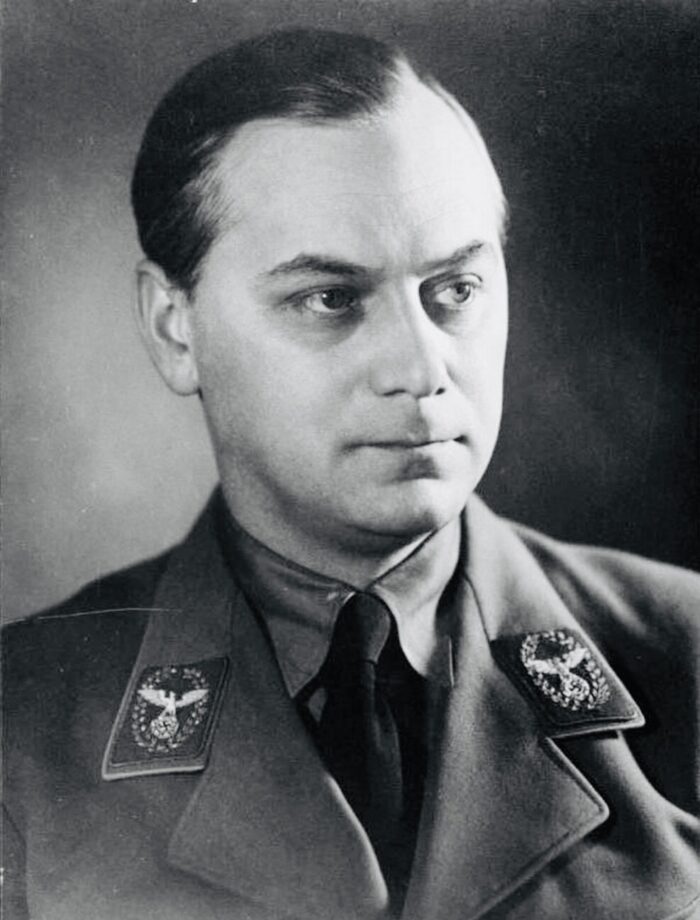
At Hitler’s behest, he created a museum in Frankfurt on the so-called Jewish Question, seizing books, artworks and cultural objects from Jewish owners and institutions in Nazi-occupied nations.
Julius Steicher, a crude version of Rosenberg, edited the antisemitic scandal sheet Der Sturmer, which Evans brands as “the most notorious of all the Nazis’ periodicals.” The slogan on its front page declared, “Jews are our misfortune.” Cartoons inside portrayed Jews as insects, vampires and bacteria. His message was simple. Jews were responsible for Germany’s ills, and as soon as they disappeared, Germany would be great again. By 1935, the paper’s circulation had shot up to more than 500,000. Many Germans, particularly those from the middle class, found it vulgar.
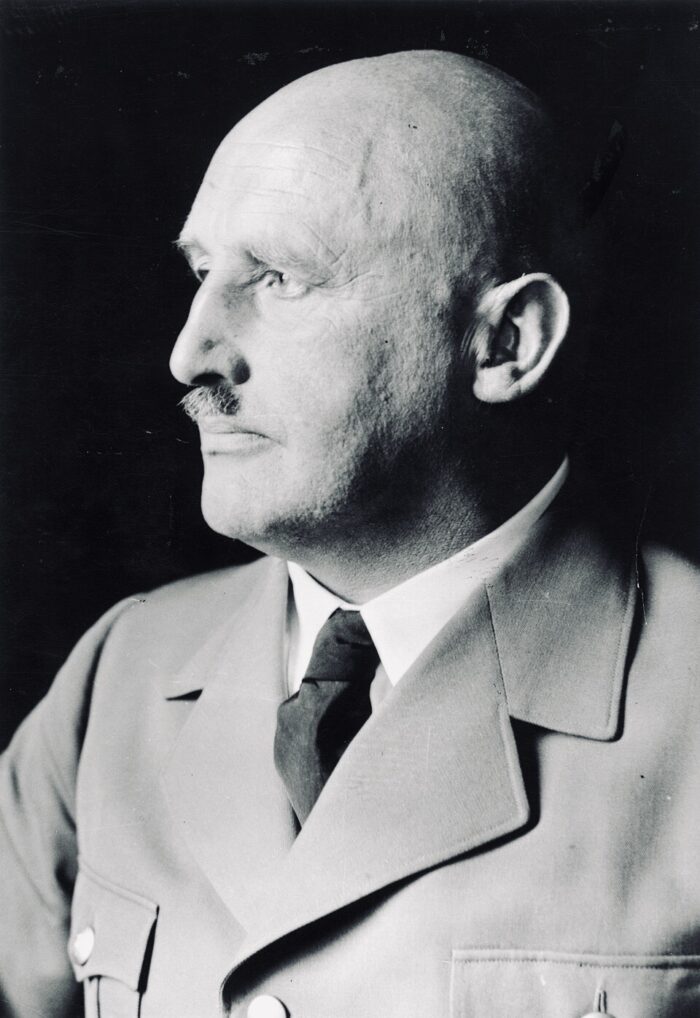
One of Hitler’s most devoted followers, he was appointed gauleiter of Franconia in 1933. Condemned to death after the war for incitement to murder, he was hanged in 1946, like several high-ranking Nazis.
Albert Speer, Hitler’s architect, was the youngest man in the Nazi leadership. From 1942 onward, he was the minister of munitions. After the war, he insisted he had been an apolitical technocrat who merely shared the fuhrer’s interest in urban design. Evans, of course, does not buy this tall tale.
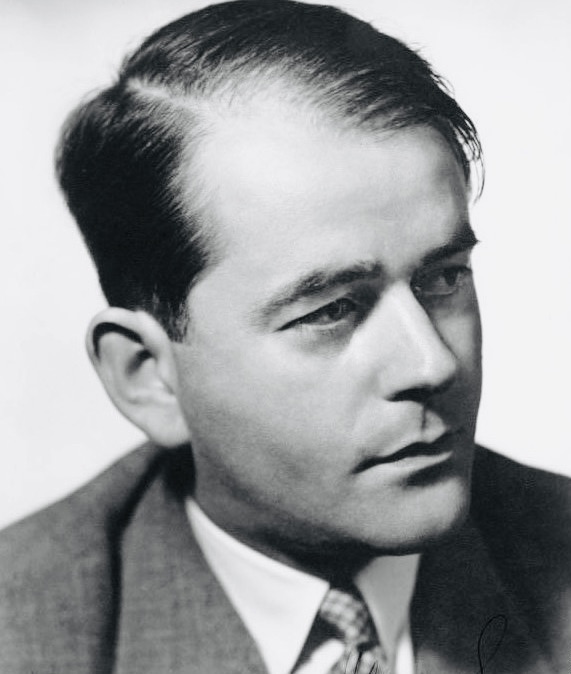
The facts tell a far different story. Speer requisitioned millions of forced laborers, who were subjected to appalling conditions. And he supplied the materials used to expand the Auschwitz-Birkenau concentration camp in Poland. At his trial, he distanced himself from the regime, but documents incriminated him as a prime enabler of Nazi crimes.
Reinhard Heydrich, the head of the Gestapo and the SS, was physically the archetype of a blond, blue-eyed Aryan. Yet he was dogged by rumors that he was of Jewish descent. As a naval officer cadet, he was generally regarded as Jewish. But as Evans points out, he had no known Jewish connections.
From 1935 onward, Heydrich deployed increasingly harsh measures on German Jews. During Kristallnacht, he saw to it that the police did not intervene in the violence directed at Jews. While he was not a fanatical antisemite like Rosenberg or Streicher, he was driven by a quest to fully enforce Nazi racist legislation. In 1941, Goring gave him written authorization to prepare the Final Solution. Heydrich chaired the infamous Wannsee conference on January 20, 1942. Following his assassination by Czech partisans four month later, the Nazis, under Aktion Reinhard, intensified their killing spree of Polish Jews.
Hans Frank, the governor-general of occupied Poland, was “a highly educated man steeped in the principles and practice of German culture,” as Evans observes. He was outwardly civilized, yet remarkably cruel. He regarded Jews with contempt, comparing them to lice. He set up the system of sealed ghettos and Jewish Councils and lowered food rations in ghettos to a level well below what was needed for survival.
After a meeting with Hitler in Berlin in December 1941, he told his officials, “We must annihilate the Jews wherever we come across them, and wherever it’s any way possible.” Frank achieved his gruesome goal. Ninety percent of Polish Jews were killed or starved to death by the Nazis.
Adolf Eichmann, the only upper-echelon Nazi executed by Israel, was the ultimate bureaucratic murderer. “I had nothing to do with killing Jews,” he told his interrogator in Jerusalem before his show trial. Yet, as a banal pen pusher, he organized the deportation of hundreds of thousands of Polish Jews to Treblinka.
And in Hungary, in 1944, he supervised the transport of 440,000 Jews to Auschwitz. He regarded it as a logistical problem to be solved efficiently. In a speech to his subordinates in Berlin, he said that “the knowledge of having five million Jews on his conscience gave him such extraordinary satisfaction that he would leap into his grave laughing.”
In what is doubtless one of his finest essays, Evans draws an exquisitely nuanced portrait of Luise Solmitz, a Hamburg school teacher who supported Nazism but was not a fanatical Nazi herself. Her story illustrates the willingness of Germans from the conservative nationalist camp to “go along” with the agenda of the Nazis.
Never a Nazi Party member, she supported Hitler despite the fact that her husband, Friedrich, was a Jewish convert to Christianity. He did not inform her of his Jewish background before they were married. Having found out, she remained a loyal and loving wife and adopted a critical view of the “excessive” antisemitic violence of the stormtroopers. That being said, she and her husband felt no affinity with the German Jewish community.
Under the 1935 Nuremberg Laws, which stripped Jews of their German citizenship and forbade them from marrying Christians, she and her husband were classified as living in a “privileged mixed marriage.” Friedrich Solmitz, however, lost his citizenship rights. And in keeping with Nazi policy, he was assigned the first name of Israel in his official identity card. Their daughter, having been classified as a mixed-race German, was subjected to a severe restrictions.
Their friends distanced themselves from the couple, and throughout the war, she was gripped by the fear that he would be deported to an extermination camp. With the collapse of the Third Reich, Solmitz vented her fury in a diary passage. National socialism, she wrote, “brought together all the crimes and depravities of all the centuries.”
And yet her sympathy for the Jewish victims of Nazism remained strictly limited. At the end of the war, when British occupation forces billeted Jewish refugees from Belgium in their home, she and her husband voiced vigorous objections until they were finally removed.
In the final chapter, Evans offers a succinct summary of the Nazi leaders he profiles.
By the standards of the day, they were completely normal in much of their lives. Many were well-read or played a musical instrument with some proficiency. What they had in common was the shattering emotional experience of a sharp loss of status and self-worth. Germany’s unexpected defeat in World War I, plus the economic disaster that followed, radicalized them.
“Hitler offered them a way out of their feelings of inferiority,” writes Evans. On the far right, disaffected Germans blamed a cabal of Jews, communists and socialists for all their problems.
Spinning outlandish conspiracy theories, Nazis were often ridiculed prior to Hitler’s ascent. Their critics suffered the consequences after Hitler was appointed chancellor. Germans would learn that the new political order would utterly transform the country, much to Germany’s detriment.