
African and Jewish Americans have been bound together in a deeply intertwined relationship despite their historical, religious and cultural differences and divergent priorities.
Since the formation of the American republic more than two centuries ago, they have been mocked and feared as they have tried to tear down the walls of hatred and prejudice, says Henry Louis Gates, Jr., the African American historian and host of Black and Jewish America: An Interwoven History.
The four-part PBS series begins on February 3 at 9 p.m. (check local listings) and continues on February 10 and 17 starting at the same time.
Ambitious in scope and serious in tone, it traces the settlement and interactions of African Americans and Jews in the United States, a flawed democracy whose defining ethos was white supremacy for long periods of time.
Gates discusses these issues with his African American and Jewish guests at various venues, including a Passover table. Adopting a measured approach, he draws a comprehensive picture of the vicissitudes of Black-Jewish relations.
The first Africans arrived in pre-independent America in the early 17th century and were soon enslaved. Early Jewish settlers had a far different experience, finding a sanctuary in the new republic, whose constitution protected religious freedom. In a 1790 letter reflecting this spirit of tolerance, the first American president, George Washington, conveyed his good wishes to the congregants of a Rhode Island synagogue.

Being Caucasians, Jews were regarded as members of the privileged white community. Judah Benjamin, a slave holder in the southern plantation system, served as secretary of state during the Confederacy. In spite of his exalted status, antisemites demeaned him.

Blacks, having been oppressed by slavery and Jim Crow laws, left the southern states in droves and headed northward to cities like Chicago and New York. At the same time, toward the end of the 19th century, 2.5 million East European Jews, weighed down by antisemitism and poverty, immigrated to the United States. Some African American newspapers published stories of the pogroms that impelled them to leave Europe.
As Gates points out, Jews were instrumental in the establishment of the National Association for the Advancement of Colored People (NAACP), which emerged in 1908 after an anti-Black riot in Springfield, Illinois. One of its first presidents, Joel Spingarn, was Jewish. He and his friend, W.E.B. DuBois, a towering African American intellectual, believed that Jews and Blacks should form an alliance.

Julius Rosenwald, the founder of the Sears Roebuck department store empire, and his colleague, the African American scientist Booker T. Washington, believed that education was a pathway to freedom. In a remarkable partnership, they built a network of schools for Southern Black children.

Gates lists two events in the first quarter of the twentieth century that negatively affected Jews: the 1915 lynching of Leo Frank in Georgia, and the passage of restrictive immigration regulations in 1924, which virtually closed the United States to Jewish, Asian, Black and southern European immigrants.
Alongside these setbacks, universities imposed enrollment quotas on Jews, while social clubs banned Jewish membership.
Blacks, in the meantime, faced the onerous “color line,” the panoply of restrictions that blocked their upward mobility at every turn. At this fraught moment, Gates and his guests agree, Jews and African Americans realized that antisemitism and anti-Black bias required them to band together to fight racism.
In the next episode, Gates deals with their cultural connections.
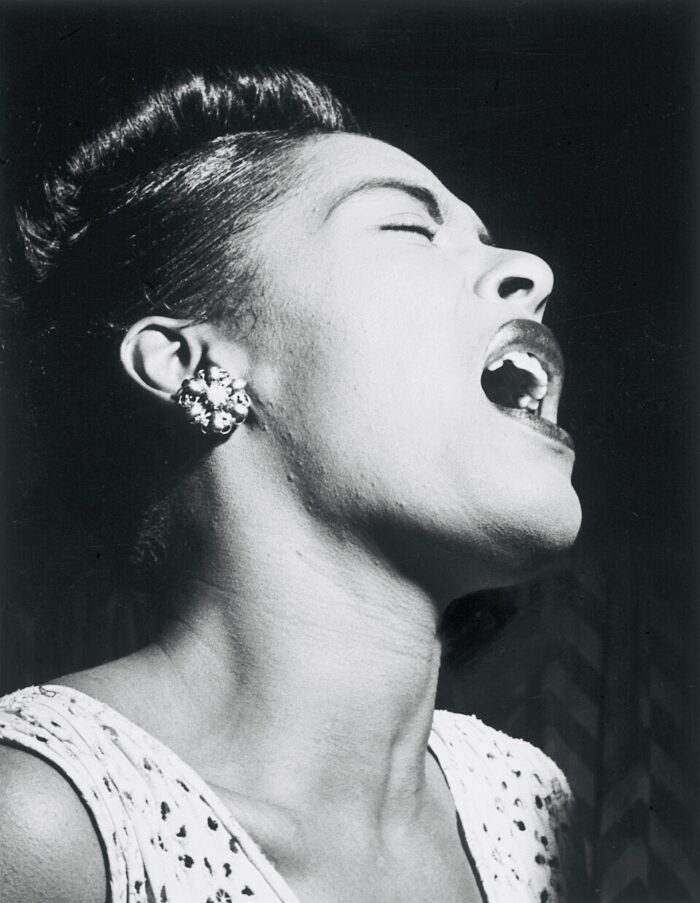
Strange Fruit, an iconic song written by a Jewish teacher from Now York, was sung by the irrepressible Billie Holiday on the Commodore label, a record company owned by Jews. Jazz, a school of music pioneered by Blacks, was embraced by Jewish Americans. By no coincidence, Louis Armstrong’s manager was Jewish.
The Hollywood movie industry, whose founders were Jewish, churned out films that, with very few exceptions, offered African American actors only minor and stereotypical roles.
Economic and social disparities between Jews and African Americans widened after World War II, creating additional tensions and resentments.
While DuBois supported Jewish statehood, Ralph Bunche, an African American diplomat, negotiated an armistice that ended Israel’s first war with the Arabs, an achievement that earned him the Nobel Prize for Peace.
Jews and African Americans battled restrictive covenants in real estate, but Levittown, a novel cookie-cutter housing project in Long Island, New York, developed by a Jewish entrepreneur, excluded Black buyers.
The third episode documents the flowering of the Jewish-Black alliance during the civil rights movement era.
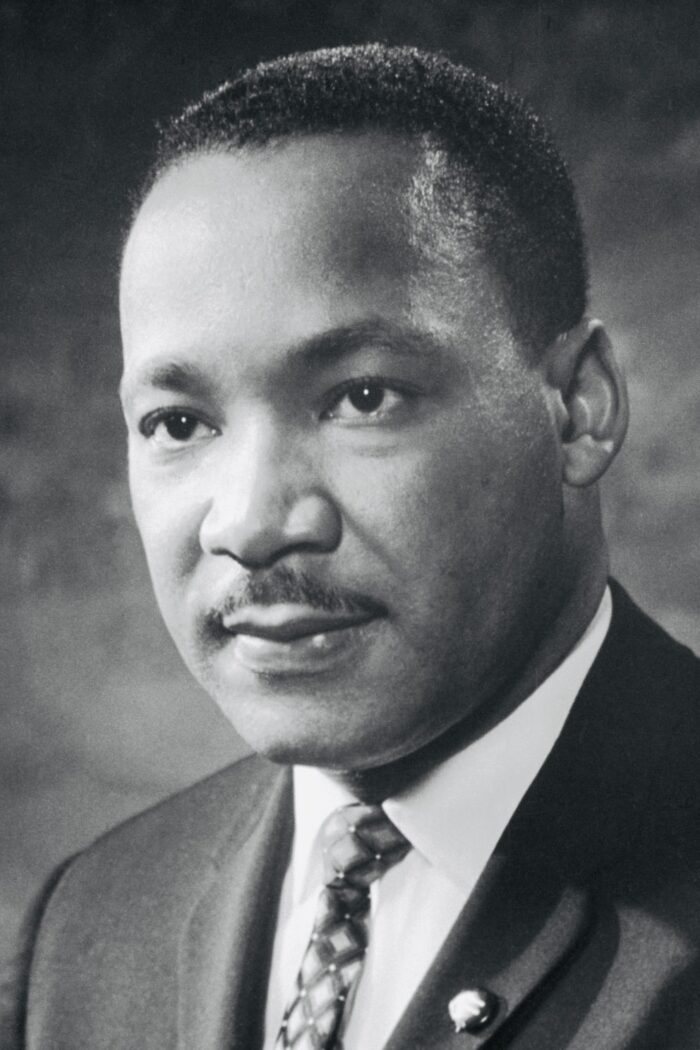
Esther Brown, a Jewish woman, played an instrumental role in the Supreme Court’s decision to strike down segregated school boards. Rabbi Abraham Heschel, a champion of racial equality, formed a friendship with the Black leader Martin Luther King Jr.
These developments prompted the Ku Klux Klan to bomb a synagogue in Atlanta in 1958. Several years later, the Klan murdered two young Jewish men, Andrew Goodman and Michael Schwerner, in the forefront of the voter registration campaign in Mississippi.
The 1967 Six Day War in the Middle East had a profound impact on Black-Jewish relations. In a generational split, traditional Black elites rallied around Israel, but younger Black power advocates, such as Stokely Carmichael, supported the Arab/Palestinian cause.
Additional issues, ranging from the Ocean Hill Brownsville teachers’ strike in New York City to the adverse relationship between Jewish landlords and tenants in Harlem, inflamed mutual grievances.
The final episode charts the increasing complexity of Black-Jewish relations from the 1980s onward.
Federal affirmative action programs, particularly at universities, benefited African Americans, but threatened to undermine hard-won Jewish gains.
And while old-guard Black civil rights leaders continued to stand by Israel, left-wing activists regarded the Jewish state as a colonial entity that oppressed the Palestinians, an accusation that some Jews equated with antisemitism.
Two major Black figures also roiled the waters.
Andrew Young, the first African American ambassador to the United Nations, was forced to resign after his secret and unauthorized meeting with a PLO representative. Jesse Jackson, a presidential aspirant who aroused indignation in the Jewish community after meeting PLO chairman Yasser Arafat, got into further trouble by pejoratively referring to Jews as “Hymies.”

Louis Farrakhan, the Black nationalist, delivered a series of unapologetic antisemitic speeches. The murder of a yeshivah student by Black thugs in Brooklyn’s Crown Heights neighborhood in 1990 triggered yet more acrimony.
A 2017 white nationalist rally in Charlottesville, Virginia, during which marchers chanted “Jews will not replace us,” reminded Jewish and Black Americans that racism is deeply embedded in U.S. soil. The Tree of Life synagogue massacre in Pittsburgh in 2018, during which a neo-Nazi killed 11 congregants, was another reminder that antisemitism remains a potent force in America.
The Black-Jewish coalition, such as it is, was battered by pro-Hamas sentiment following Hamas’ one day invasion of southern Israel on October 7, 2023. Gates offers no elaboration, but he implies that some African American firebrands were among Israel’s strongest detractors during that period.
In closing, Gates accentuates the positive.
American Jews and Blacks, he muses, have built “beauty from pain.” And in a forceful observation, he proclaims that “no one is safe until everyone is safe.”
This is a reminder that efforts to counter antisemitism and anti-Black prejudice are linked to the struggle to achieve an egalitarian society for all of America’s citizens.