
Frederik Forsyth’s novel, The Odessa File, was an amalgam of fact and fiction. So is Ronald Neame’s eponymous feature film, which was adapted from Forsyth’s best-seller and released in 1974.
A hard-hitting thriller, it is driven by several interlocking themes: Israel’s quest for survival. The Holocaust. The attempt by diehard Nazis to evade justice. The crusade by a dogged German journalist to find and expose them.
Appearing nearly three decades after the ignominious defeat of Nazi Germany, it was one of the first postwar movies to tackle such hot-button topics. I missed it when it started its theatrical run, but I belatedly caught up with it on the Turner Classic Movies channel.
Featuring a German, British and American cast, it unfolds in Israel and West Germany in 1963 and 1964. Its advisor, Simon Wiesenthal, was a Holocaust survivor and Nazi hunter.
The brief opening scene sets it into motion.
A high-ranking Israeli army officer tells a foreign correspondent that German scientists are helping Egypt, Israel’s arch foe, to build long-range rockets capable of destroying the Jewish state. Their guidance systems are being manufactured by Nazi sympathizers in West Germany who belong to the Odessa organization, which assisted Nazis in escaping from Europe after the war.
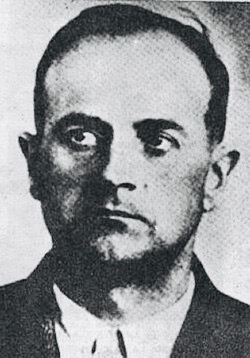
In a flashback to the early 1940s, Jews are sent by train to the Nazi ghetto in Riga, Latvia. Its SS commander, Eduard Roschmann, is hard and cruel. He is responsible for the deaths of thousands of European Jews.
Roschmann disappeared after the war, only to be arrested in 1947 before his final disappearance. Like a procession of Nazis with blood on their hands, he found a refuge in South America, where he died in 1977.
At this juncture, Peter Miller (Jon Voight), a young freelance German reporter, enters the picture. Having read the posthumous diary of a Holocaust survivor tormented by Roschmann, Miller is determined to track him down, even though a magazine editor and his mother both discourage him from proceeding any further.
The editor’s disinterest in Roschmann is a reflection of postwar attitudes in West Germany. Worn down by the hardships of the war and perhaps ashamed of Germany’s central role in the genocide of Jews, a significant number of Germans want to forget what happened and move on with their lives.
Miller’s determination to find Roschmann is solidified when another Holocaust survivor assures him that he is alive and well. In pursuit of his prey, he attends a reunion of soldiers from an SS division who harbor sentimental memories about Hitler’s Germany. There he catches a glimpse of Roschmann (Maximilian Schell). When he tries to photograph him, Miller is roughly hustled out of the building.
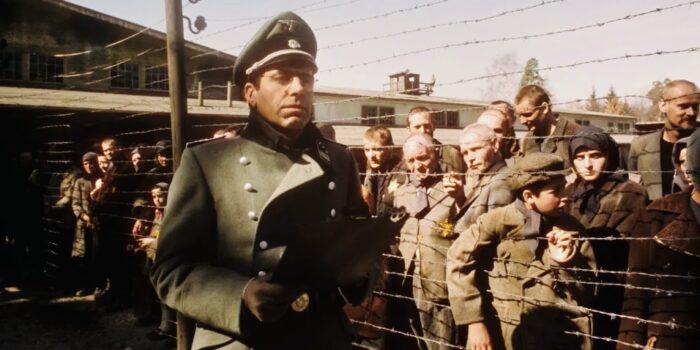
This scene speaks to Miller’s realistic assessment that some Germans view the Third Reich through rose-colored glasses. Much to Miller’s disappointment, his girlfriend, Siggi (Mary Tamm), is unconcerned about this phenomenon.
The tension builds when one of Roschmann’s associates tries to kill Miller. From this point forward, unrepentant Nazis and their accomplices are doggedly on his trail.
On a visit to Vienna, Miller talks to Wiesenthal (Shmuel Rodensky), who fills him in on details about the Odessa outfit and Roschmann’s flight to South America.
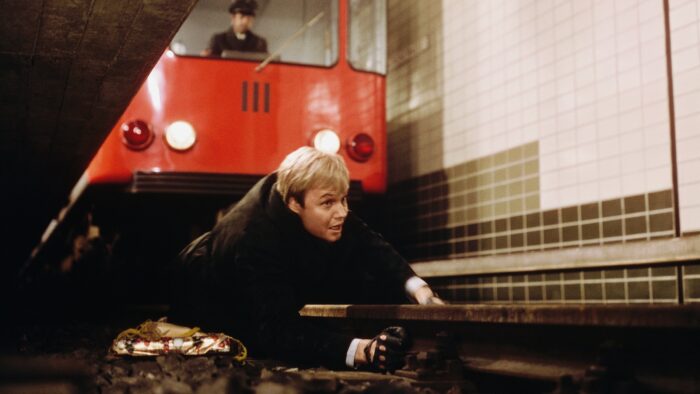
The film takes a twist when operatives of the Mossad, Israel’s external intelligence agency, kidnap Miller and convince him to infiltrate Odessa as a Nazi sympathizer who once worked in a German concentration camp. These scenes convey high suspense, and Voight acquits himself splendidly.
Toward the denouement, Miller confronts Roschmann in his lair. Their sharp exchanges are riveting.
Although The Odessa File is clearly anti-Nazi in spirit, its appraisal of Germans per se is measured, striking a fine balance between the past and the present.