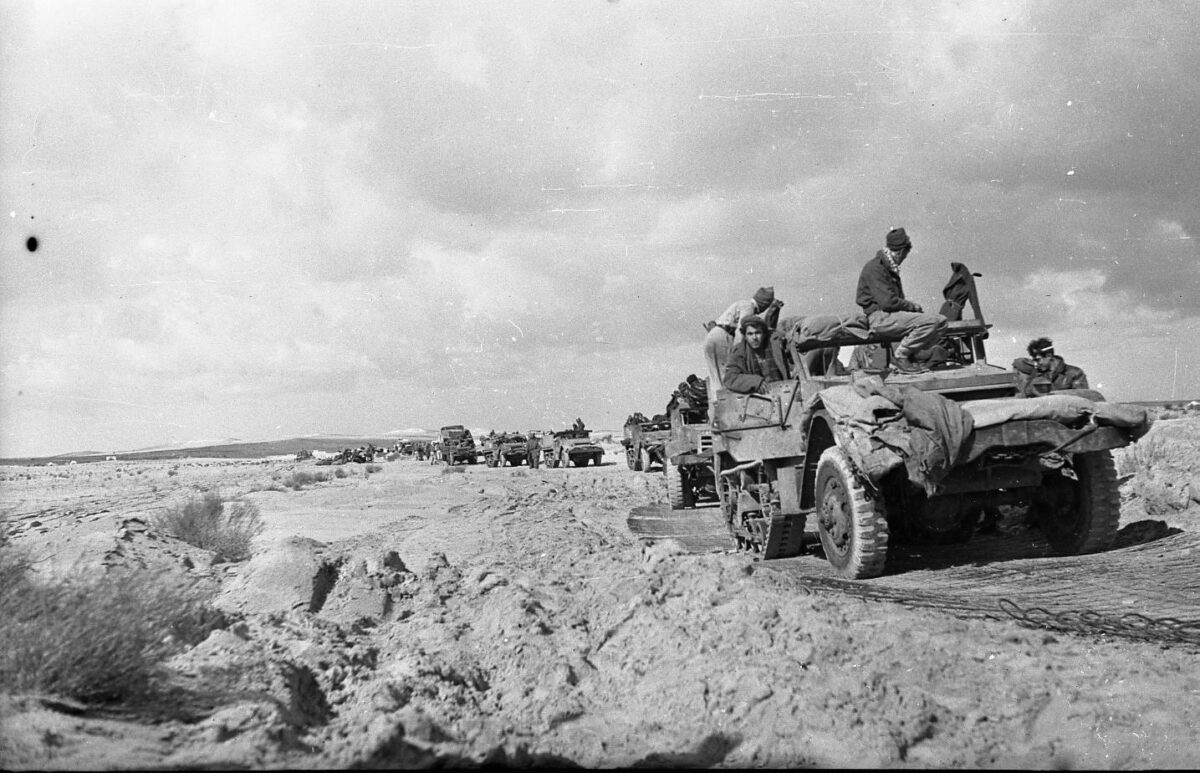
Neta Shoshani’s substantive documentary, 1948 — Remember, Remember Not, delves into the tumultuous events that led to the first Arab-Israeli war nearly 80 years ago. Based on personal letters, diaries and file footage, and supplemented by on-camera interviews, it will be screened at the Toronto Jewish Film Festival, which runs from June 4-14.
It is divided into two parts. The first section deals with the fallout from the United Nations’ Palestine partition plan, which was passed by a resounding margin on November 29, 1947. The second segment unfolds against the backdrop of Israel’s Declaration of Independence on May 14, 1948 and the Arab invasion of Israel a day later, which sparked the ensuing War of Independence.
The recollections of Jews and Palestinian Arabs are given almost equal billing in this thoughtful film about a bitter conflict that irretrievably changed the political and military landscape of the Middle East.
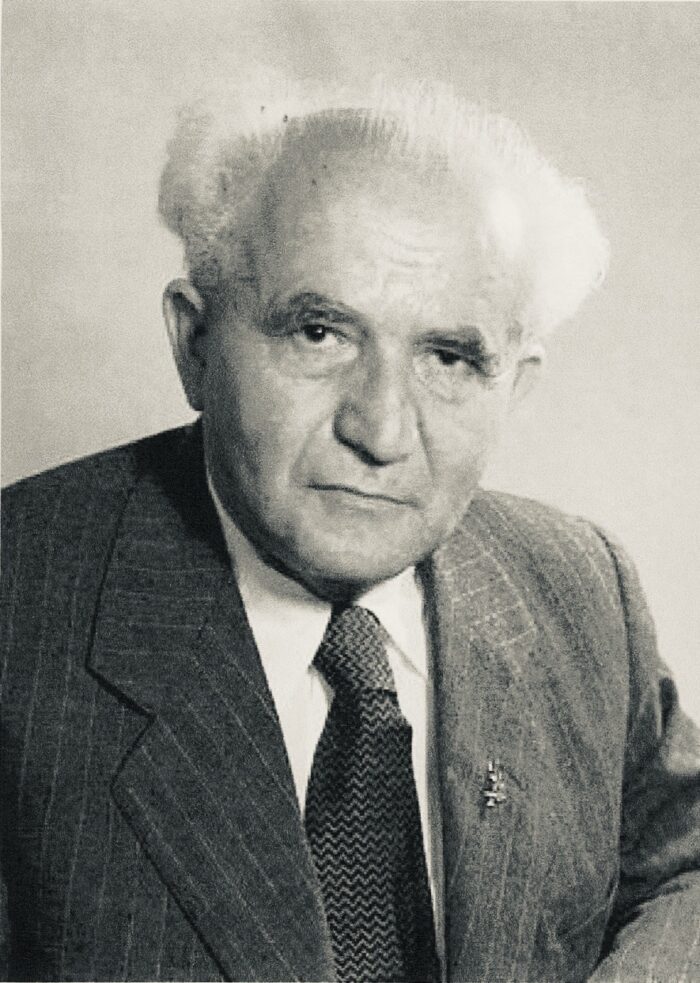
While Arabs were extremely disappointed by the Palestine partition scheme, Jews generally regarded it as the single greatest day in Jewish history. However, David Ben-Gurion, who would be Israel’s first prime minister, expressed qualms that the envisioned Jewish state would be populated by 470,000 Palestinians, who felt their homeland had been stolen by interlopers. By contrast, the proposed Arab state would have had only 10,000 Jewish inhabitants.
Not surprisingly, the United Nations resolution sparked a civil war in Palestine. The graphic images in 1948 convey the destruction and the bloodshed. We see the ruins of demolished buildings in Jerusalem and we watch the funeral of fallen Jewish fighters.
“All our good men die young,” muses a 92-year-old woman who was 18 when she enlisted in the Haganah fighting force.
Ben-Gurion complains that the Arabs were armed to the hilt, but he is confident that Jews would prevail on the battlefield. In another clip, an Arab man observes that the Jewish side is united and awash with weapons. The Arab perspective comes into further view when a group of Palestinians visit a lush hillside overlooking Kibbutz Mishmar Haemek, where the Palestinian village of Abu Shusha once stood.
Palestinians were seriously displaced during this period, as Shoshani candidly points out. By her estimate, 300,000 were uprooted prior to the outbreak of the war. In Katamon, an elegant, largely Arab neighborhood in Jerusalem, a Palestinian man laments the loss of his books and liquor cabinet.
There was no shortage of violence, judging by a number of massacres. Palestinians in Deir Yassin were slaughtered. In an atrocity perpetrated by Arabs, Jewish doctors, nurses and university students were killed while travelling in a convoy in Jerusalem.
Arab armies from Egypt, Syria, Transjordan, Iraq and Lebanon invaded Israel to snuff out its existence. Contrary to myth, the Israeli army was not outnumbered. Thirty six thousand Jewish soldiers faced 27,000 Arab troops.
Vivid vignettes enliven 1948. Jewish soldiers try to stop Arab tanks with their bodies. Ben-Gurion, in a flash of anger and frustration, threatens to destroy neighboring Transjordan.
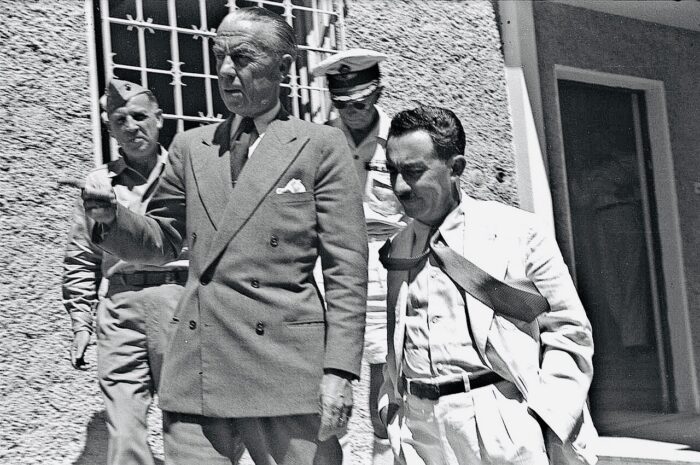
Count Folke Bernadotte, a Swedish mediator, realizes that he is in an “exposed position.” He expressed this concern after calling for the Palestinian right of return and recommending that the Negev desert should be assigned to Arab rule. His recommendation infuriated Jews. That he was assassinated by Jewish zealots shortly afterward is hardly surprising.
The “dark corners” of Israel’s victory are explored to some extent.
Jewish soldiers in Tiberias, Haifa and elsewhere looted abandoned Arab homes. These thefts were usually condemned by the Jewish leadership, and offenders were occasionally arrested.
A few Jewish soldiers raped Arab women. Benny Morris, an Israeli historian, calls a spade a spade when he refers to these atrocities as war crimes. The state archives containing this explosive material has yet to be opened to the public.
As 1948 reaches its denouement, Ben-Gurion says that Israel will always need a good army. A prescient observation. Eight decades on, Israel’s very existence is still threatened and Israel still lives by the sword.