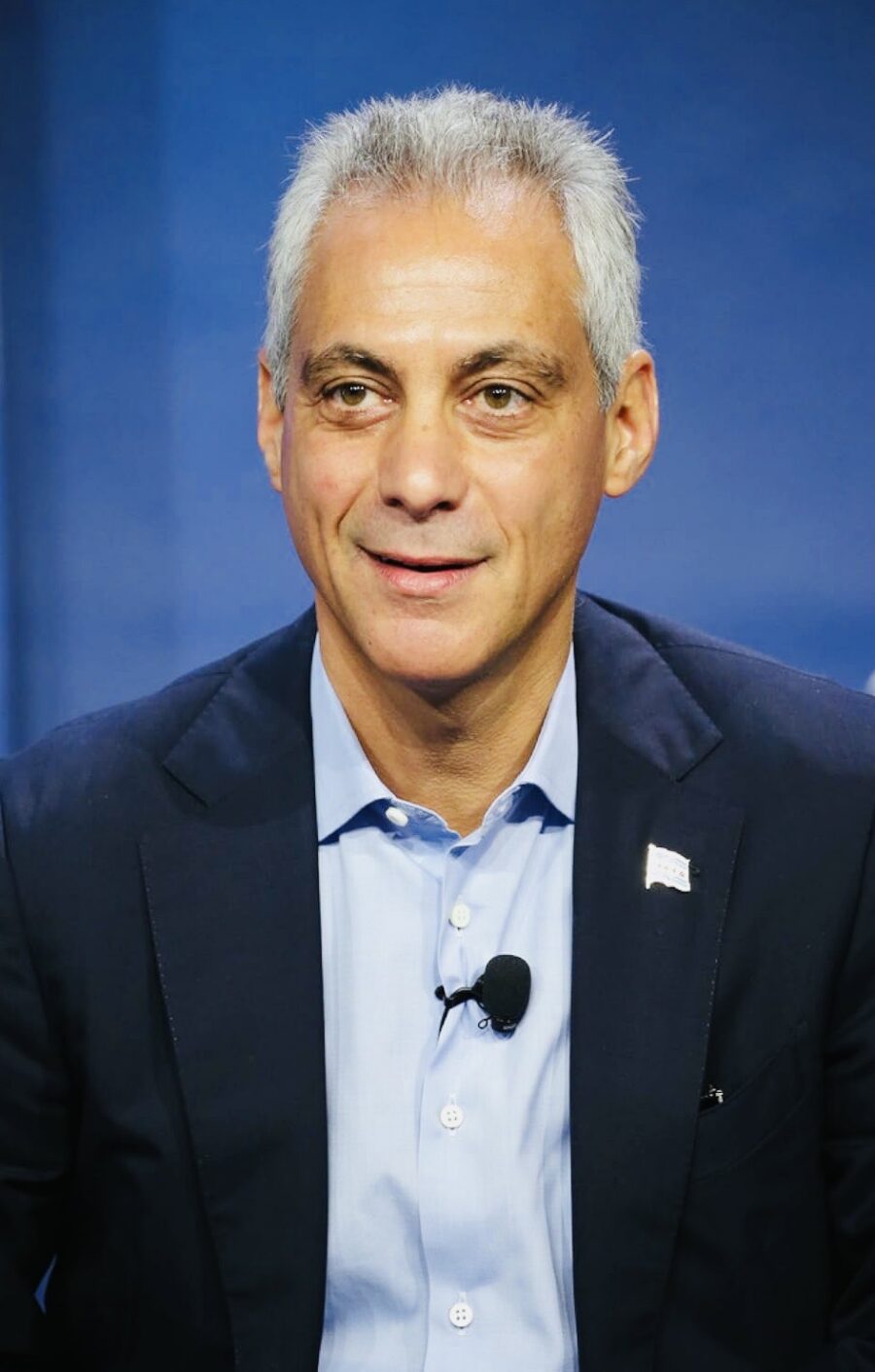
A prominent Jewish American has dispensed a message of tough love to Israel.
It is worth listening to.
Rahm Emanuel was in Israel earlier this month to deliver a sober and blunt speech at Tel Aviv University about the future of Israel’s relationship with its greatest ally, the United States.
“I flew here from Chicago to tell you directly where things need to head if we are going to maintain the historic alliance that binds our two democracies,” said Emanuel, the former mayor of Chicago, the ex-ambassador to Japan and President Barack Obama’s chief of staff. “Without question, the alliance is at a crossroads. It cannot stand or survive as it has been. To maintain the strength of our ties, we need significant changes and a new direction.”
Emanuel, a possible Democratic Party presidential nominee in 2028, said he came as a friend to warn Israel that its friendship with the United States is at a “tipping point.”
Claiming that Israel’s support in the United States is plummeting, he blamed the policies of Prime Minister Benjamin Netanyahu for transforming Israel into a “pariah” nation and leading it into a “dead-end.”
He was stating the obvious.
According to a recent Pew survey, 62 percent of Americans hold unfavorable views of the Israeli government. Still other polls indicate that, for the first time, Americans sympathize more with Palestinians than Israelis.
A New York Times/Sienna poll found that 60 percent of Democratic supporters expressed more sympathy for Palestinians than Israelis. Only 15 percent were more supportive of Israel.
Although most Democrats are critical of Israel, increasing numbers of Republicans find fault with it as well.
Israel’s image in the United States has plunged drastically since its invasion of the Gaza Strip in the autumn of 2023. Israeli forces launched the military operation shortly after Hamas attacked Israel, killing roughly 1,200 people and kidnapping 251 Israelis and foreigners.
During Israel’s two-year campaign, which ended with a shaky ceasefire in October 2024, 73,000 Palestinians, including Hamas and Islamic Jihad combatants, were killed. The Palestinian death toll triggered accusations that Israel committed genocide, a charge the Israeli government denies.
In addition, some Americans have blamed Israel for having pushed the United States into its recent war with Iran.
In his speech, Emanuel alluded to these developments and warned Israel that its evolution from a start-up nation to a modern-day Sparta is bound to be consequential. “You have turned from being known for your technological prowess to being considered primarily a territorial pariah. You need to think about what that means for your future.”
As he built his argument, he underscored his deep personal connection to Israel. His father, Benjamin, fought in Israel’s 1948 War of Independence before immigrating to the United States. His uncle was killed in that conflict and is buried on Jerusalem’s Mount of Olives.
Looking ahead, Emanuel called for a two-state solution, an idea that the current Israeli government utterly rejects. But he tempered his proposal with a caveat. The leadership of a Palestinian state would have to accept the historic Jewish connection to Israel, stop teaching its children to hate Israel, and end the “heinous practice” of financially rewarding terrorists who kill Jews.
Emanuel said he understands Israel’s cynicism regarding any future arrangement with the Palestinians. Israeli offers of Palestinian sovereignty in exchange for security were frequently met with violence, he noted, implicitly referring to the September 2000 Palestinian uprising and its wave of terrorism, which resulted in the deaths of more than 1,000 Israelis.
Nonetheless, Israel’s future cannot be “held hostage to a past defined exclusively by recriminations,” he said, urging Israel to embark on a path that does not solely rely on military prowess. Israel must find “a new sustainable path to peace, security and prosperity.”
Voicing opposition to a scenario whereby Israel annexes the West Bank, much of which it has occupied since the 1967 Six Day War, Emanuel said, “Israel will be alone if its leaders choose to attempt to annex the West Bank.”
“America will not and cannot be complicit or complacent in that endeavor,” he said, pointing out that the United States erred in “blindly and silently” supporting Netanyahu’s government.
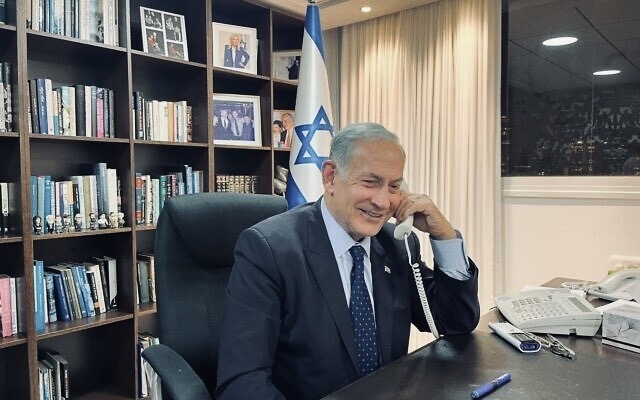
Addressing another topic, he called for an end to the “American taxpayer’s subsidy of Israel’s defence budget,” arguing that Israel is rich enough to buy its own arms and should purchase U.S. weapons under the same terms and restrictions as every other ally. Netanyahu himself has said that he wants to wind down U.S. military assistance to Israel, transitioning it from “aid to partnership.”
Emanuel called for a three-part U.S. policy that would leverage the Arab world’s desire for stability, Israel’s need for security and the Palestinian demand for sovereignty and independence. “The political benefits for all parties would be far greater than a two-state solution could ever offer. But to get there, everyone would need to make good on their piece of the bargain,” he said.
The United States, Israel’s “foremost and steadfast ally” since Israel’s founding in 1948, is prepared “to stand shoulder to shoulder with Israel on the long journey toward peace” should it choose that path.
In delivering this frank message, Emanuel attempted to chart a course between Israel haters on the left and right and the pro-Israel camp in the United States.
He lambasted American protesters who supported Hamas’ October 7, 2023 attack in southern Israel. “For those who celebrated and cheered on what happened, your moral bankruptcy speaks louder than any words today,” he said.
Striking a balance, he castigated anti-Israel voices who shout ‘‘from the river to the sea’’ and condemned right-wing Israelis who pursue a vision of Greater Israel in which the West Bank is incorporated into Israel.
“Both are fantasies chanted by fanatics,” he said.
Emanuel’s comments should be seen against the backdrop of an upsurge of antisemitism in the United States since October 7.
A new survey by the Associated Press-NORC Center for Public Affairs Research reveals that six in 10 Jewish adults feel “less safe” in the United States than before that date. Similarly, four out of 10 Jewish adults said they are now “less likely” to wear, carry or display things that might identify them as Jewish.
This past February, the American Jewish Committee released a poll that found that one-third of American Jews were the target of an antisemitic incident in 2025. Two-thirds of respondents believed that Jews in the United States were less secure than in 2024.
The new antisemitic climate dovetails with Israel’s increasingly sagging popularity in the United States. This can hardly be a coincidence.
Emanuel’s observations about the state of U.S.-Israel relations and the need for meaningful shifts in Israeli policy have been dismissed by conservative Diaspora Jews and right-wing Israelis.
They would be wise to consider his views. Emanuel, a realist, has sounded an alarm that cannot be blindly ignored. What is at stake here is Israel’s future relationship with the United States, which supporters of Israel should not take for granted.