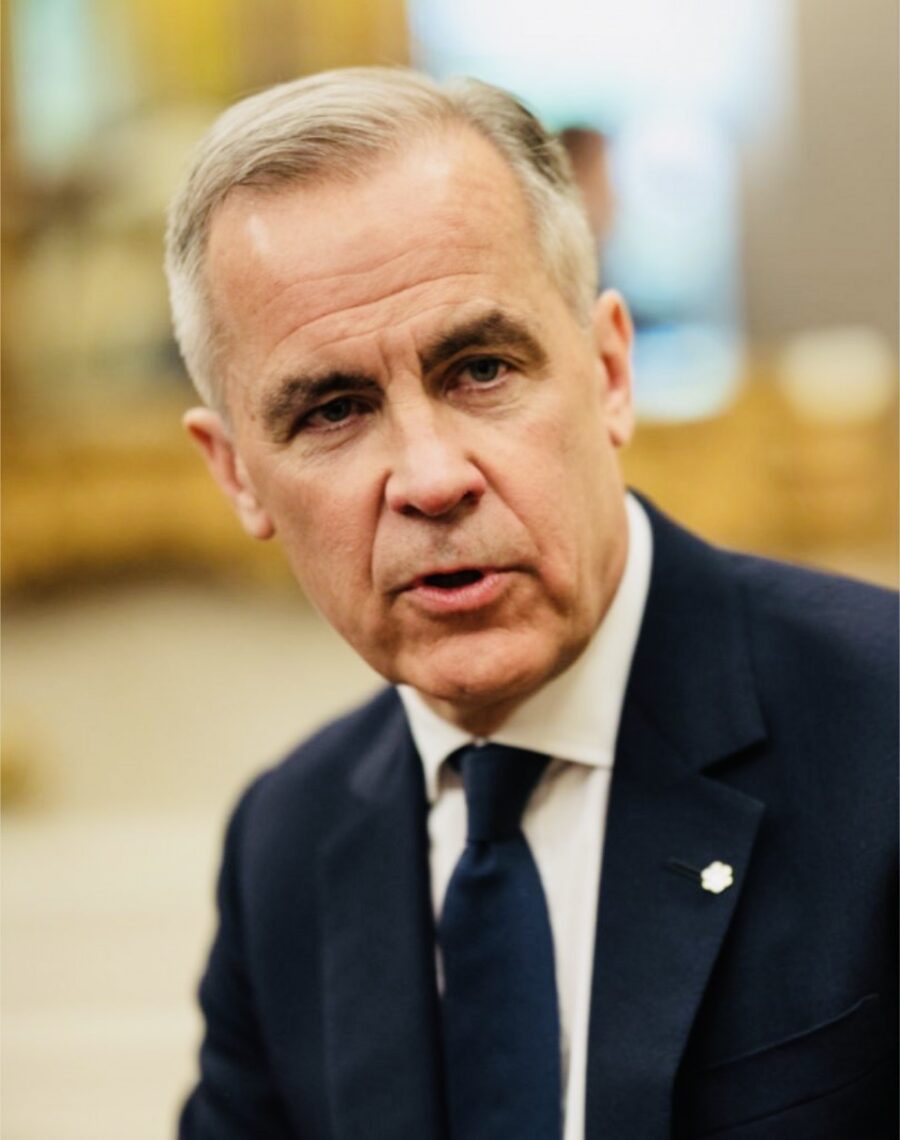
Canadian Prime Minister Mark Carney was recently in Jeddah to drum up business with Saudi Arabia, a wealthy and influential Arab state. He was the first leader from Canada to visit this oil-rich Arab nation in 26 years. While there, he met Saudi leader Crown Prince Mohammed bin Salman and discussed plans to deepen cooperation in trade and defence within the framework of the newly established Canada-Saudi Arabia Co-ordination Council.
It was an important trip in light of Carney’s intention to diversify Canada’s commercial relations with international partners and to be less reliant on the United States, whose current president, Donald Trump, has shown himself to be unfriendly and even hostile to Canada.

During his press conference, Carney was asked why he seeks to engage with an authoritarian monarchy that scoffs at democratic norms and flouts human rights.
It was a good question of direct relevance to Canada.
In 2018, Saudi Arabia expelled Canada’s ambassador in Jeddah after the then Canadian foreign minister, Chrystia Freeland, called for the immediate release of several imprisoned Saudi political activists.

The rupture between Canada and Saudi Arabia deepened after the dissident Saudi journalist Jamal Khashoggi was murdered in Saudi Arabia’s consulate in Istanbul. The Saudi government denied involvement in his murder, but a U.S. Central Intelligence Agency report confirmed it.
Since these disruptive events, Canada has patched up its bilateral relations with Saudi Arabia, a key U.S. regional ally. Carney’s trip on July 9 was designed to build on this progress.

When he was asked whether he had raised human rights issues with the Saudis, he replied that the contents of his discussions were confidential.
But in revealing comments, Carney said, “Engagement is not endorsement, so engaging with the country doesn’t mean that we agree with everything that a country is doing.”
“Lecturing countries from afar is an ineffective strategy,” he added. “It’s satisfying, but it’s ineffective.”
At first glance, Carney’s comments seemed reasonable enough. But upon further reflection, they caused concern because they are completely at odds with his rather frequent public condemnations of Israel’s policies.
Since replacing Justin Trudeau as Liberal Party leader and prime minister, Carney has publicly criticized the Israeli government.
During Israel’s two-year war with Hamas in the Gaza Strip, he repeatedly asked Israel to exercise restraint and to comply with international humanitarian law. He condemned Israel’s blockade, saying that food and humanitarian assistance should never be used as political tools.
He demanded an immediate ceasefire and the release of all Israeli hostages in Hamas’ captivity, while emphasizing that Palestinian civilians required greater protection.
While he rejected the term “genocide” to describe Israel’s military campaign in Gaza, he nonetheless sharply criticized Israeli conduct there.
In one of his strongest critiques, he compared Israel’s actions in Gaza to Russia’s invasion of Ukraine, saying that territorial conquest by force and prolonged occupation undermine the international order.
And in line with a proposal submitted by the left-of-center New Democratic Party, he supported Canada’s suspension of new arms export permits to Israel, arguing that Canada should not contribute to the conflict in Gaza.
Condemning Israeli settlement expansion in the West Bank, he said that Jewish settlements there were contrary to international law and an obstacle to peace. He also expressed support for a Palestinian state within the contours of a two-state solution.
With the outbreak of the war in Iran last winter, he cited that conflict as “another example of the failure of the international order” and suggested that the U.S.’ and Israel’s attacks appeared inconsistent with international law. At the same time, he acknowledged that Iran is a major source of regional instability and affirmed that Israel has a right to defend itself.
Judging by his remarks, Carney has had no trouble criticizing Israel “from afar.” However, he did not apply the same principle to Saudi Arabia. In the interests of advancing bilateral ties with Saudi Arabia, he remained conspicuously silent with respect to its appalling human rights record.
Carney’s supporters will likely say that Canada has a fairly close relationship with Israel and that public criticism of its policies therefore forms an integral segment of its ongoing dialogue with the Jewish state.
There is some truth to that claim, but the fact of the matter is that Carney has been glaringly inconsistent. On the one hand, he criticizes Israel openly. On the other hand, he gives Saudi Arabia a wide berth.
Carney’s seemingly contradictory and hypocritical stance is likely due to economic and strategic considerations.
Israel’s policies, particularly those relating to the Palestinians, are questionable and should be scrutinized and criticized. By the same token, he should apply exactly the same standards to Saudi Arabia’s dismissal of human rights, regardless of its wealth and influence.