Antisemitism is now a focal point in the impassioned debate over free speech in the United States as defined by the First Amendment in the constitution, contends James Loeffler in his bold and thought-provoking work, Exceptional Hatred: Antisemitism and the Fight Over Free Speech in Modern America, published by Metropolitan Books.
This debate is at the center of current American politics. As he writes in his introduction, “American democracy stands at a precipice, besieged by authoritarian politics, resurgent nativism, and popular demagoguery. These forces, once relegated to history, now threaten our pluralistic society and its defining commitments to freedom and equality.”
Within the framework of these developments, the United States is consumed by a “national crisis” over free speech and antisemitism, argues Loeffler, a professor of modern Jewish history at Johns Hopkins University and the author of Rooted Cosmopolitans: Jews and Human Rights in the Twentieth Century.
Exceptional Hatred is constructed around three antisemitic incidents during which the United States confronted its “deepest contradictions” regarding race, religion and national identity.
The first incident occurred when anti-Jewish riots in Chicago led to two court cases — Terminiello v. Chicago (1949) and Beauharnais v. Illinois (1952), both of which redefined the boundaries of free speech.
The second one took place in the late 1970s in Skokie, when neo-Nazis attempted to stage a provocative march through a Chicago suburb inhabited by a fairly substantial number of Holocaust survivors.
The third unfolded in 2017, when torch-bearing fascists at a Unite the Right rally in Charlottesville, Virginia, chanted “Jews will not replace us.” This incident unfolded on the campus of the University of Virginia. Progressives, who were normally dedicated t0 fighting white supremacy in all its forms, refused to admit Jewish student groups unless they cut ties with a pro-Israel organization. Jewish students were therefore required to pass a special political litmus test, Loeffler says.
He skillfully frames these incidents within the historic parameters of antisemitism in the United States, a good starting point for an informed discussion on this fraught topic.
Seventeenth century Puritans banned Jews from their New England colony until their conversion to Christianity.
During the 18th century, Jews gained some acceptance from the European population, and synagogues sprang up in cities such as Savannah and Philadelphia. Although Jews were subjected to legal disabilities, they were spared persecution and violence.
“The American Revolution heralded a change in Jewish status,” Loeffler notes. “For the first time, Jews found themselves citizens of a country in which religious equality was a precondition for democratic politics.”
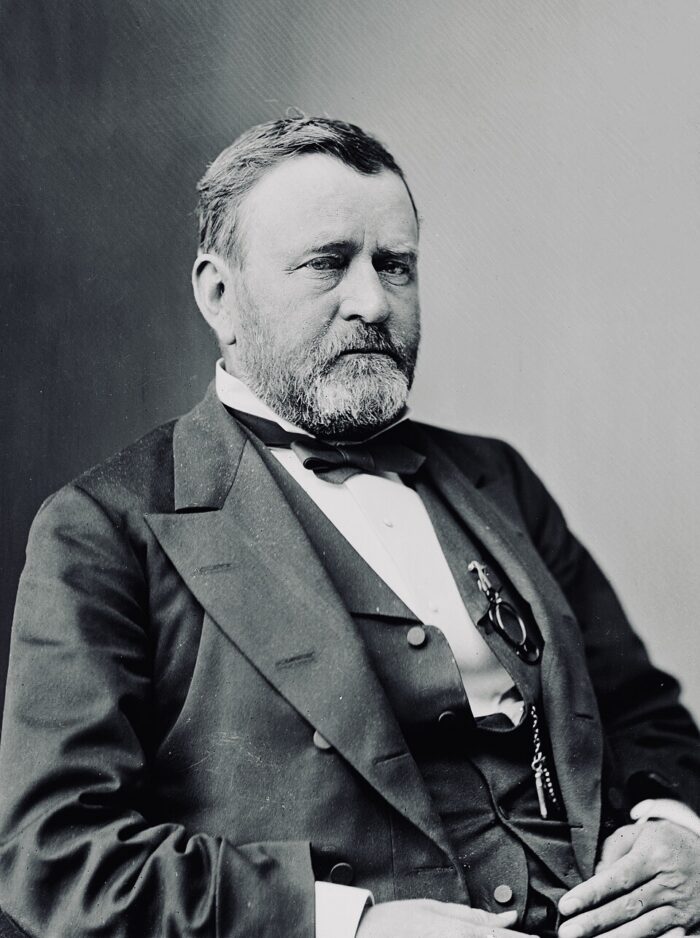
This pattern of openness and animus intensified during the U.S. Civil War. Jews enlisted in the Union and Confederate armies, and the Confederacy appointed Judah Benjamin, a Jew, as its secretary of state. Yet antisemitism surfaced when Ulysses S. Grant, a northern general, barred Jews “as a class” from the Tennessee military zone.
As many Jewish immigrants arrived in the late 19th century, Protestant elites looked on warily. “We are in the hands of Jews,” warned the historian Henry Adams, the grandson of former president John Quincy Adams.
In 1898, Loeffler notes, the federal government imposed onerous health and literacy tests to reduce Jewish immigration. And from the early 20th century, real estate deeds, neighborhood covenants, hotels, clubs, universities and companies often excluded Jews and African Americans.
The lynching in 1915 of Leo Frank, a Jew who was falsely accused and wrongfully convicted of murdering a young woman in the factory he managed in Atlanta, marked the revival of the antisemitic Ku Klux Klan. As the 1920s dawned, nativism and anti-communism led to a precipitous rise in antisemitism. This period coincided with the emergence of the free speech movement.
By the 1930s, the United States was home to well over 100 antisemitic organizations. Two of the most vocal antisemites, Gerald L.K. Smith, a Protestant preacher, and Charles Coughlin, a Catholic priest, were supported by the industrialist Henry Ford, an antisemite himself and an admirer of Adolf Hitler.
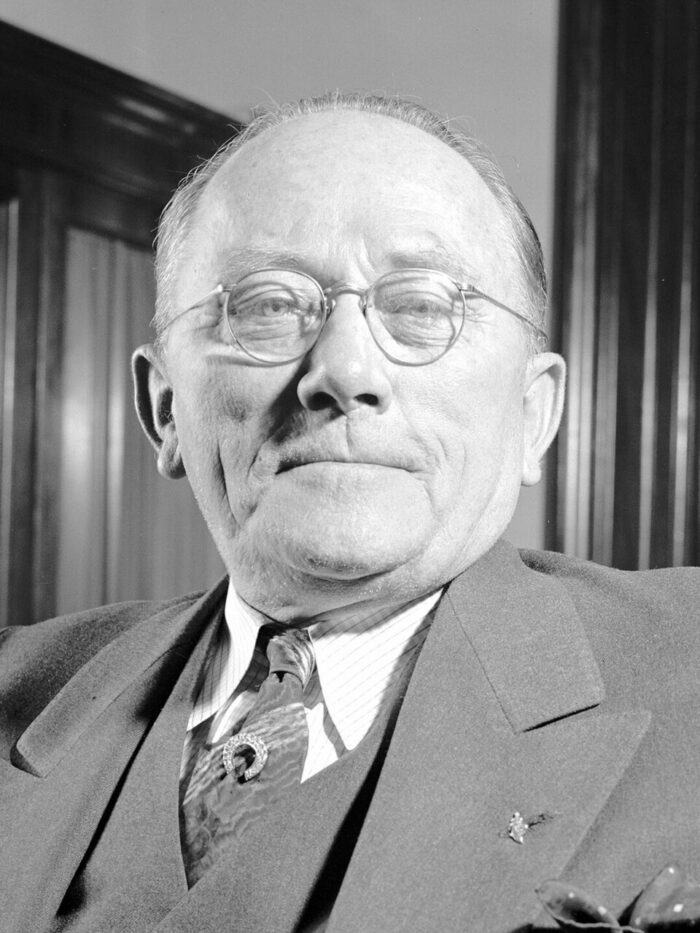
American antisemites did not work in a vacuum, as Loeffler points out. A survey taken in 1938 indicated that 36 percent of Americans believed that Jews had too much power. In 1945, the American Dental Association considered a proposal to impose quotas on Jewish applicants to dental schools. And shortly after Mississippi Senator Theodore Bilbo denounced “a certain class of kike Jews” in New York City, a survey conducted among active duty U.S. soldiers revealed that more than 20 percent supported Nazi Germany’s genocidal policy with respect to Jews.
Loeffler also cites the controversy surrounding the selection of Bess Myerson as the first Jewish Miss America in 1945 to illustrate the depth of American antisemitism.
“Even before the Miss America contest began, Myerson’s Jewishness emerged as a problem for the organizers. Pageant director Lenora Slaughter quietly urged her to change her name.” Several corporate sponsors refused to be associated with a Jewish Miss America.
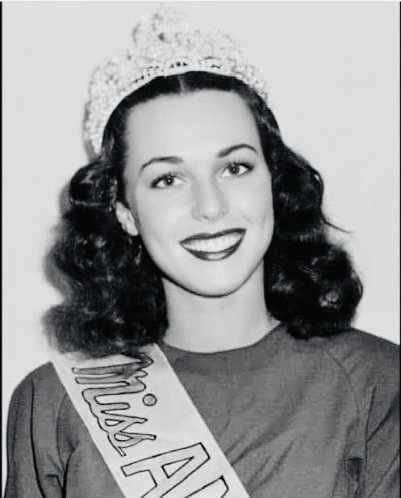
“Myerson’s fast rise to fame and private confrontation with hatred neatly captured the ambiguous Jewish position in America at the drawn of the postwar era.”
Having established that antisemitism has been a persistent problem in the United States, Loeffler delves into the antisemitic incidents that form the core of his book.
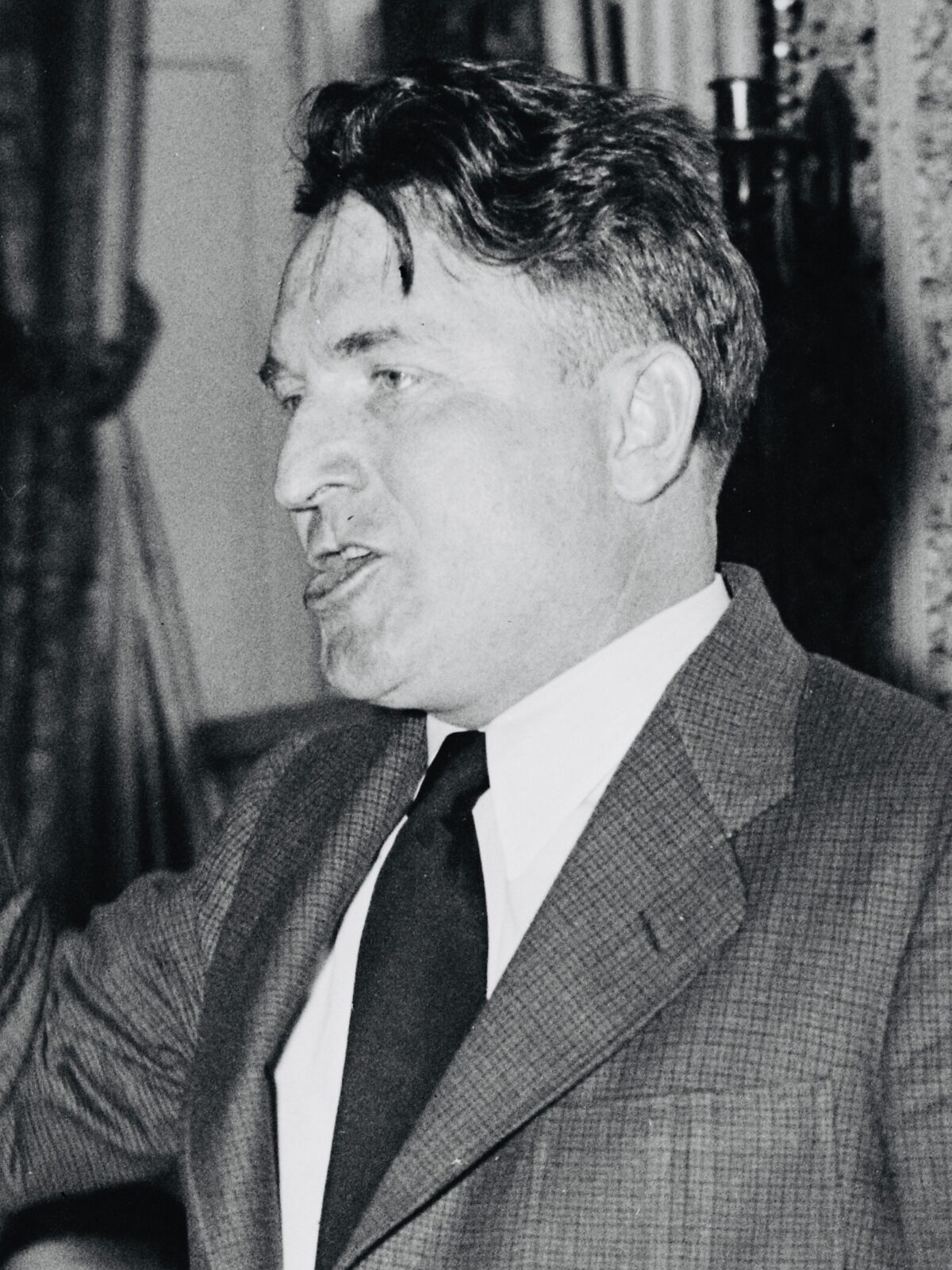
He deals first with Arthur Terminiello, an Italian American Catholic priest who denounced President Franklin Roosevelt’s “Jew Deal” and claimed that Japan’s surprise attack on Pearl Harbor was a massive conspiracy staged by Roosevelt in collaboration with Britain, the Soviet Union and Jews. At rallies around the country, Terminiello and Gerald L.K. Smith delivered fiery speeches attacking Jews.
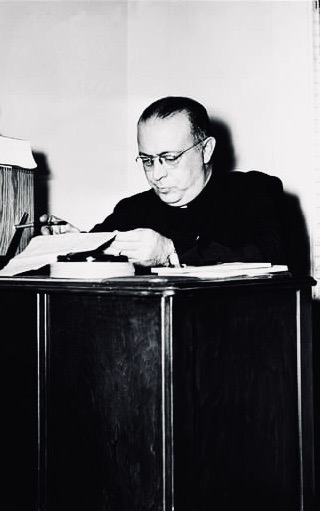
Having been sued for defamation, Terminiello found himself in a courtroom, where the presiding judge told the jury that free speech is not a warrant to disparage people. He was found guilty of incitement and ordered to pay a paltry fine of $100.
By then, antisemitism had become a topic of national discussion, with Hollywood having churned out two feature films on this theme, Crossfire and Gentleman’s Agreement.
The second incident erupted after Aaron Bindman, a Jewish labor organizer and former communist, threw a housewarming party at his home in a segregated working class Irish Catholic neighborhood in Chicago.
With rumors having spread that an African American family had moved into Bindman’s house, a riot ensued during which Jewish-owned shops in the district were ransacked and their proprietors beaten. Loeffler calls the violence a pogrom.
Joseph Beauharnais, the leader of a white supremacist organization, was arrested for violating the state law against group libel. Arguing that the First Amendment should be respected, his lawyer said that the guiding principle in this case should be “freedom of speech.” The jury found Beauharnais guilty of defamation.
In the Skokie case, the Nationalist Socialist Party of America set off angst among some of its residents when it announced its intention to march through the heavily Jewish suburb. Its organizer, Frank Collin, was raised as a Catholic, but his father was a German Jew, a fact he tried to conceal.
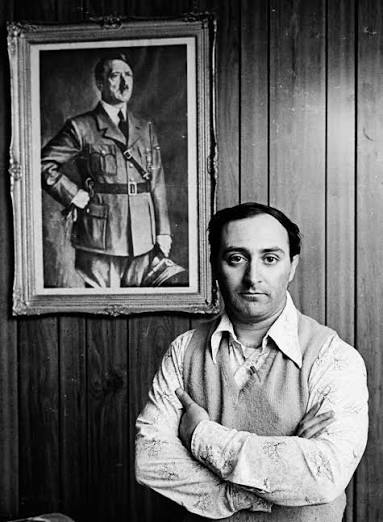
Loeffler believes that “no single event better encapsulated the free speech debate in post-1960s America than Skokie.”
The American Civil Liberties Union protested the injunction barring the neo-Nazis from marching in Skokie, which had once been a German American enclave but had since been populated by Holocaust survivors. In the interests of free speech, the judges returned with a compromise. The neo-Nazis could march in uniform, but without the swastika, they ruled.
Loeffler considers Skokie a turning point in the debate over the First Amendment: “American law pivoted from policing hate to prosecuting hate crimes.”
In his estimation, Charlottesville “heralded a dark turn in American antisemitism.” A year earlier, in 2016, a prominent political scientist declared that antisemitism had “virtually disappeared” in the United States.
As Loeffler observes, the fascists who paraded through the town shouting an anti-Jewish epithet “cloaked” themselves in “the rhetoric of free expression.”
The lawsuit against them boiled down to one question: “Had the organizers of the Unite the Right rally engaged in a civil conspiracy to commit racially motivated violence? Or had they simply exercised their First Amendment rights?”
Loeffler thinks that Charlottesville introduced something homegrown rather than something foreign, underscoring his belief that antisemitism and racism in the United States have always been intertwined and have usually been protected by the First Amendment.