Iran lost the war militarily, but may prevail politically.
Nearly six months after the United States and Israel launched joint air strikes in Iran, killing a significant proportion of its political and military leadership and massively degrading its armed forces, the Iranian regime has maneuvered U.S. President Donald Trump into a strategic cul-de-sac.
Trump initiated the war with the intention of eliminating Iran’s nuclear program, destroying its arsenal of ballistic missiles and drones, crushing its regional allies in its Axis of Resistance, and creating conditions for a general uprising to topple the theocratic regime.
These objectives have yet to be achieved.
When the war erupted on February 28, Iran was no match for the United States and Israel. Iran turned the tables on them by firing ballistic missiles and drones at critical infrastructure and U.S. bases in the Arab Gulf states and Jordan.
And in a brilliant strategic move that appeared to catch the United States off guard, Iran started attacking commercial shipping in the vital Strait of Hormuz, through which about 20 percent of the world’s oil and liquified natural gas passes. Iran then closed the international waterway to most ships and declared that it would manage traffic through it and charge tolls.
With these steps, Iran achieved tactical leverage by damaging the global economy. With gasoline and food prices rising around the world, and with midterm elections looming in the United States in November, Trump felt pressure to end a war that, he thought, could be finished within six weeks.
To this day, Iran continues to use force to coerce foreign nations to accept its control over the strait. On August 8, the United Arab Emirates reported that an Iranian missile struck one of its oil tankers, causing no casualties.
Iran’s repeated attacks on commercial shipping in the strait underscores its determination to use force to try to establish dominance over the strait amid ongoing negotiations.
Iranian spokesmen have repeatedly said that the strait will not revert to its prewar status as an open waterway, and that Iran will keep attacking ships trying to transit without its permission. Iran’s military command has called its policy an “unbreakable red line.”
“For Iran, the strait has become a strategic lever for deterrence, maintaining the regional balance of power, and reshaping the security rules in the Persian Gulf,” Mostafa Najafi, a Tehran-based security analyst, told The New York Times.
With the Trump administration fixated on reopening the strait, the key issues that triggered the war in the first place have taken on secondary importance, much to the chagrin of Trump’s wartime partner, Prime Minister Benjamin Netanyahu.
In the last few months, Trump has attempted to reach a deal with Iran by applying military pressure in on-again, off-again air strikes, but his tactic has failed. Last month, he called off operations.
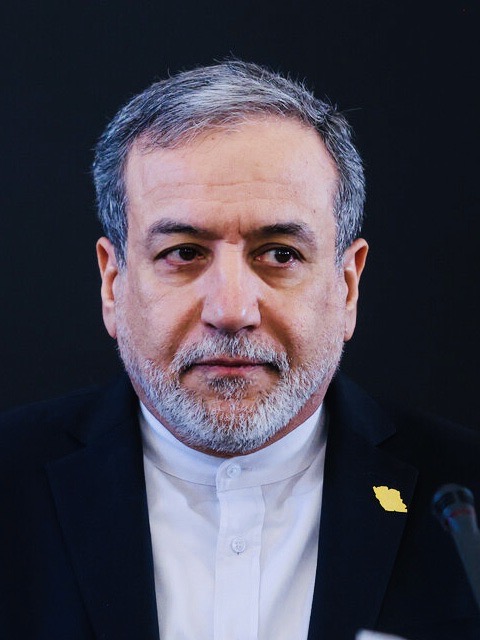
Trump has repeatedly claimed that Iran is desperate for talks to wind down the war, but his claims have proven to be illusory. Iranian Foreign Affairs Minister Abbas Araghchi has denied that Iran is negotiating with the United States, saying they are merely “exchanging messages” via intermediaries.
By the looks of it, Iran is in no hurry to resume talks with the United States, despite the damage the war has caused to its economy.
Emboldened by its apparent success in cornering Trump, Iran has doubled down on its demands, as if it was the winner of the war.
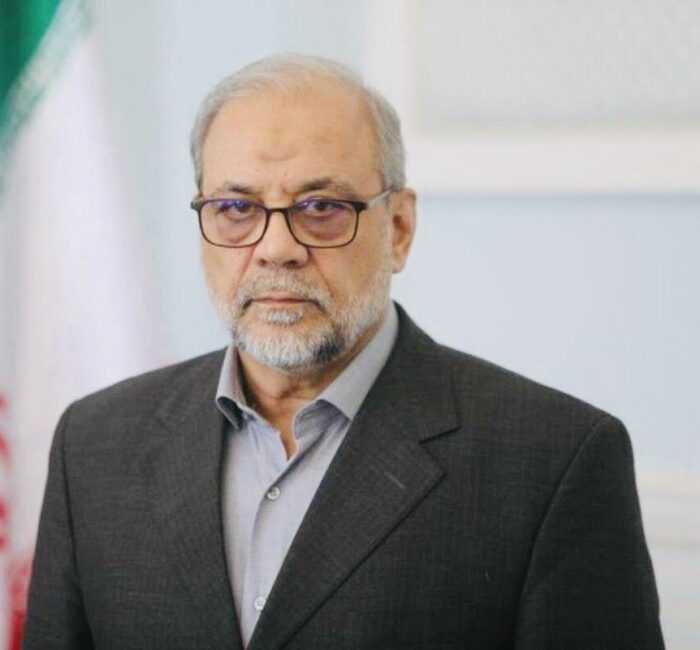
A couple of days ago, Mohammad Bagher Zolghadr, the outgoing secretary general of the Supreme National Security Council, the highest national security and foreign policy decision-making body in Iran, officially listed them.
The strait will not be reopened unless the United States agrees to lift its economically punishing naval blockade on Iranian ports, cancel its economic sanctions, withdraw its forces from Arab countries around Iran, pay war reparations, release frozen Iranian assets, and cease attacks on its regional allies. They range from Hezbollah and Hamas to the Houthis in Yemen and pro-Iranian militias in Iraq.
The Wall Street Journal reported that the Islamic Revolutionary Guards Corps, which has effectively governed Iran since the outbreak of the war, insists on these set of demands.
If Trump refuses to accede to Iran’s conditions, the war may drag on longer than he ever imagined. In the meantime, he is hoping for the best possible outcome. On August 9, he told Axios that that Iran will eventually submit to his terms due to economic distress. He did not threaten a new offensive against Iran. “We are low-keying it,” he said.
Trump is monitoring Iran’s current negotiations with Oman. Araghchi said recently that both countries are “very close” to reaching an agreement on establishing a temporary transit route through the strait. This is a fraught issue. The United States has endorsed a southern route along Oman’s coastline that avoids Iranian waters, while Iran has strongly advised ships to use the northerly route in its territorial waters.
Due to this dispute, Iran has fired on vessels plying the southerly route. As a result, the U.S.-Iran ceasefire, which was hammered out in April, collapsed. This led Trump to reimpose the naval blockade on Iran and withdraw from the Memorandum of Understanding, which was brokered by Pakistan and signed by the United States and Iran in June. It called for the reopening of the strait and the temporary lifting of U.S. sanctions on Iran. Since its language was vague, the United States and Iran had differing interpretations of its meaning.
Araghchi’s comments shattered expectations that a deal between Iran and Oman would soon allow commerce to flow through the strait and thereby ease the global energy price crisis.
Over the past week, about a dozen ships have navigated the strait per day, according to Kpler, a maritime data company. Prior to the war, an average of 130 ships used the route on a daily basis.
Even before Zolghadr issued his statement, Iranian officials hinted that the reopening of the strait was not imminent. Hossein Mohebbi, a spokesman for Iran’s Islamic Revolutionary Guards Corps, said that it was “not contingent on Iran’s negotiations with Oman, but on the United States’ full acceptance of Iran’s conditions.
Iran is playing the long game. It believes that Trump will eventually devise an exit strategy, capitulate and declare “victory,” ridding himself of a foreign policy headache.
Iran’s assumption seems plausible and rests on several pillars.
The war has depleted U.S. weapons stockpiles to troubling levels, though Trump denies there is a shortage. Air defence missiles are particularly in short supply. New supplies may not reach the U.S. armed forces for several years.
An attempt by U.S. forces to reopen the strait might require ground troops and would be costly, a prospect that Trump would not relish in light of his previous warnings that the United States should not get bogged down in “forever” wars in the Middle East. Trump also realizes that Iran’s ally, the Houthis, could widen the war by disrupting shipping in the Bab el-Mandeb strait, a major trade route that connects the Red Sea and the Gulf of Aden to the Indian Ocean.
The war is unpopular with the majority of Americans, leaving Trump politically vulnerable. If the strait remains mostly closed, the price of gas and other essential goods will stay high, possibly imperilling Republican prospects in congressional elections in a few months.
By Iran’s logic, Trump may have no choice but to cut his losses.
Iran’s demands suggest that hardline elements within the regime are shaping its negotiating position. The commander of the Islamic Revolutionary Guards Corps, General Ahmad Vahidi and his inner circle, seek to secure the benefits of an agreement with the United States without having to relinquish Iran’s leverage over the strait.
According to the Institute for the Study of War, a U.S. think tank, three competing groups within the regime are trying to influence policy.
The group currently arguing for negotiations and total control over the strait is probably guiding policy at this moment. It is likely led by Vahidi, who appears to be close to the supreme leader, Mojtaba Khamenei, whose father, Ali, was killed by U.S. and Israeli air strikes on the first day of the war.
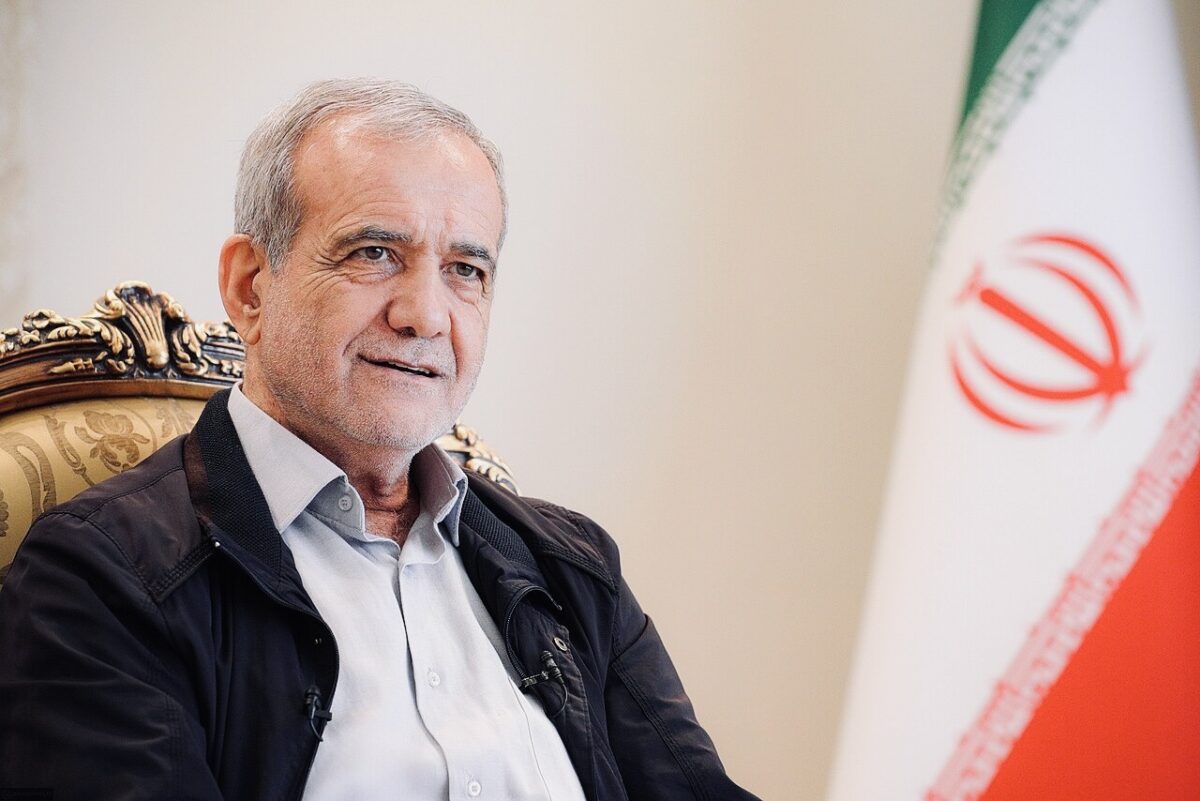
The second group, which includes President Masoud Pezeshkian, Araghchi and the Speaker of Parliament, Mohammad Bagher Ghalibaf, disagrees with Vahidi over means, not ends. They seek control of the strait, but its definition of management may be less rigid. Ghalibaf, for example, has argued that Iran should avoid overcommitting resources to controlling the strait if doing so comes at the expense of regime stability or preservation of its nuclear capabilities. Pezeshkian has warned about the dire consequences this war is having on Iran’s faltering economy.
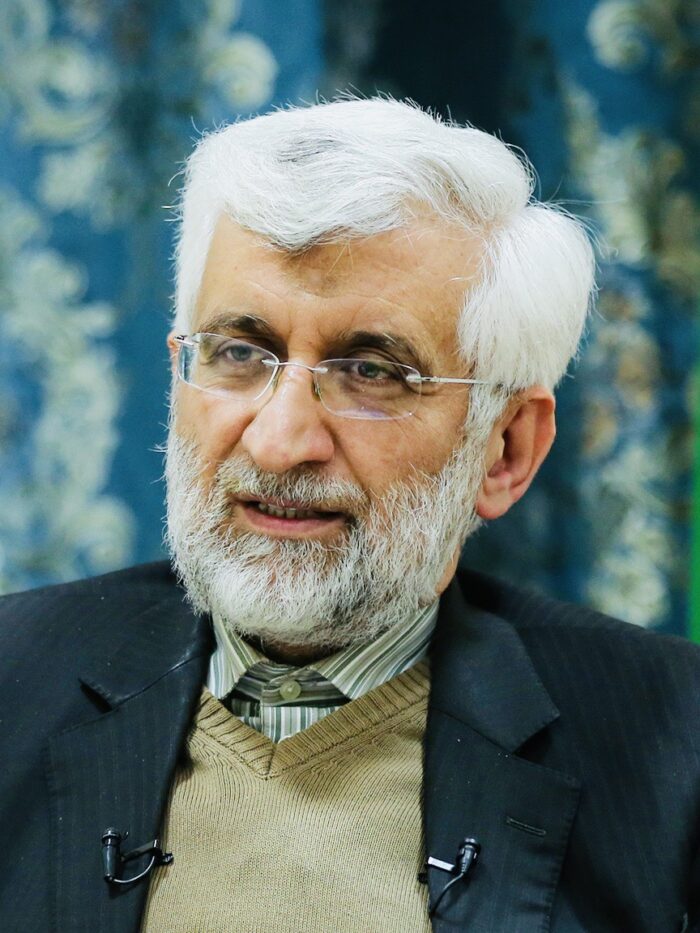
The third group is composed of the ultra-hardline Paydari Front, which opposes all negotiations with the United States. Although small in number, it enjoys proximity to power through insiders such as Saeed Jalili, who is currently Khamenei’s representative on the Supreme National Security Council.
Amid tensions over the strait, Iran is rebuilding infrastructure from missile bases to bridges that was destroyed by the United States and Israel during the hottest phase of the war, The Wall Street Journal reported last month.
The story, based on a review of satellite imagery, suggests that the speed at which Iran is restoring its capabilities helps explain why it is standing up to the United States and may yet politically prevail.