Israel’s support in the Democratic Party is gradually slipping away.
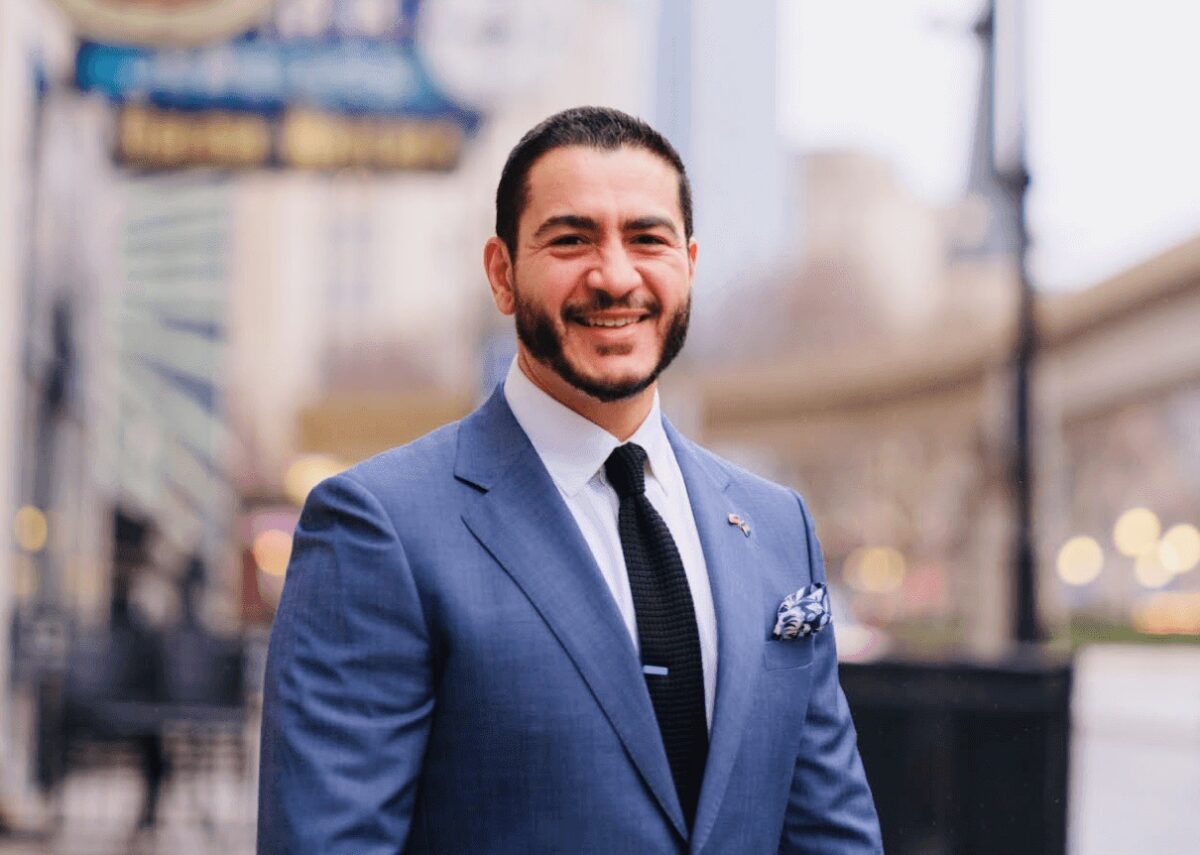
The latest evidence of this seminal shift is Abdul El-Sayed’s victory in Michigan’s Democratic primary on August 4.
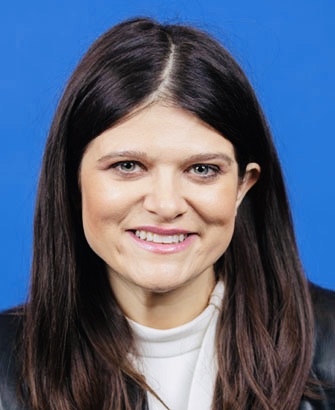
El-Sayed, a harsh critic of Israel, may become the first Muslim to serve in the U.S. Senate. A 41-year-old physician, former public-health official and onetime Columbia University epidemiology professor, he defeated Haley Stevens, a 43-year-old four-term pro-Israel congresswoman, by a razor-thin margin of 48.5 percent to 47.5 percent.
It was an intensely bitter race, replete with mutual accusations of anti-Arab racism and antisemitism. Both candidates were vying to replace the retiring Democratic U.S. senator, Gary Peters.
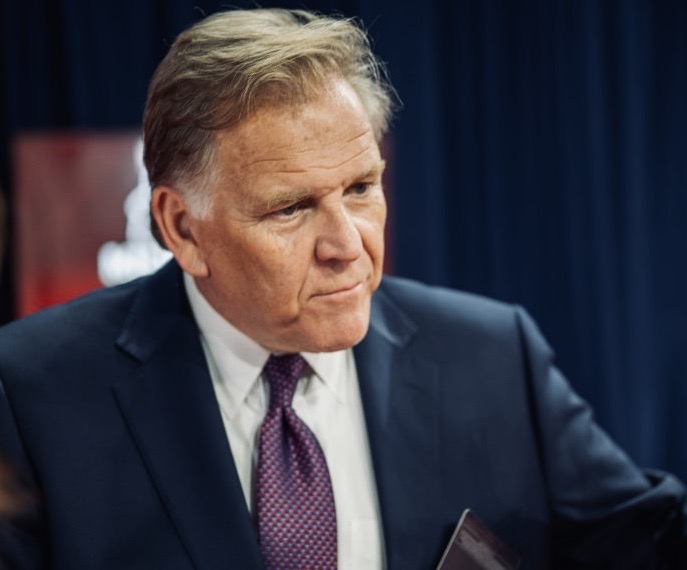
El-Sayed, a member of the party’s leftist progressive wing, will face Mike Rogers — a Republican supporter of Israel who has been endorsed by President Donald Trump — in the November election. The latest polls indicate that Rogers will defeat El-Sayed, who was born in Michigan but whose parents immigrated to the United States from Egypt.
El-Sayed’s victory may be seen as a watershed in American politics. Even a few years ago, the idea that a candidate like him could win a Democratic primary on an anti-Israel platform was virtually inconceivable.
Zohran Mamdani broke that mould last autumn when he became the first Muslim mayor of New York City.
In light of these developments, we have entered a new era in which the Democratic Party’s increasingly influential progressive wing is gaining ground. There is a pro-Palestine current running through it, and politicians like El-Sayed are exploiting this sentiment to the hilt.
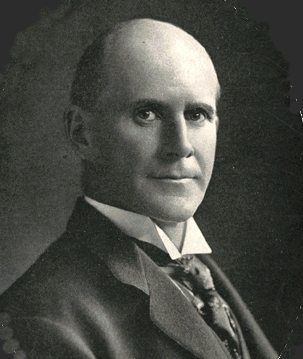
Judging by recent CNN and Washington Post polls, about one-third of Democrats new consider themselves democratic socialists, while three-quarters would be open to supporting a democratic socialist for president. The last major American socialist figure, Eugene Debs, contested the presidency five times and won six percent of the vote in 1912.
This generational shift away from Israel does not bode well for Israel’s special relationship with the United States, but it was well under way before El-Sayed appeared on the scene.
In New York City earlier this summer, three Democrats endorsed by Mamdani — Darializa Avila Chevalier, Claire Valdez and Brad Lander — won primaries in New York City, which has the country’s largest Jewish population. They are expected to win seats in Congress in the general election in November.
Valdez, Lander and Chevalier are lukewarm or hostile to Israel and have been sharply critical of the American Israel Public Affairs Committee (AIPAC), an influential lobbying group that actively promotes the United States’ alliance with the Jewish state.
If elected, they will join progressives like Alexandra Ocasio- Cortes, Ilhan Omar, Rashida Tlaib and Bernie Sanders in Congress. Like their fellow progressives, they have accused the Israeli armed forces of genocide in the Gaza Strip and have called for an arms embargo against Israel.
Donavan McKinney, another progressive who opposes military aid to Israel, defeated Shri Thanedar, a pro-Israel congressman, in the recent Democratic primary in Michigan, a battleground state. A democratic socialist backed by Sanders and Tlaib, he focused his campaign mainly on domestic issues. He is heavily favored to win the election in November.
Not all progressives, however, were on the winning side. In Missouri, incumbent Wesley Bell scored a resounding victory in the Democratic primary against Cori Bush, a prominent Democratic socialist and vocal critic of Israel.
The victories registered by progressives like McKinney and El-Sayed are also the clearest sign yet that the Democratic establishment has lost its grip on the party.
Stevens was endorsed by the Democratic governor of Michigan, Gretchen Whitmer, and by the minority leader in the U.S. Senate, Chuck Schumer, but their endorsements carried little weight.
AIPAC reportedly funnelled $32 million into Stevens’ campaign, prompting El-Sayed to raise it as a campaign issue.
According to The New York Times, AIPAC intends to pump tens of millions of dollars into Rogers’ coffers. “Our members remain determined to ensure that voters reject Dr. El-Sayed and his radical anti-Israel agenda in November,” said AIPAC in a statement on August 6.
Although El-Sayed is not as radical as Mamdani, having distanced himself from the anti-Israel Democratic Socialists of America, he is definitely on the party’s left wing.
He repeatedly accused Israel of committing genocide in Gaza, lambasted Israel as “bloodthirsty,” claimed that the Israeli government was as “evil” as Hamas, questioned whether Israel should be a Jewish state, and argued that U.S. aid to Israel should be diverted to domestic priorities.
El-Sayed also offended many Jewish Democrats by attacking AIPAC, by maintaining his relationship with the anti-Israel blogger Hasan Piker, and by equating the recent antisemitic attack on Temple Israel in the Detroit suburb of West Bloomfield with Israel’s military operations in Lebanon.
But speaking to The New Yorker’s David Remnick several days before the primary, El-Sayed struck a more nuanced tone on Israel.
“I believe in a process that offers a free Palestinian people the equal rights, dignity and self-determination that a free Jewish Israeli people ought to have,” he said. “And I will support whatever the outcome is that a free Palestinian people and a free Jewish Israeli people decide is the right outcome. If that’s two states, great, I’m for it. If it’s one state, great, I’m for that — if it’s this ‘land for all’ model, or 23 states, or whatever it is they decide.”
Trump was not so measured, accusing El-Sayed of being “a Communist loser who hates Jews and Israel.”
Matt Brooks, the chief executive officer of the Republican Jewish Coalition, condemned El-Sayed as well, claiming that he poses “a direct threat” to Jews in Michigan, which has substantial Jewish and Arab communities. “El-Sayed has struggled to say that Israel has a right to exist as a Jewish state and empathized with a terrorist who tried to murder Jewish schoolchildren at Temple Israel … yet Michigan Democrat picked him as their nominee for the United States Senate.”
Although most Jews voted for Stevens, two anti-Zionist groups, Jewish Voice for Peace and IfNotNow, rallied behind El-Sayed.
In the wake of the primary, El-Sayed expressed a desire to build bridges with Jewish Democrats in the state. In his victory speech, he appealed to Jewish voters, saying that his “commitment to Jewish safety is the same commitment that I have to the safety of my own daughters.”
And in an interesting twist, he appeared to acknowledge the right of Jews to self-determination in their ancestral homeland, Israel, something he resisted during the primary race. He thanked “Jewish American brothers and sisters” who backed his campaign and said that his Jewish supporters “understand that self-determination for one people does not require the quenching of self-determination for another people.”
Having rolled over Stevens, El-Sayed appealed for her support to defeat Rogers. She quickly endorsed him, as did Schumer and Kamala Harris, who was vice president during Joe Biden’s presidency.
Looking ahead, El-Sayed’s path to the Senate is less than assured. Pundits believe he faces an uphill battle against Rogers, a former congressman who claims that El-Sayed is “trying to bring communism to Michigan.” The latest polls show Rogers defeating him by a margin of one to 10 points.
To defeat Rogers, he will have to attract African American, Jewish and working-class moderates in the Detroit area who voted for Stevens.
It will be an election to watch, given its implications for American politics and Israel’s relations with its greatest ally.