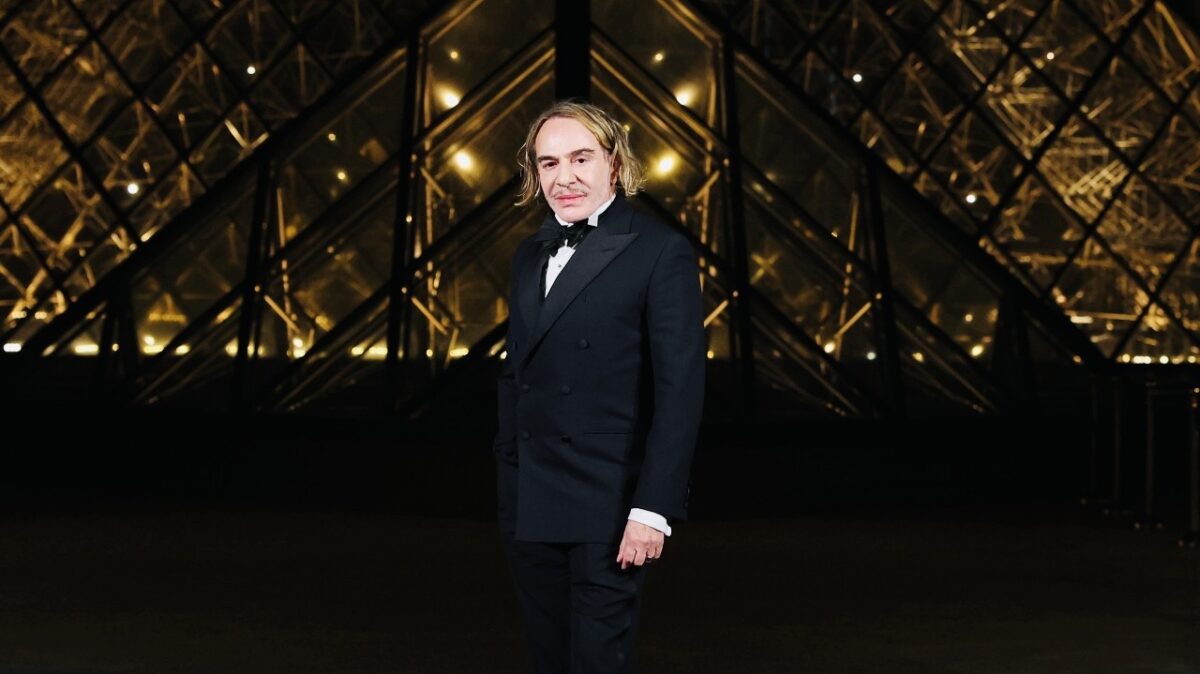
John Galliano, the controversial British fashion designer, will be the subject of an exhibition at New York City’s Metropolitan Museum of Art starting next May 9. Due to run until January 9, 2028, it may well burnish his reputation as one of the most influential designers of the 20th century, but it may not necessarily improve his battered image. He will be the only designer apart from Yves Saint Laurent and Rei Kawakubo to have attained this singular honor at the museum.
Now 65, Galliano is a revered figure, having been the head of design at Christian Dior in Paris from 1996 to 2011. Under his leadership, Dior went from being “a well-mannered French heritage house” to “a global phenomenon,” writes Vanessa Friedman in The New York Times.
Galliano’s fortunes crashed following a disgraceful incident in a bar in Paris, where he revealed himself as an antisemite in an incriminating video. In a separate video, he was heard praising Adolf Hitler.
Subsequently, he was charged with a hate crime and lost his prestigious job, forcing him to embark on a period of repentance and rehabilitation.
Ever since his ignominious “Mel Gibson” moment in 2011, Galliano has been haunted by his hateful and still unexplained outburst.
Needless to say, he was not the first celebrity to engage in Jew bating.
In the summer of 2006, the Australian actor and director Mel Gibson, having been stopped for drunk driving in Malibu, California, launched into a tirade against the arresting police officer. Gibson shouted “fucking Jews” and claimed that Jews are “responsible for all the wars in the world,” according to the policeman’s arrest report. Gibson also repeatedly asked the arresting officer, “Are you a Jew?”
Arrested for driving under the influence, he was sentenced to probation, fined, and ordered to attend an alcohol treatment program.
Jewish organizations, including the Anti-Defamation League, strongly condemned his remarks.
Gibson issued a lengthy public apology, saying, “There is no excuse, nor should there be any tolerance, for anyone who thinks or expresses any kind of antisemitic remark.” In a television interview, Gibson described his comments as “the stupid ramblings of a drunkard,” admitted he was ashamed, and denied being an antisemite.
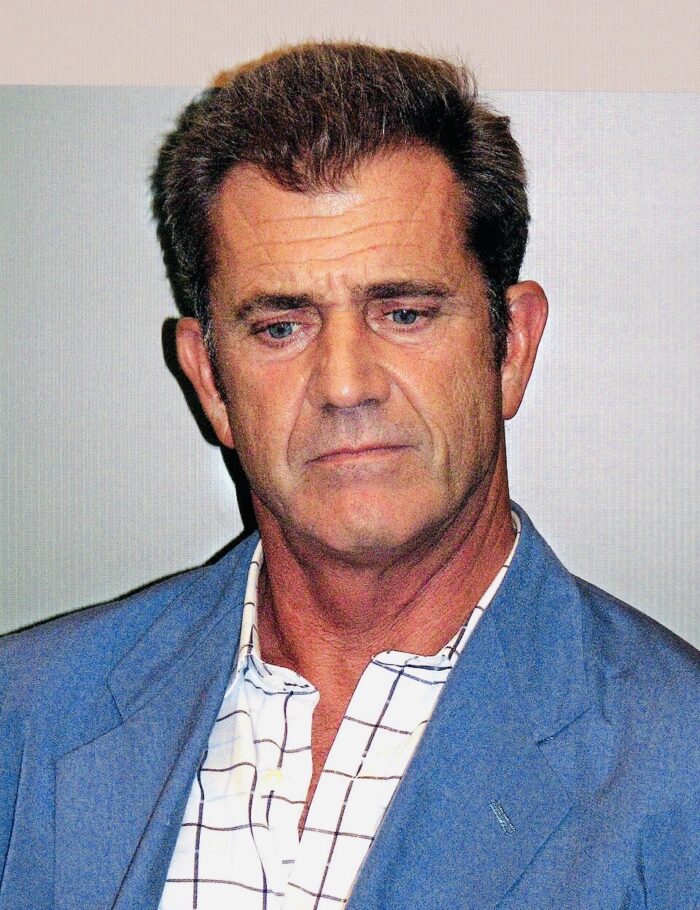
Gibson’s reputation in Hollywood tanked, as did his employment prospects. Eventually, he returned to directing and acting, but this incident still remains a defining feature of his life.
Galliano suffered a similar fate after unleashing a profusion of profanities at a woman sitting near him at the La Perle bar in Paris’s historically Jewish Marais district.
According to The Guardian, a British daily, Galliano said, “Could you shut up please, I can’t stand your voice, fucking bitch.” Casting aspersions on her clothes, hair, thighs and makeup, he reportedly called her a “fucking ugly Jewish bitch” and made a reference to her “dirty Jewish face.” The woman he addressed, Geraldine Bloch, later said he had used the word “Jewish” at least 30 times.
Her friend, Philippe Virgitti, recalled that Galliano cursed him as a “fucking Asian bastard” and threatened to kill him.
Shortly afterward, the Paris Criminal Court found Galliano guilty of “public insults based on origin, religious affiliation, race or ethnicity,” an offence regarded as a hate-speech crime under French law.
During his trial, Galliano said he had no memory of the incident because he was suffering from severe addictions to alcohol, Valium, and sleeping pills. The couturier told judges he had been “pushed to the edge” by financial and emotional pressures.
Asked in court about a separate video in which he said, “I love Hitler,” Galliano replied, “These are not views that I hold or believe in … I see someone who needs help, who’s vulnerable. It’s the shell of John Galliano. I see someone pushed to the edge.”
Galliano was fined and instructed to pay $21,500 in legal costs to the complainants. He entered a rehabilitation process and publicly apologized, describing his remarks as “foul” and “horrific.”
He also worked with Jewish leaders and organizations as part of his efforts to understand antisemitism and make amends.
In 2013, Abraham Foxman, the then national director of the Anti-Defamation League, met Galliano and arranged for him to study with a rabbi and visit the Auschwitz-Birkenau Holocaust memorial in Poland.
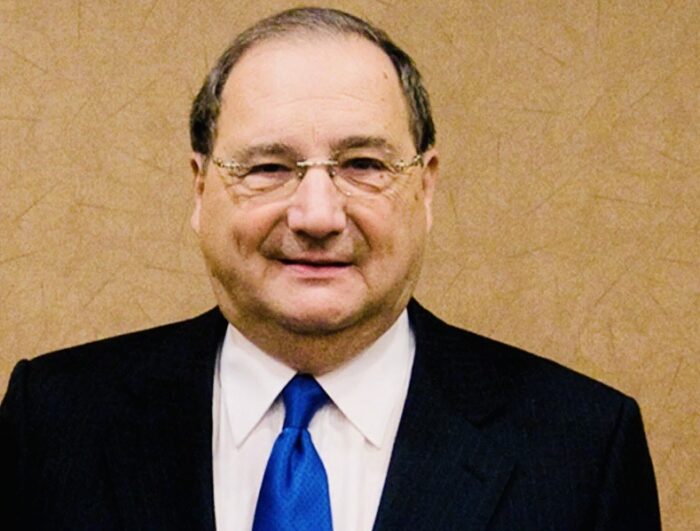
Foxman was impressed by his apparent transformation. “Mr. Galliano has worked arduously in changing his worldview and dedicated a significant amount of time to researching, reading, and learning about the evils of antisemitism and bigotry,” said Foxman, who died in May.
Jonathan Greenblatt, the chief executive of the Anti-Defamation League, said, “We believe John Galliano has genuinely worked through the issues that led to his antisemitic outburst years ago in Paris, and we have long since accepted his apology. His efforts to repair the damage his words caused and to learn from that incident should be applauded.”
Rabbi Rick Jacobs, the president of the Union for Reform Judaism, said he had met Galliano and had come away with the impression that he is “an incredible positive model of a guy who did the work to really earn back his position.”
Anna Wintour, the global editorial director of Vogue and a trustee of the Metropolitan Museum of Art, came to his defence as well and vigorously supported its decision to honor Galliano and his work.

Understandably, he should be given a second chance, at least under the Jewish principle of teshuva. But Galliano needs to explain why he harbored such visceral animosity toward Jews in the first place. To the best of my knowledge, he has yet to do so.
A thorough examination of the roots of his anti-Jewish animus could be useful in better understanding the dynamics of the world’s oldest hatred. If Galliano identifies the beliefs, prejudices or influences that produced such virulent antisemitism, sharing that understanding could help others recognize how hatred develops.
It is time for Galliano to come clean. He should do so before the opening of the Metropolitan Museum of Art’s exhibition dedicated to his career.