Donald Trump is bound to be disappointed, if not angry, by Israel’s negative reaction to his recent announcement regarding the prospects of peace in the Gaza Strip.
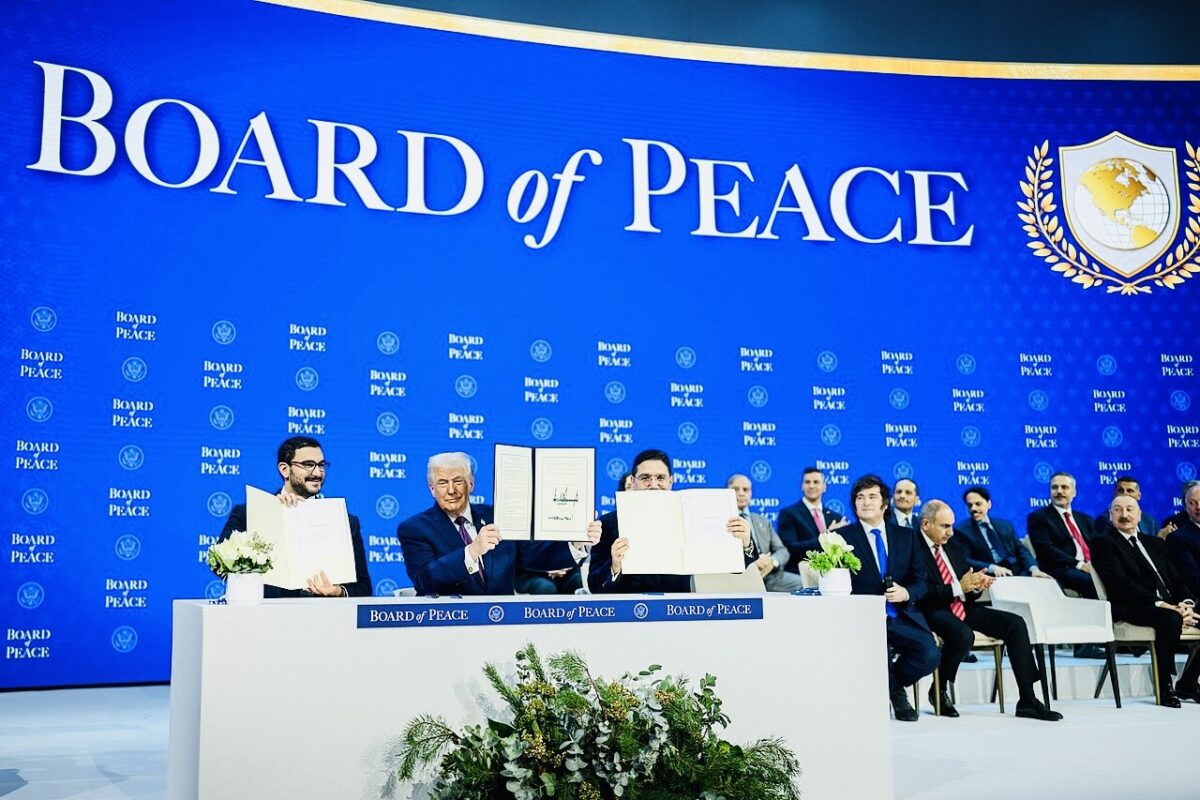
On July 29, nine days after Khalil al-Hayya was elected Hamas’ new political chieftain, Trump announced that Hamas had agreed to give up its weapons during future negotiations with the Board of Peace, a body created by the Trump administration last year. It is supposed to facilitate Trump’s 20-point plan and monitor the ceasefire that ended Israel’s war with Hamas in October 2024.
While Trump viewed his announcement as a milestone, Israel regarded it as a millstone
The Israeli government is profoundly skeptical that Hamas will surrender its weapons and is unlikely to pull back its forces from Gaza, as per Trump’s plan. Certainly, Netanyahu will not order a withdrawal before the October 27 general election. He faces an arduous reelection battle, and his far-right coalition partners have demanded no withdrawals from Gaza. Keeping this factor in mind, he has remained conspicuously and tellingly silent. His spokesmen, however, have expressed skepticism.
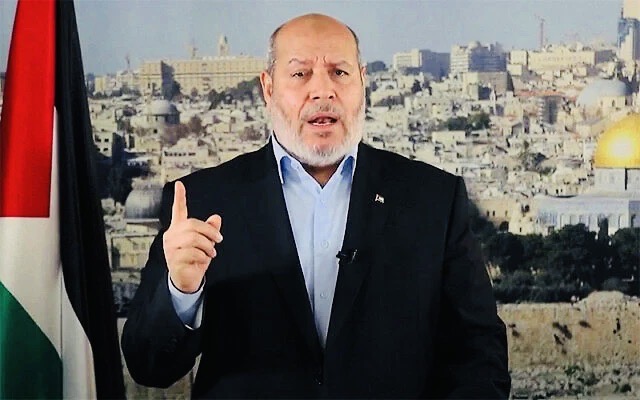
Hamas officials claim they have accepted the plan in principle, but are waiting for Israel’s approval. Ghazi Hamad, a senior Hamas official, told Reuters that Israel must accept it before Hamas disarms.
Israel will not consider a withdrawal unless Hamas — an organization that rejects Israel’s very existence — is prepared to relinquish its array of weapons.
And therein lies the Gordian knot that the Board of Peace may never succeed in untying.
Trump’s plan, which is to be carried out in “carefully structured phases,” is nothing if not ambitious.
It requires Hamas to surrender its weapons, destroy its vast network of tunnels, and hand over power to a new authority. It also envisages a phased Israeli withdrawal from Gaza, the formation of a new technocratic Palestinian government, the deployment of an International Stabilization Force, and the reconstruction of that coastal enclave.
Gaza, with a population of 2.2 million, was virtually destroyed during Israel’s two-year war with Hamas from October 2023 to October 2024. Hamas ignited the conflict after several thousand of its heavily-armed gunmen attacked communities, towns and military bases in southern Israel on October 7, 2023, killing roughly 1,200 people and kidnapping 251 Israelis and foreign nationals. Israel then invaded Gaza, triggering the fifth cross-border Gaza war in 15 years.
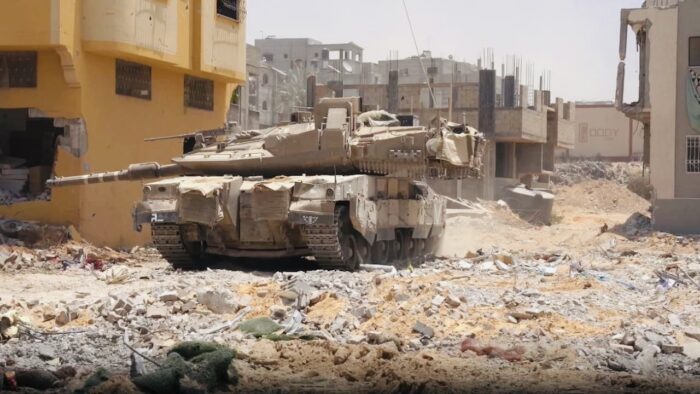
During its military campaign, Israel killed 73,000 Palestinians, about 22,000 of whom were Hamas and Islamic Jihad operatives. Israel eliminated an entire echelon of Hamas leaders from Yahya Sinwar and Ismail Haniyeh to Mohammed Deif and Mohammed Sinwar. In May of this year, Israel assassinated Izz al-Din al-Haddad, the head of Hamas’s military wing. Eleven days later, Israel killed Haddad’s replacement, Mohammed Odeh. Israel has also taken out hundreds of midlevel commanders.
Despite its losses, Hamas — a proxy of Iran– is still standing, confounding Israel’s objective of obliterating it. But as Jaser Abumousa points out in a recent Foreign Affairs article, Israel managed to maul Hamas “beyond the point of recovery.”
In his view, Hamas may still be stronger than other armed group in Gaza. But Israel’s bombing campaign wiped out Hamas’ essential military infrastructure, tore asunder its leadership, and cut it off from its patrons, Iran and Hezbollah.
Consequently, Hamas lacks the power to actually rule Gaza, in Abumousa’s opinion. “It is suffering from political paralysis and facing financial disaster,” he writes. “Finally, it has lost public support: many Gazans blame (it) for starting a war that has resulted in the destruction or damage of 90 percent of the homes in Gaza and the deaths of roughly four percent of the prewar population.”
Additionally, Israel occupies upwards of 60 percent to 70 percent of Gaza, from which it unilaterally withdrew in 2005. Yet Hamas, which seized Gaza from Fatah in a violent coup in 2007, is in complete control of its chunk of Gaza, where virtually all its inhabitants presently live.
The ceasefire that Trump brokered is extremely shaky. In the past two years, Israel and Hamas have clashed on almost a daily basis, with five Israeli soldiers and more than 1,200 Palestinians having been killed. Despite Trump’s announcement, the Israeli Air Force has continued to strike Hamas sites in Gaza. The Board of Peace’s director, Nickolay Mladenov, who visited Israel yesterday, has criticized Israel’s air strikes.

Hamas, having been severely pummelled by Israel, has not been able to mount a meaningful military response to Israel’s attacks. And since January of this year, Hamas has attempted to fire only one rocket at Israel. Prior to October 7, Hamas would fire a barrage of rockets when its truce with Israel broke down.
These continuing clashes underscore the difficulty facing the Board of Peace and Trump’s plan, which consists of three parts: the unseating of Hamas, the end of Israel’s occupation, and the rebuilding of Gaza. The guarantors of the agreement are the United States, Qatar, Turkey and Egypt. Implementation, which is expected to begin in the next few weeks, will be very difficult due to visceral hatred on each side.
U.S. officials have said that Hamas has agreed to demilitarize Gaza and transfer responsibility for governance to the National Committee for the Administration of Gaza (NCAG), a technocratic body managed by Palestinians.
On July 7, Hamas said it had dissolved its government and was ready to hand it over to the NCAG. Theoretically, this means that neither Hamas nor the Palestinian Authority will have a role to play in administering Gaza and providing security.
When Trump announced his plan on his Truth Social site, he wrote in a flourish of optimism, “Today, the Board of Peace reached a HISTORIC agreement for the COMPLETE DISARMAMENT of Hamas and all other armed groups in Gaza. This is a monumental step toward lasting PEACE and SECURITY.”
Brushing off questions about its viability, Trump claimed that Israel was “very happy” with it despite signs of concern from the Israeli government. “We do have an understanding with Israel,” he told reporters after a cabinet meeting at the Camp David presidential retreat. “Israel is very happy about it. Israel helped us.”
A day later, he tempered expectations, calling the situation in Gaza “very complex” and warning that the process would probably be replete with “ups and downs.” He added that he would be “very disappointed” if Israel rejected his plan.
Trump’s pressure tactic did not work.
An unnamed Israeli “diplomatic official” said the plan does not adequately address a key issue — the disarmament of Hamas. “There will be no Israeli withdrawal” from the Yellow Line, he said. The Yellow Line demarcates the areas in Gaza controlled by Israel and Hamas.
The official said that Hamas must be divested of its weapons and that they must be removed from Gaza altogether. Furthermore, he noted, Gaza must be demilitarized.
This message was reportedly conveyed to Tony Blair, an executive member of the Board of Peace. Among its other members are U.S. Secretary of State Marco Rubio, Middle East peace envoy Steve Witkoff, Trump’s chief of staff Susie Wiles, and Trump’s son-in-law and former senior advisor, Jared Kushner.
Subsequently, Doron Spielman, a spokesperson for Prime Minister Benjamin Netanyahu’s office, told The Associated Press that Israel’s intelligence assessment was that Hamas remains committed to rebuilding its armed forces rather than genuinely demilitarizing.
“Our assessment is that if we redeploy before Hamas is truly disarmed, it will quickly expand its presence throughout Gaza, rebuild its terrorist infrastructure, once again threaten Israeli communities, and seek to carry out another October 7-style attack,” he said. “Disarming means physically giving up the weapons. Nothing less.”
Spielman said that Hamas has used the current ceasefire to rearm, recruit thousands of additional fighters and rebuild its military infrastructure.
Spielman’s assessment conforms to an Israel Defence Forces intelligence report, released in June, that Hamas’ military wing is preparing for a renewed round of war with Israel.
According to the report, Hamas has been manufacturing hundreds of explosive devices and anti-tank missiles every month, rebuilding tunnels destroyed by Israel during the war, and recruiting new fighters. In addition, Hamas has restarted training new members for its Nukhba force, which breached Israel’s defences on October 7.
Ultimately, the success of Trump’s plan is entirely contingent on Hamas’ disarmament, which in turn is dependent on a complicated series of reciprocal and independently verified steps, which may or may not take place.
Hamas, whose raison d’être is armed resistance to Israel’s occupation and existence, will be extremely reluctant to surrender all its weapons. Hamas has already said it will not lay down its heavy weapons until the creation of a Palestinian state, a scenario that the present Israeli government staunchly rejects.
It is already clear that Trump’s plan, however well meaning, is fanciful and has little, if any, chance of succeeding. In all probability, the status quo in Gaza will prevail. This will disappoint Trump and likely undermine his relationship with Netanyahu, embolden Israel to remain in much of Gaza, entrench Hamas as an immovable force, and doom the majority of Gaza’s Palestinian inhabitants to a life of squalor and misery.