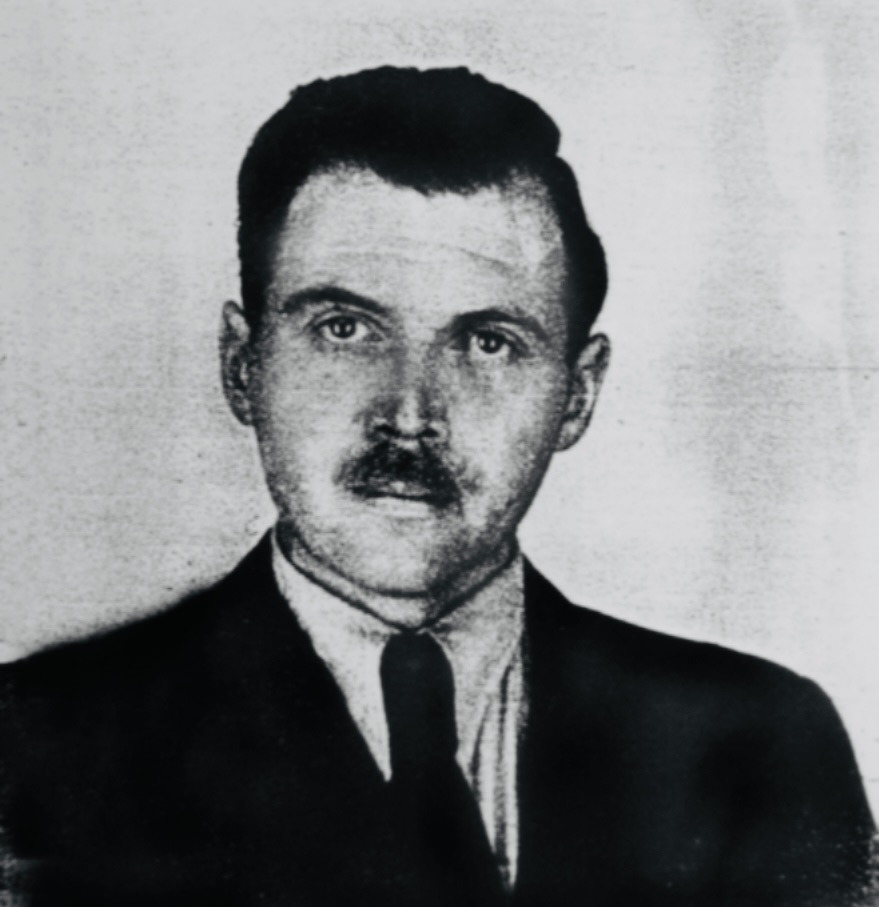
Wolfgang Gerhard, 67, drowned off a beach in Bertioga, Brazil, in 1979. His real name was Josef Mengele, a German physician known as the Angel of Death.
Mengele was a war criminal who conducted gruesome medical experiments on inmates in the Auschwitz-Birkenau extermination camp and who funnelled thousands of civilians to oblivion. He carried out these atrocities from 1943 to 1944.
He was buried in a cemetery near Sao Paulo under his pseudonym, and six years would elapse before the news of his death surfaced. His burial was arranged by Lisolette Bossert and her husband, Wolfram, who had sheltered Mengele for ten years and remained faithful to him until his demise.
After escaping from Europe and evading justice, Mengele lived in Brazil and Paraguay for some 18 years, mostly under the protection of the Bosserts.
“What Mengele found in Brazil, especially in the state of São Paulo, was a network of loyal supporters, European immigrants who, in one way or another, had their lives intertwined with his,” writes Betina Anton in Hiding Mengele (Diversion Books), a thoroughly researched account about him. “In Brazil, Mengele created his ‘Tropical Bavaria,’ a place where he could speak German and maintain his customs, beliefs, friends, and his connection to his homeland.”

Anton, a Brazilian journalist of German extraction, knew Lisolette Bossert, who was her teacher at a German school in Sao Paulo. Even as generous rewards were offered for information leading to Mengele’s arrest, Bossert kept conspicuously silent.
However, she was not the first person who helped Mengele. Giza and Gitta Stammer, a Hungarian couple who lived in Austria after World War II and immigrated to Brazil in 1949, protected Mengele for thirteen years.
Anton, in her interesting book, traces Mengele’s life from Gunzburg, his birthplace in Bavaria, to Bertioga, where he drew his last breath.
The scion of a wealthy family in the agricultural machinery business, Mengele left his hometown when he was nineteen to study at the University of Munich, where he earned a doctorate in anthropology. He switched to medicine, coming under the influence of Otmar von Verschuer, a geneticist and the director of the University of Frankfurt’s Institute for Human Genetics and Racial Hygiene.
Like Verschuer, Mengele, a conservative Catholic, was drawn to eugenics, a racially biased science that the Nazi regime exploited in the mistreatment of Jews and handicapped Germans. Eugenics was invented by the British scientist Francis Galton, a cousin of Charles Darwin. Galton believed that the human species could be improved through the selection of “superior” races over “inferior” ones. By the beginning of the twentieth century, eugenics had become a global movement, particularly in the United States and Germany.
Mengele joined the Nazi Party in 1937, having developed an affinity with it on the issue of race. A year later, he was inducted into the SS, the Nazi police force. After Germany’s occupation of Poland, he was assigned to a special office whose task was to determine whether ethnic Germans from the Baltic states possessed the right racial traits to take over farms that had been confiscated from Poles. Having finished this assignment, he was moved to an SS division.
Mengele requested a transfer to Auschwitz because he believed there were great research possibilities there. He was correct. The camp offered him an opportunity to gain access to Jews and prisoners from various races whom he could use as subjects in medical experiments at his own discretion. He was especially interested in the study of twins, and the first experiments he conducted were on Roma children.
The topics he also wished to investigate ranged from growth disorders and bone-marrow transplants to body abnormalities and typhus and malaria.
Mengele, too, was charged with meeting newly arrived inmates and deciding in a split second whether they would live or die. “In an almost gentle voice, he asked if anyone was ill,” Anton writes. “If so, the person was told to move to the left, thus joining the elderly, children and mothers with small babies … Nobody knew at the time that going to the left meany dying immediately in the gas chambers, and going to the right meant living a little longer to work exhaustingly.”
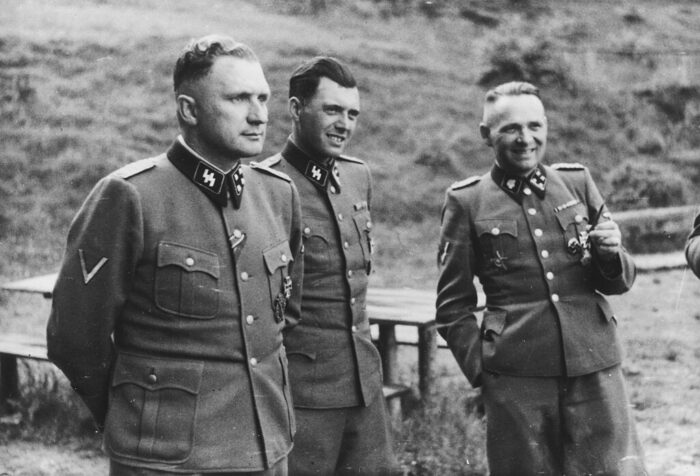
Mengele’s performance impressed his boss, Dr. Eduard Wirths, who promoted him from physician in charge of the Roma camp to chief doctor of the entire Auschwitz complex.
With the Red Army approaching in January 1945, Auschwitz was evacuated and Mengele was sent to the Gross-Rosen camp in Poland. He left with all his notes relating to his experiments, but they have yet to be found. The information regarding his experiments has been provided by the human test subjects who survived and by his assistants.
Having escaped before he could be arrested, Mengele spent the final months of the war at a German military hospital in the Sudetenland in Czechoslovakia. From there, under an assumed name, he worked on a farm in Bavaria for the next three years.
Taking advantage of an escape route set up by diehard Nazis, Mengele boarded a ship in 1949 bound for Argentina, which welcomed fugitives from the Third Reich. He carried a Red Cross passport issued by the Swiss consulate in Genoa and bearing the name of Helmut Gregor. His wife, Irene, had no desire to live abroad and divorced him in 1954.
Once in Buenos Aires, Mengele established relationships with a host of Nazis ranging from Willem Sassen, a Dutch collaborator, to Adolf Eichmann, one of the architects of the Holocaust. They would be among his protectors. He felt safe enough to live openly under his real name. When he applied for an Argentine identity card, he needed documents from the German embassy to prove that he was really Josef Mengele. “This episode makes clear that the German authorities knew exactly of Mengele’s whereabouts then,” says Anton.
In Argentina, Mengele supported himself as the owner of a small carpentry shop. His family in Germany supplied the investment capital. Later, he would be a partner in a pharmaceutical company.
The first official accusation against Mengele was filed in 1958 by the Central Office for the Investigation of Nazi Crimes, which was located in the West German town of Ludwigsburg. In 1959, a court in Freiburg issued an arrest warrant against him. Shortly afterward, the West German government offered a substantial reward to anyone who had information leading to his capture. As Anton notes, it was the first time that West Germany had offered money to apprehend a Nazi criminal.
By then, Mengele had fled to Hohenau, a town in Paraguay founded by German immigrants. He did not stay long. He went back to Argentina in 1960, spending the next nineteen years in El Dorado, a neighborhood in Sao Paulo’s suburbs.
The Mossad, Israel’s external intelligence agency, made several attempts to capture him. “Mengele would never lose his fear of being found by the Jews, even though he lived in remote places, on farms and in the outskirts of urban centers,” says Anton.
The Mossad’s abduction of Eichmann in 1960 left a deep impression on him. He was so fearful of being caught that he developed a serious health problem. Having swallowed an excessive amount of hair from his moustache, he accumulated a ping-pong ball-sized clump of hair that caused a blockage in his intestines. Toward the end of his life, Mengele was afflicted by maladies from rheumatism to migraine headaches.
Six years after he drowned, three countries — West Germany, the United States and Israel — announced a coordinated effort to find him and bring him to trial for crimes against humanity. A month later, word got out that he had died and had been buried in a cemetery near Sao Paulo. His remains were exhumed and his identity was confirmed after lengthy DNA testing.
Nearly fifty years after his passing, Mengele “returned” to medical school, this time as “an object of study.” For decades, his skeleton lay forgotten in a medical institute in Sao Paulo. But about twenty years ago, it was pressed into service in forensic medicine classes. “And so Mengele’s story ended as he had wished,” writes Anton with biting sarcasm. “At a university … but in a way he could never have imagined.”