
Israel’s furious reaction to news that Navi Pillay had won the Nobel Peace Prize is perfectly understandable.
Pillay, a South African jurist and an ad hoc judge at the International Court of Justice, presided over a United Nations commission that accused Israel of genocide in the Gaza Strip during its two-year war with Hamas from 2023 to 2025.
In announcing the award, the chairman of the Norwegian Nobel Committee, Jorgen Watne Frydnes, said that Pillay’s work as a human rights lawyer promoted peace and international law and was “a source of hope and inspiration to all those who seek to bring about a more peaceful world.”
In effect, the Norwegian Nobel Committee legitimized the scurrilous accusation that Israel resorted to genocide in its just war of self-defence.
Prime Minister Benjamin Netanyahu blasted the committee’s decision as misguided, accused it of having “lost its moral compass,” and condemned Pillay of being prejudiced against Jews.
Israel’s foreign ministry denounced it as “the grotesque weaponization of an award to legitimize anti-Israel hatred and prejudice.”
Danny Danon, the Israeli ambassador to the United Nations, said that honoring Pillay would damage “the credibility of the Nobel Committee” and “tarnish the legacy of the distinguished laureates who have received this honor throughout history.” He added that being a Nobel Prize recipient “will not make (Pillay’s) false conclusions about Israel any more truthful.”
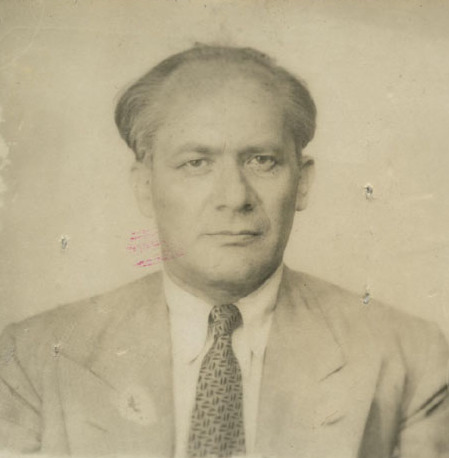
South Africa initiated the case against Israel under the Genocide Convention. Raphael Lemkin, a Polish Jewish lawyer who coined the term “genocide,” fled Poland after Germany’s invasion in 1939. He found asylum in the United States, where he was appointed a professor at Duke University. From his base there, he campaigned to raise international awareness of the atrocities that Germany and its Axis allies were committing against Jews. Amid this untrammelled violence, Lemkin coined the word “genocide” to describe Nazi Germany’s genocidal policy toward Jews during the Holocaust.
The convention he called for was adopted by the United Nations on December 9, 1948. It entered into force three years later.
According to the convention, genocide occurs when one or more of five specified acts are perpetrated with the intent to destroy, in whole or in part, a national, ethnic, racial or religious group.
The five prohibited acts are: Killing members of the group. Causing serious bodily or mental harm to members of it. Deliberately inflicting conditions of life calculated to bring about the group’s physical destruction, in whole or in part. Imposing measures intended to prevent births within the group. Forcibly transferring children of the group to another group.

South Africa took its case to the International Court of Justice in January 2024, when the war in Gaza was still raging. The court ordered Israel to take measures to prevent acts prohibited by the convention, prevent and punish direct and public incitement to genocide, and facilitate urgently needed humanitarian assistance.
The court, however, has yet to determine whether Israel actually committed genocide.
In September 2025, Pillay’s Independent International Commission of Inquiry on the Occupied Palestinian Territory, including East Jerusalem and Israel, concluded that Israeli authorities and security forces had committed genocide in Gaza. It found evidence of four of the five prohibited acts and concluded that statements by Israeli officials, together with the pattern of conduct, demonstrated genocidal intent. It also found that senior Israeli officials had incited genocide.
In light of these developments, it is deeply ironical that Israel, a state which emerged from the ashes of the Holocaust, has been tarred with the brush of genocide. Yet Israel’s argument that its war was strictly directed against Hamas rather than Palestinians as a people is compelling and plausible.
Although tens of thousands of Palestinian civilians were killed during the war, the crucial question is whether Israel committed these acts with the specific intent to destroy Palestinians, in whole or in part, as a national, ethnic, racial or religious group. Israel maintains that its military campaign was directed against Hamas, not Palestinians as a people. In my view, the evidence does not establish the genocidal intent required by the convention.
Israel’s military campaign was expressly directed against Hamas and its sister organizations. Israel launched its invasion of Gaza following Hamas’ attack on October 7, 2023, during which roughly 1,200 people were killed, dozens were sexually assaulted, and 251 were taken hostage. Israel’s objectives were to destroy Hamas’ military and governing capabilities, recover the hostages and prevent another attack.
Palestinian civilian casualties occurred largely because Hamas deliberately placed its military infrastructure in residential neighborhoods. It has been methodically documented that Hamas used civilians as human shields, expecting their deaths to arouse a wave of international condemnation against Israel.
Hamas’ strategy worked.
It is true that Israel levelled the majority of residential buildings in Gaza, but this, too, was unavoidable because Hamas operatives concealed themselves in these structures.
The aforementioned arguments were clearly dismissed by Pillay, whose record points to the inescapable conclusion that she is ill-disposed toward Israel.
If the Israeli government had really sought to wipe out the Palestinians, it could have done so. It could have ordered the air force to carpet bomb Gaza day and night and and kill most of its inhabitants. It could have dispensed with issuing warnings about impending attacks. Instead, Israel dropped leaflets and sent texts to warn Palestinians to move to safer places. It could have starved the Palestinians, but refrained from enacting such measures.
To suggest that Israel and Nazi Germany are guilty of the same crime is simply absurd, abominable and surreal.

It should not be forgotten that Hamas initiated this war, whose overarching objective was to wipe Israel off the map and slaughter its Jewish population. Hamas knew that Israel’s military response would be fierce and unrelenting. In striking back, Israel seriously degraded Hamas and devastated Gaza. But Israel’s objective from start to finish was to destroy Hamas. Period.
Genocide was never a component of Israel’s plan. The deaths of so many Palestinians can ultimately be attributed to Hamas’ gross miscalculation of breaking a ceasefire, attacking Israel, and inflicting a traumatic and unforgettable reign of terror on Israeli civilians.
Pillay’s conclusions are fundamentally at odds with Israel’s account of its military objectives and its contention that the war was directed against Hamas rather than Palestinians as a people. She rushed to judgment in accusing Israel of genocide. Which is why she does not deserve the Nobel Peace Prize.