The war in Ukraine seems interminable.
It erupted in February 2022 with Russia’s invasion of Ukraine, which Russian President Vladimir Putin described as a “special military operation.” It has since dragged on relentlessly, killing roughly 400,000 to 450,000 Russian soldiers and 125,000 to 150,000 Ukrainian troops and wounding more than two million soldiers on both sides, according to the Center for Strategic and International Studies.
Thousands of Ukrainian civilians have also been killed, mostly by Russian bombings of residential neighborhoods.
Shortly after storming into Ukraine in an unprovoked assault, Russian forces occupied roughly 27 percent of its territory. Putin expected to conquer Ukraine in a matter of weeks, but he has had to settle for much less due to Ukrainian resistance.
Since 2022, Ukrainian counter-offensives have forced Russia out of substantial areas near Kyiv, Kharkiv and Kherson. In 2014, Russia seized Crimea and parts of the Donbas.
Currently, Russia holds approximately 20 percent of Ukrainian land, according to the Center for Strategic and International Studies and Russia Matters.

With the fifth anniversary of Russia’s aggression fast approaching, the fighting has morphed into a slogging war of attrition, with no end in sight.
Putin could end the war tomorrow if he chose to, but he seems in no hurry to stop the bloodshed. Indeed, he appears ready to pay whatever price in men and materiel it requires. His steely resolve is bolstered by the political and military support he has received from China, Iran and North Korea. Ukrainian President Volodymyr Zelensky claims that more than 8,000 North Korean soldiers have been deployed to the front lines as cannon fodder to assist the Russian army.
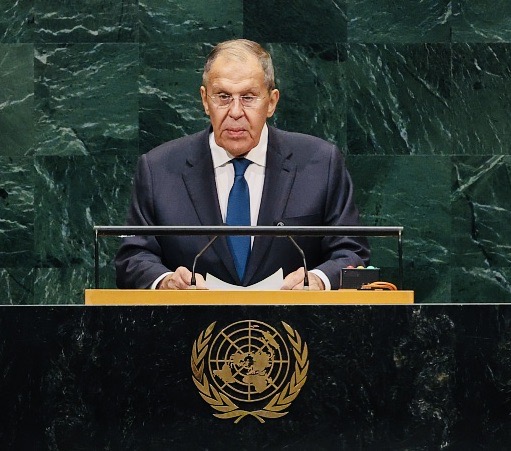
In a recent speech to the United Nations, Russian Foreign Minister Sergei Lavrov said that Russia remains unbowed and fully bent on achieving victory. “We will carry through our fight for the truth and justice,” he said. “The goals of the special military operation will be achieved. Threats to Russia’s security will be eliminated and peaceful life restored. It will happen despite any circumstances …”
In its relentless quest to batter Ukraine into submission, Russia has stepped up its ballistic missile and drone attacks on Ukrainian cities. Russia, in particular, has targeted critical infrastructure and transportation networks.
“Since the beginning of July, Russian drones and missiles have been terrorizing Kyiv with exceptional intensity,” writes Dmytro Kuleba, Ukraine’s former foreign minister, in Foreign Affairs. “Air raid sirens blare day and night, warning residents of oncoming fire and sending people running underground. Many of the drones have been shot down, but not all, and the ballistic missiles have largely gotten through.”
Kuleba admits that Russia’s bombardments have been effective. “The terror from the air has exhausted Ukraine’s society,” he concedes. “People are working miracles to keep the economy functioning as they adapt to ever harsher conditions, and they have rightfully earned admiration from across the world. But it is important to understand that Ukrainians are steadfast because they know that capitulating would make life even worse … Even so, they may not be able to hold out forever. There are no signs, for now, that the country is at its breaking point. But no one can say where that point lies.”
Russia’s strategy hinges on its attempt to undermine the Ukrainian economy and break Ukraine’s morale in the hope that Ukraine will sue for peace on Russian terms. As well, Russia is hopeful that Ukraine’s Western allies, including Britain and Germany, will tire of the conflict and press Ukraine to capitulate.
The kind of an agreement that Russia seeks would be completely one-sided. Putin covets Ukrainian lands and has no intention of returning occupied areas. Judging by an essay he wrote several years ago, he considers Ukraine, once a Soviet province, an artificial entity unworthy of sovereignty and independence.
To be completely fair to Russia, Putin has also argued that NATO membership for Ukraine would threaten Russian security, a claim that figured prominently in Moscow’s justification for the war.
Much to Russia’s chagrin, Ukraine has held on far longer than Putin expected and has launched punishing and humiliating counter-attacks. Ukraine has struck oil refineries deep inside Russia, bombed Russian overland supply routes to Crimea, and attacked ports in the Black Sea and the Sea of Azov, thereby reducing the export of Russian grain.
This war has been economically costly for both combatants.
Ukrainian exports of grain, iron ore and steel have fallen by about one-third. Foreign aid from Ukraine’s allies has softened the blow, but Zelensky said recently that he needs $27 billion to plug a budget shortfall.
Ukrainian strikes on Russian oil refineries and retail warehouses have led to fuel shortages, long lines at gasoline stations, and a shortage of inventory that has impacted small businesses and consumers. Last month, the Russian Finance Ministry acknowledged that taxes would be increased to finance next year’s budget.
There was a time, during Joe Biden’s presidency, when Ukraine could steadfastly rely on the United States for political and financial backing and a constant flow of arms shipments. But with Donald Trump in the White House, Washington has coldly distanced itself from Ukraine and given Russia the benefit of the doubt on key occasions.
Several days ago, Trump announced that Russia had agreed to sell diesel fuel to the United States and other countries. With this curt announcement, which was designed to lower gas prices and help Republicans win congressional seats in November’s mid-term elections, Trump dropped American sanctions on Russian oil exports.
Six U.S. senators, including two Republicans, complained that the deal would assist in funding Russia’s war machine. “The United States should not provide Putin with a financial lifeline while Russia continues to kill Ukrainian civilians,” they said in a statement. “The administration must immediately reverse course.”
Canadian Prime Minister weighed in, too. His office issued a strongly-worded statement: “This agreement is in direct opposition to the efforts of Ukraine, Canada and our allies to create peace and stability in Europe. It will provide additional revenue for Russia and help finance its illegal, unjustifiable war against Ukraine.”
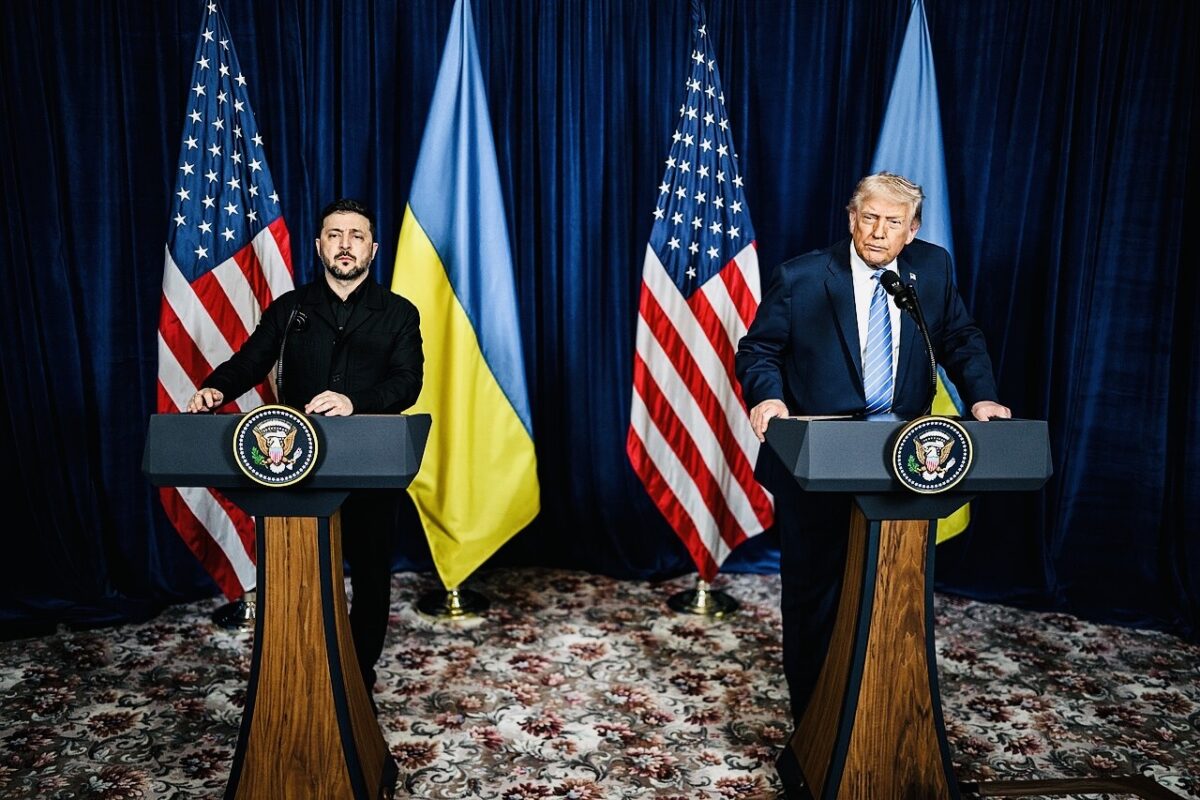
Zelensky, who has worked hard but not always successfully to maintain a stable relationship with Trump, did not bother to hide his sense of betrayal. Calling Trump’s transactional agreement with Putin a “weak decision,” he chided him. “It is certainly not how partners should treat each other,” he said bitterly.
Being thin skinned and sensitive to criticism, Trump lashed out at Ukraine, accusing Ukraine of causing a “world problem” by having attacked Russian oil refineries in retaliatory strikes and suggesting that Ukrainians needed “a new president.”
Trump’s outburst was typical of his usually pro-Russian approach to Ukraine. Although he has not explicitly endorsed Russia’s invasion of Ukraine, he has weakened Ukraine through a series of policy decisions, diplomatic initiatives and public statements that have been music to Putin’s ears and that have strained relations with European allies.
Trump, in stating his desire to end the war, has repeatedly placed more pressure on Ukraine to make concessions than on Russia to reverse its naked aggression.
In 2025, following a disastrous confrontation with Zelensky at the White House, Trump temporarily halted U.S. military assistance and intelligence sharing with Ukraine. The intelligence suspension was consequential because Ukraine relies on U.S. information to detect incoming Russian missiles, monitor battlefield movements and plan military operations. Trump used the suspension to pressure Zelensky into cooperating with his proposed peace negotiations, which have fizzled. In the meantime, Russia has continued its military campaign.
Trump has pressured Ukraine to accept territorial concessions that can only benefit Russia. His diplomatic proposals have contemplated recognizing Russia’s annexation of Crimea in 2014 and accepting Russian control over other Ukrainian territories occupied during the war.
Ukraine, of course, has rejected such concessions as violations of its sovereignty and constitution. Trump’s approach caters to Russian imperialism, inasmuch as it rewards territorial conquest. Some critics believe that Trump’s policy could potentially encourage Russia to seize further territory in Ukraine and nearby countries in the future.
Trump has consistently treated Zelensky more harshly than Putin, having repeatedly criticized Zelensky, questioned his leadership and publicly disparaged him. Prior to their embarrassing meeting at the White House last year, Trump falsely accused Zelensky of being a dictator and insinuated that Ukraine bore responsibility for the war.
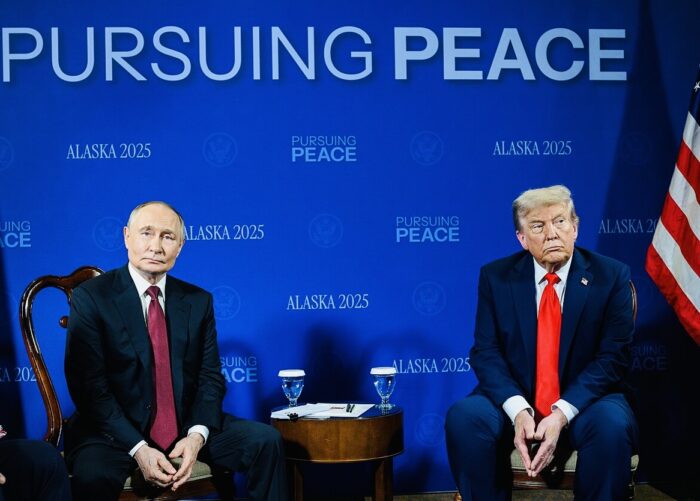
Meanwhile, Trump pursued direct negotiations with Putin, which bore no fruit. To this day, in contravention of the evidence, Trump has spoken positively about Putin’s willingness to negotiate.
Since his first term in office, Trump has reduced the predictability of U.S. military support to Ukraine. According to the Council on Foreign Relations, no significant new U.S. aid has been authorized since Trump’s return to office. He has made it clear that U.S.-manufactured weapons and munitions will be prioritized for American needs.
At the end of the day, Trump has tilted toward Russia.
Temporary suspensions of U.S. aid and intelligence sharing have strengthened Russia. American pressure on Ukraine to negotiate and consider territorial concessions has occurred without demands from the Trump administration for corresponding Russian concessions.
However, there have been countervailing developments.
Trump has not totally abandoned Ukraine militarily. This past July, he praised Zelensky and announced that Ukraine would be allowed to manufacture U.S.-designed Patriot missiles, a significant departure from his earlier posture. Trump has continued to allow some military assistance to Ukraine and has occasionally expressed frustration with Putin.
While Trump has not formally sided with Russia in every dispute, he has repeatedly exerted pressure on Ukraine while offering Moscow diplomatic openings and leaving the future of American support of Ukraine uncertain.
In the final analysis, Trump has been soft on Russia. Trump’s policy has emboldened Russia, demoralized Ukraine, and made it considerably more difficult to end this protracted war.