
An unusual chapter in Russian history unfolded between 1827 and 1856, when Jewish boys and men were kidnapped and forcibly brought to camps, known as cantons, to be trained as soldiers in the Tzarist army.
Often snatched when they were as young as six years old, they were sent to vocational schools, after which they became soldiers at the age of 18. Compelled to serve for 25 years, these cantonists were cut off from their families and communities and were under unrelenting pressure to convert to Christianity.
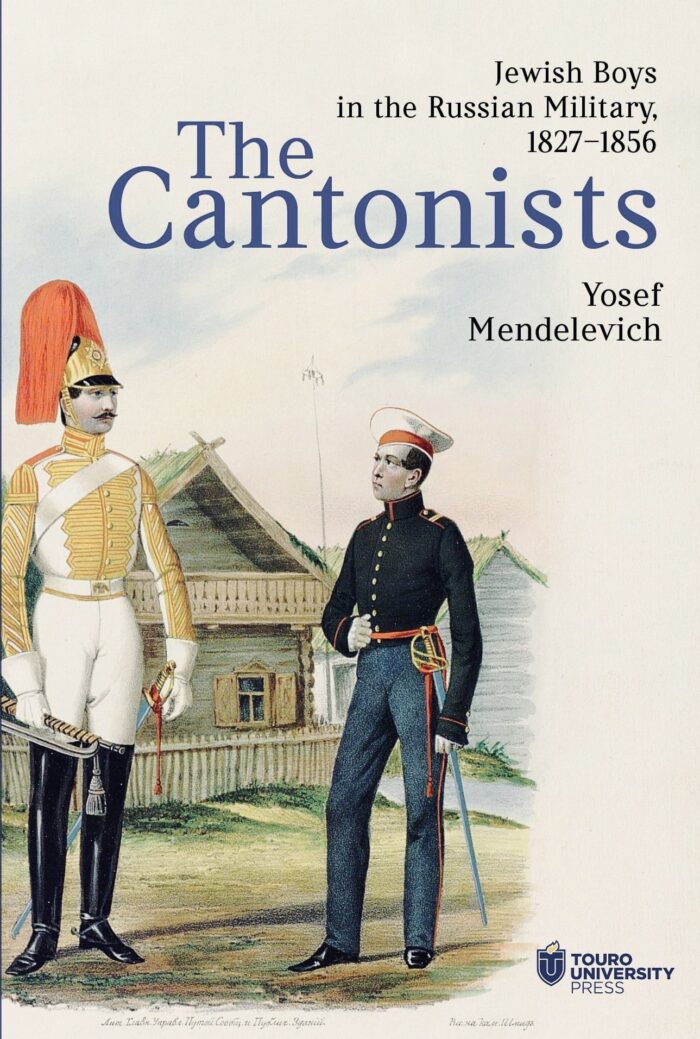
Josef Mendelevich, an Israeli historian of Latvian descent, has written a book about this obscure topic. The Cantonists: Jewish Boys In The Russian Military, 1827-1856 is published by Touro University Press in association with Academic Studies Press.
As he acknowledges, the conscription of Jewish boys and adults into the Russian armed forces was part of a general policy of mandatory military service that applied to all Russia’s citizens, be they Christians, Jews or Muslims. In the case of Jews, who were often seen as an alien element, this policy was expressly designed to “reform” or assimilate them into Russian society.
Jews were forcibly conscripted, even though Russia had no manpower shortage and Jews were considered poor candidates as soldiers.
The conscription of Jews started during the reign of Nicholas I, who was crowned in 1825 following the death of his brother, Alexander I. Although Nicholas was regarded as an antisemite, he lavished praise on Jewish soldiers in his diary.
Mendelevich believes that his positive comments attested to his ambivalence toward Jews. On the one hand, he derisively labelled Jews as “Zhids,” condemning them as “true blood-sucking leeches” exploiting common folk. On the other hand, he appointed some Jewish soldiers to elite units without taking their religion into account. “Nicholas saw the army as the most convenient means of training the younger generation of Jews to be loyal citizens of the Christian state,” writes Mendelevich.

The Russian officials most influential in Nicholas’ decision to recruit Jews into the army were Egon Kankrin, the minister of finance; Count Sergei Uvarov, the minister of education; Count Pavel Kislev, the head of a committee for the reformation of Jews; Prince Mikhail Vorontsov, the governor-general of southern Ukraine, and Prince Alexsandr Chernyschev, the minister of war.
Approximately 15,000 Jews were conscripted from 1827 to 1840. They accounted for 2.5 percent of the army’s manpower, a figure that corresponded to the percentage of Jews in the Russian empire.
Jewish boys who became cantonists were often kidnapped by khappers. Jewish families invested considerable efforts to hide their sons from them.
Jews in certain categories were eligible for exemptions. They included merchants, youths who had studied in recognized elementary, middle and high schools, craftsmen and farmers.
No documents have been found to indicate that Nicholas issued a direct order to convert Jewish soldiers, says Mendelevich. Yet Jews were encouraged to convert, and there was a “deliberate and guided” policy of punishing Jews who refused to do so.
During the nineteenth century, 69,400 Jews converted to Christianity, the majority of whom were cantonists.
One such cartonist, Herzel Yankel Tsam, rose to the rank of major after 40 years of service. He was one of nine unconverted Jewish officers in the Russian armed forces who had been a cantonist.

Converts were treated more leniently, yet unconverted Jewish soldiers were permitted to observe the rituals of Judaism and allowed to visit synagogues.
The book is enlivened by passages from the diaries and testimonies of cantonists.
Chaim Merimzon, who was born in Lithuania, recalls a conversation with a boy who was beaten and tortured because he refused to submit to Christianity. Jews who converted were sent to vocational schools to learn trades. Moisy Spiegel, from Siberia, was forced to learn Christian prayers and attend church services. Israel Leib, a Lithuanian Jew, remembers that “our officers used all means possible to force Christianity on us.”
The cantonist system was abolished when it became clear that it was too costly to maintain and provided little or no benefit. But as Mendelevich observes, it adversely affected an entire generation of Jews and left a “cruel and inhumane” legacy.
The Cantonists is a useful addition to the historiography of Jews in Russia, particularly since this subject has not received the attention it deserves. And while it is thoroughly researched, it is written in a plodding style, which may well deter most readers from ploughing through it.