The 10-day ceasefire in Lebanon, which was due to expire on April 26, has been extended by three weeks until May 17.
That is the good news.
The bad news is that this tenuous truce has already crumbled.
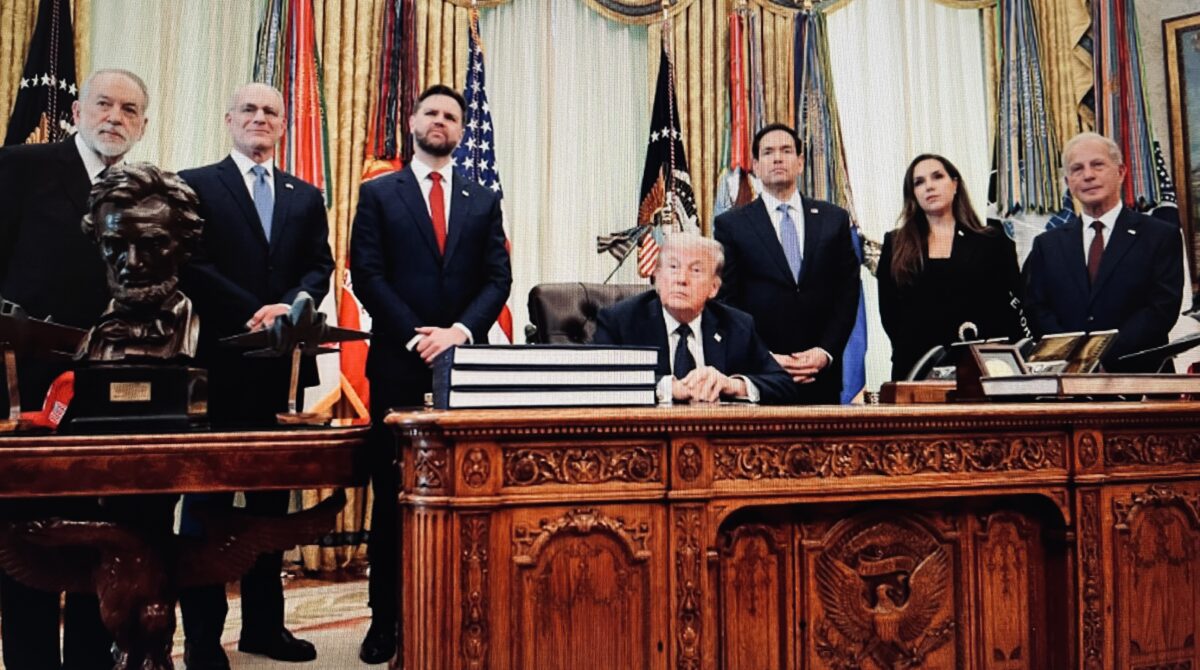
U.S. President Donald Trump was instrumental in prolonging the April 16 ceasefire during the second round of direct talks between Israel and Lebanon in Washington, D.C. on April 23.
These negotiations, held at the White House, were attended by Vice President JD Vance, Secretary of State Marco Rubio and the U.S. envoys to Israel and Lebanon, Mike Huckabee and Michel Issa. Israel and Lebanon were represented by their ambassadors to the United States, Yechiel Leiter and Nada Hamadeh Moawad.
Trump claimed that the talks went very well and urged the Lebanese government to scrap legislation that prohibits contact with Israelis. He added that the ceasefire not does not preclude Israel from launching retaliatory strikes in self-defence.
Trump stated that his administration will work with the Lebanese government to “protect” it from Hezbollah, which vehemently opposes the current talks. He said that any future agreement between the United States and Iran would have to ensure that the Iranian regime stops funding Hezbollah, its chief proxy in the Middle East.
Although the extension of the ceasefire was a step in the right direction in terms of attempting to defuse Israel’s conflict with Hezbollah, the truce exists in name only. In the past two days, it has been broken repeatedly by both sides.
No one is under the slightest illusion that it will endure. The previous one, which began on April 16, was punctured by daily battles. The truce of November 2024, which ended Israel’s third war with Hezbollah in 18 years, was constantly shattered.
Speaking of the talks on April 23, Prime Minister Benjamin Netanyahu said that Israel has begun a process toward “historic peace” with Lebanon. But he warned that Hezbollah is trying to disrupt it. He added that Israel reserves the right to maintain “full freedom of action against any threat.”
Ali Fayyad, a Hezbollah parliamentarian, dismissed the ceasefire as “meaningless,” complaining that it gives Israel carte blanche in Lebanon.
Shortly before Trump announced the new truce, Hezbollah fired a volley of rockets at the northern border community of Shtula, all of which were intercepted. It was Hezbollah’s first rocket attack against Israel since the April 16 ceasefire. In addition, Hezbollah launched a drone at Israeli troops in southern Lebanon. It, too, was downed.
Hezbollah’s barrage occurred a few hours after Israel bombed Hezbollah positions. Israel’s air and artillery strikes killed several gunmen and three Lebanese civilians, including a journalist employed by a Hezbollah-owned newspaper.
Both sides claimed they were responding to violations of the ceasefire.
On April 24, a day after the Washington talks, Israel killed six Hezbollah operatives in Bint Jbeil, a town near the Israeli border. Nine days earlier, Israel killed senior Hezbollah commander Ali Reda Abbas in Bint Jbeil. He was a crucial figure in Hezbollah’s reconstitution efforts following the 2024 war.
On April 25, Israel and Hezbollah continued to exchange fire.
Israel contends that its continuing military operations in Lebanon do not violate the ceasefire, which permits it “to take all necessary measures in self-defence, at any time, against planned, imminent or ongoing attacks.”
Some observers, however, claim that Israel’s interpretation of that provision is too broad.
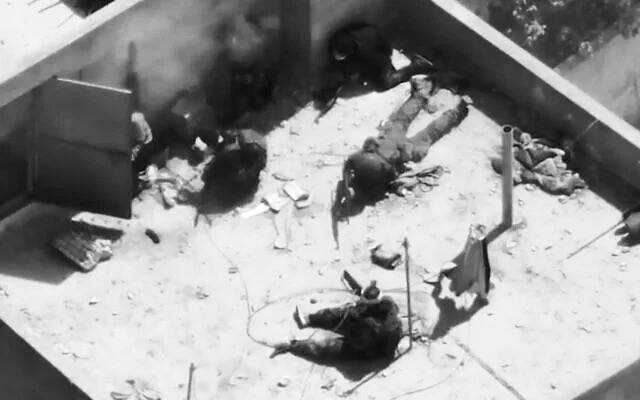
Since the April 16 truce, Israel has destroyed hundreds of Hezbollah targets in southern Lebanon, including rocket launchers, command centers, weapons caches and tunnels, and killed over 30 Hezbollah operatives.
Israel has eliminated more than 1,800 Hezbollah foot soldiers and commanders since the outbreak of the war on March 2. During this period, Israel has lost 15 soldiers and two civilians.
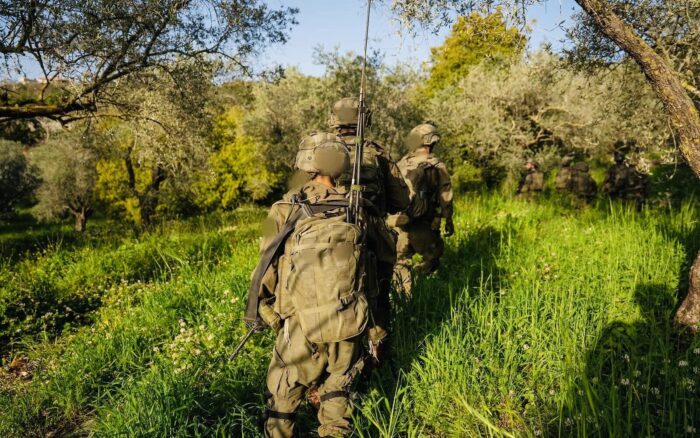
Israel, having established a buffer zone south of the Litani River, is currently carrying out operations to “clear out” the area and dismantle Hezbollah infrastructure. Five Israeli army divisions, plus naval forces, hold this so-called “yellow line” in southern Lebanon, which is dotted with 55 villages populated by Shi’a Muslims who are supportive of Hezbollah.
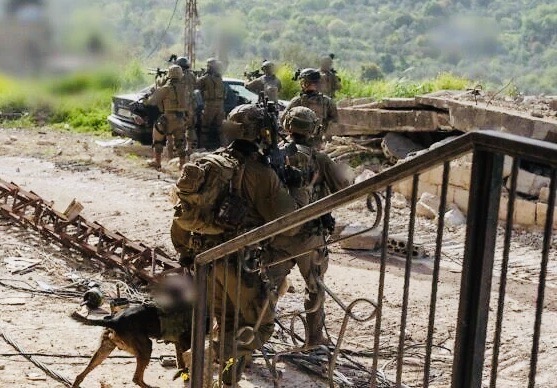
Defence Minister Israel Katz said recently that Israel plans to occupy this region indefinitely to protect northern Israeli communities from Hezbollah infiltration attempts and anti-tank guided missile fire. Israel is trying to achieve these objectives through “a combination of military and political steps,” he said.
Hezbollah’s disarmament will require ”sustained effort, patience, and endurance,” noted Netanyahu.
It will also require Lebanon’s cooperation, which may be a problem. Israel and Lebanon, which have been locked in a technical state of war since Israel’s founding in 1948, are far apart on core issues. Their differences clearly pose a serious challenge to U.S. diplomacy.
Israel insists that all three of its core demands must be met if an agreement is to be reached.
First, Israel must have full operational freedom to act against security threats anywhere in Lebanon. Second, Israel must have full control of the buffer zone up to the Litani River, and it must be free of any Hezbollah presence or infrastructure. Third, Israel must be permitted to disarm Hezbollah, preferably in concert with the Lebanese government and the United States.
Therein lies the problem.
The Lebanese government, headed by President Joseph Aoun and Prime Minister Nawaf Salam, is guided by a set of completely different demands: Israeli operations in Lebanon must cease. Israel must withdraw from all Lebanese territory.
A day before the most recent talks in Washington got under way, Aoun spelled out Lebanon’s short-term objectives: the extension of the April 16 ceasefire and a halt to Israeli demolition of buildings in southern Lebanese villages and towns. He claimed that Lebanon would provide “no concessions, no compromises, and no capitulation,” but in the end he had to settle for only his first objective.
Salam told The Washington Post that any long-term agreement with Israel would be contingent on a full Israeli withdrawal from Lebanon and the removal of its buffer zone in the south. In all probability, Israel will not accept these conditions unless Hezbollah is disarmed.
On the eve of the talks, Israeli Foreign Minister Gideon Saar claimed that Israel has no “serious disagreements” with Lebanon. His claim is far-fetched in light of the fact that the land border between Israel and Lebanon has yet to be officially demarcated. In Saar’s view, Hezbollah is the sole obstacle to peace and normalization between Israel and Lebanon, but this is an oversimplification.
At these talks, Israeli ambassador Yechiel Leiter argued that Israel’s military presence in Lebanon should be viewed in its proper perspective.
“To put the emphasis repeatedly in our talks on Israeli withdrawal is to fall into the trap once again of putting the emphasis in the wrong place,” he said. “If we continue down that path, we are doomed to failure. And failure, friends, is not an option. If, on the other hand, we put the focus on the root problem, Hezbollah, and its murderous intentions with regard to Israel, I have no doubt that we will succeed in eliminating the Hezbollah menace and achieving peace between our two countries.”
Leiter’s remarks contain a substantial element of truth, but they belittle Lebanon’s insistence that its sovereignty must be respected.
Despite the divergencies in Israel’s and Lebanon’s positions, the Lebanese government has begun taking steps to disarm Hezbollah. During a cabinet meeting on April 22, Aoun instructed the Lebanese Armed Forces (LAF) and other Lebanese agencies to intensify raids on Hezbollah weapons caches in Beirut and elsewhere in Lebanon. Aoun said that Lebanese security services should show “no leniency” to “any party” in implementing the government’s state monopoly over weapons.
However, Salam delivered an entirely different message on April 21 when he said that he was opposed to the forcible disarmament of Hezbollah. “We are not seeking confrontation with Hezbollah,” he said. “On the contrary, I would prefer to avoid confrontation with Hezbollah.”
If Salam’s approach to Hezbollah hardens into official government policy, Hezbollah is unlikely to disarm or cease attacking Israel, leaving Lebanon back where it was before Hezbollah initiated the most recent war.
Syria, once a close ally of Hezbollah, can point Lebanon in the right direction. On April 19, Syrian forces dismantled a Hezbollah-linked cell that reportedly planned to launch rockets from southern Syria toward Israel. Two individuals were arrested and several rockets were seized.
Obviously, Lebanon’s challenge in disarming Hezbollah will be infinitely more complicated and dangerous. A real attempt to defang Hezbollah could trigger another Lebanese civil war. Yet the Lebanese people cannot enjoy the fruits of peace and stability unless Hezbollah is disarmed and its state-within-a-state in Lebanon is dismantled.