
At its general assembly meeting in Geneva last week, the European Broadcasting Union judiciously came down on the side of fairness and justice. It allowed Israel to continue participating in the Eurovision Song Contest, the next one of which takes place in Vienna in May.
Some members, having denounced Israel’s conduct of the war in the Gaza Strip, demanded a referendum to eject Israel from the event. This group included Ireland, Spain, the Netherlands and Slovenia
When a U.S.-brokered ceasefire ended the Israel-Hamas war in October, this incendiary issue was no longer as relevant as far as the European Broadcasting Union was concerned. Consequently, a vote on Israel’s status was cancelled, and the status quo prevailed.
In a huff, the public broadcasters calling for Israel’s expulsion withdrew from the competition in protest over the decision.
According to reports, Iceland and Belgium may soon follow in their footsteps.
These outliers will not be missed. Nor is their absence expected to affect the quality of Eurovision, which is watched by tens of millions viewers around the world.
Their misguided attempt to banish Israel from the contest, even after the two-year war wound down, was intrinsically wrong. At the very least, it was a blatant violation of Eurovision’s spirit, which tries to foster a sense of amity among nations.
Seizing on this point, the director general of Israel’s broadcaster, Golan Yochpaz, made an important point when he argued that cultural boycotts have no place in Eurovision.
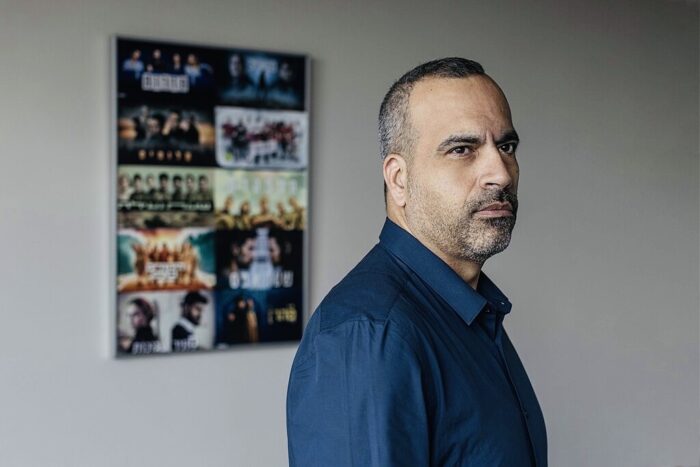
A cultural boycott of Israel is not only indefensible, but represents a slippery slope, he said. “A boycott may begin today with Israel, but no one knows where it will end, or who else it may harm.”
Besides, he added, boycotts tend to be invidious instruments, harming freedom of expression, the antithesis of what Eurovision represents and promotes.
In calling for Israel’s expulsion, Spain, the Netherlands, Ireland and Slovenia injected politics into a non-political forum and blithely ignored Israel’s inviolate right of self-defence.
Lest it be forgotten, Israel invaded Gaza in response to Hamas’ massacre of roughly 1,200 Israelis and foreigners on October 7, 2023. Israel’s campaign to destroy Hamas’ military capabilities and its ability to govern Gaza in the future was not only just, but absolutely necessary.
And the accusation by Israel’s detractors that it had committed genocide in Gaza was patently false.
The European Broadcasting Union understood the situation and correctly resisted excluding Israel from Eurovision.
If the past is any guide, Israel is likely to acquit itself reasonably well at next year’s Eurovision. Since its debut appearance in 1973, Israel has won four times. Only six other countries have amassed a superior record.
Israel coasted to its initial victory in 1978 with Izhar Cohen’s “A-ba-ni-bi.” A year later, Gali Atari emerged in first place with “Hallelujah.” In 1998, Dana International won with “Diva.” And in 2018, Netta Barzilai took the top spot with “Toy.”
Earlier this year, Yuval Raphael finished in second place.
Eurovision should continue to reject attempts to boycott countries that fall afoul of critics. Eurovision must remain neutral and impartial when such pressure is brought to bear on it. Under no circumstances should it penalize the performers.