
The Ku Klux Klan, the most powerful far-right American movement during the 1920s, was far more potent than its white supremacist forebearer, which emerged following the U.S. civil war. With a membership of over one million within a few years of its founding, it amassed more political power than any Klan before or since.
Its rise and fall in Athens, a town in the southern state of Georgia 110 kilometers northeast of Atlanta, is deftly explored by Nancy MacLean in Behind The Mask of Chivalry: The Making Of The Second Ku Klux Klan, published by Oxford University Press.
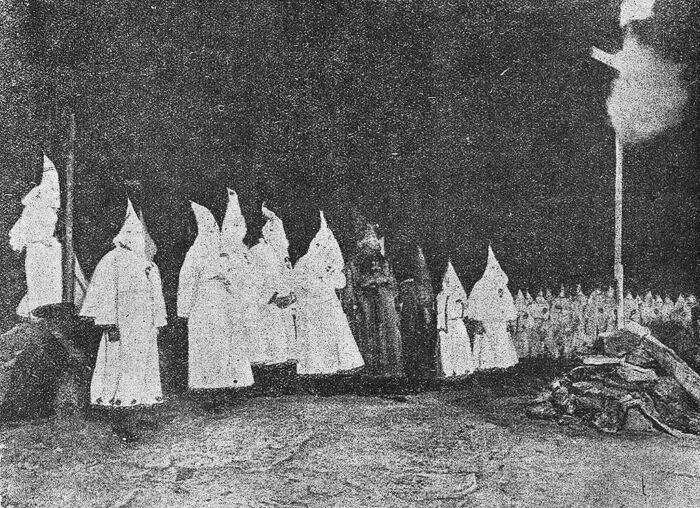
The book was originally published in 1994. A preface by MacLean, a professor of history and public policy at Duke University, introduces the 30th anniversary edition. In a brief essay, she argues that the right-wing populism of the 1920s, which the Klan exploited to its advantage, is again “dividing people and stirring discord.” She is implicitly referring to U.S. President Donald Trump’s “Make American Great Again” faction in the Republican Party.
MacLean’s comparison of past and present is debatable, but her analysis of the Klan’s reemergence is sharp and convincing. Be that as it may, she fails to provide even a cursory examination of the original Klan, an oversight that should be remedied in the next edition.
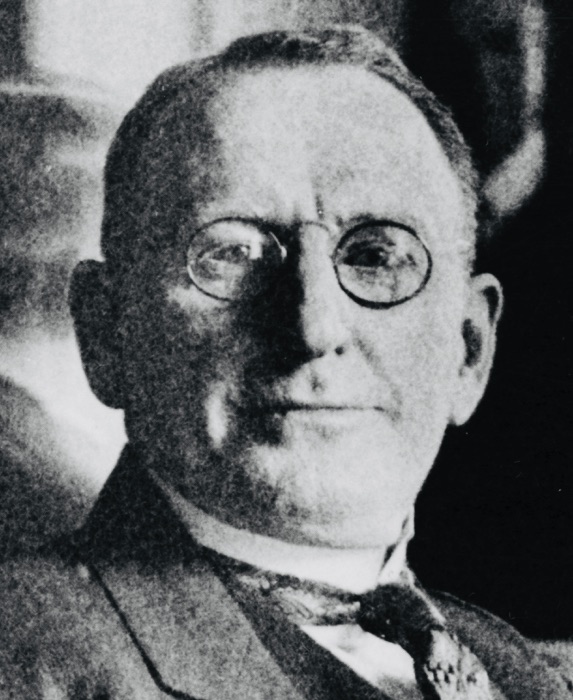
The second Klan’s founder, William Joseph Simmons, was the son of an Alabama doctor who had been a member of the hooded order. His colleague, Tom Watson, a Georgian politician, played an integral role in its establishment as well.
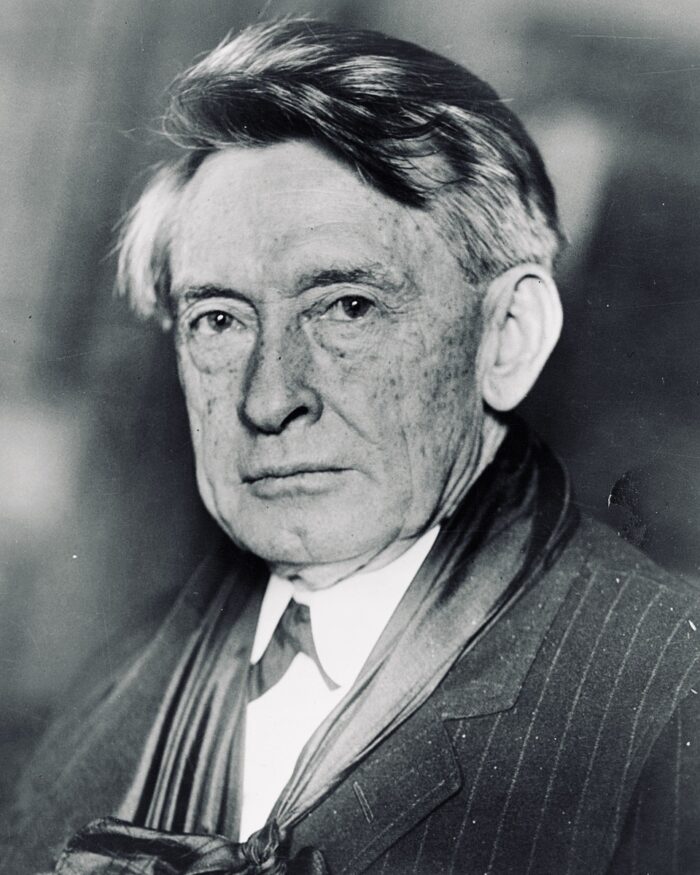
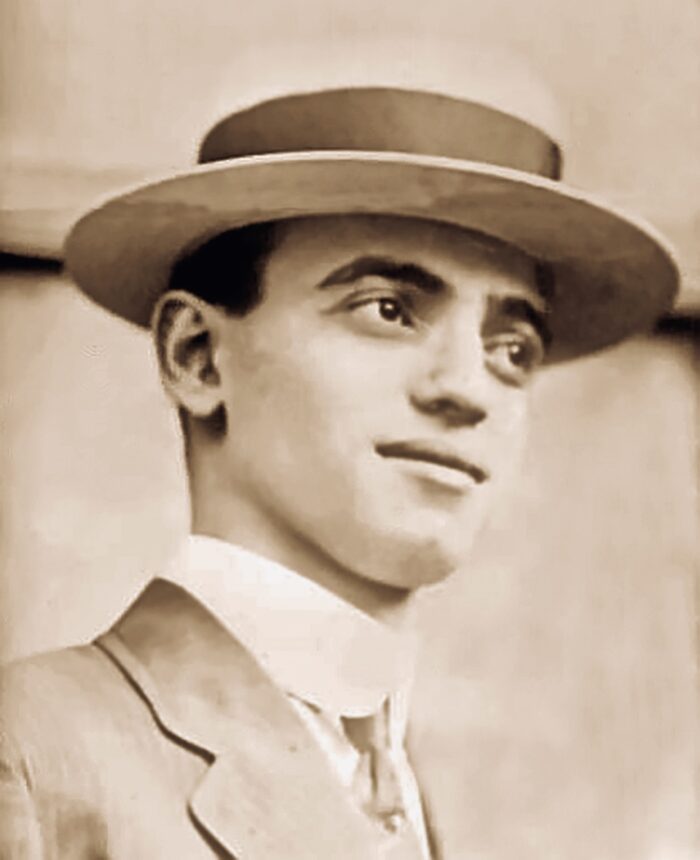
Watson, enraged by the state governor’s decision to commute the death sentence of Leo Frank, a Jewish factory supervisor in Atlanta who had been convicted of the murder of a white female employee, inspired a group of vigilantes to kidnap Frank from a prison and hang him from a tree. Frank was the first and last Jewish American to be lynched.
Three months after Frank’s lynching, Simmons resurrected the Knights of the Ku Klux Klan, which MacLean likens to Italian and German fascist movements. “The Frank case has often been cited as a catalyst for the creation of the second Klan,” MacLean writes. “In fact, no one has ever documented a direct connection between the two.”
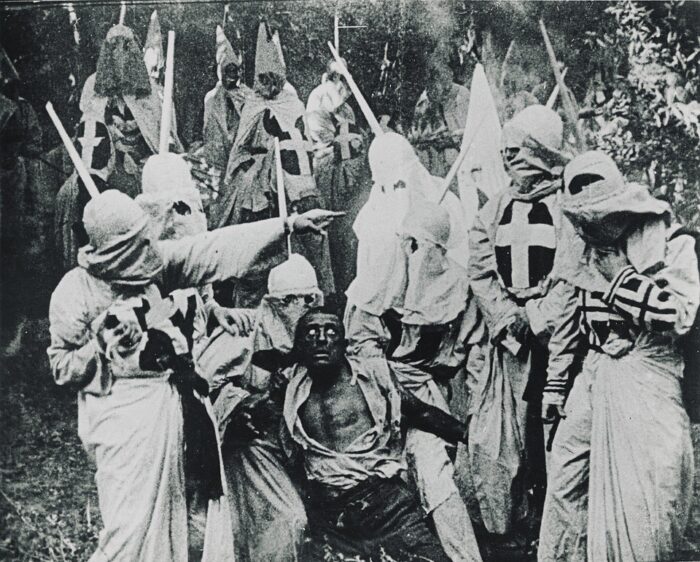
In her view, D.W. Griffith’s silent film, Birth Of A Nation, had a lot more to do with the Klan’s resurrection than Frank. This racist movie glorified the Klan, convincing some whites that African American men were beasts and that caucasian vigilantes were the saviors of American civilization.
MacLean ascribes the astonishingly rapid growth of the Klan to two astute publicists, Mary Elizabeth Tyler and Edward Young Clarke, who had a knack for turning adversity into profit. Regrettably, she pays them short shrift.
As she cogently observes, the Klan was all things to all people. “It was at once mainstream and extreme, hostile to big business and antagonistic to industrial unions, anti-elitist and hateful of blacks and immigrants, pro-law and order and prone to extra-legal violence.”
Positioning itself as a militant defender of “pure Americanism,” the Klan stood for patriotism, “old-time religion,” and conventional morality. It railed against miscegenation, bolshevism, and immigration from non-northern European countries.
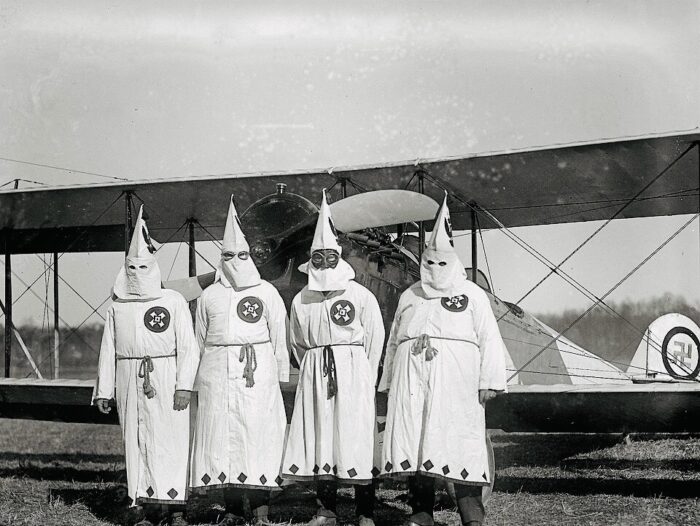
A foe of Catholics and Jews, the Klan exalted Protestantism as “the very foundation of our peerless civilization” and as a natural foe of bolshevism. It claimed that African Americans were biologically inferior, criminal, immoral, lazy, oversexed and unfit to vote in elections. Sexual themes, such as the trope that blacks and Jews coveted Christian white women, saturated Klan literature.
Regarding themselves as warriors in waiting for a war between whites and blacks, Klansmen adamantly believed that the United States was “a white man’s nation.” They regularly took the law into their own hands, hunting down and murdering blacks and some whites who had committed unforgivable offences. From 1917 to 1921, four lynchings took place in the vicinity of Athens, whose population around that time was 16,000.
Evangelical Protestants, in particular, flocked to the Klan. Protestants from more liberal denominations, including Unitarians and Episcopalians, were less likely to join. The typical member was a married man from the petite bourgeoisie with children. Although females were not allowed to become members, they could join a parallel organization, Women of the Ku Klux Klan.
Klan chapters promoted sociability and mutual aid. Picnics and rallies were common. When a member got married or died, Klansmen and their families attended their weddings or funerals.
The Klan gained enormous political influence in Georgia, holding the balance of power in the state by 1923. Its recruits ran the gamut from the state’s governor and Atlanta’s mayor to its chief justice and attorney general.
With the exception of the Columbia Enquirer-Sun and the Macon Telegraph, Georgia newspapers refrained from criticizing the Klan. A few offered outright support, but most maintained an “eerie silence.”
Athens had a long-established Jewish community, but in the eyes of the Klan, Jews were in the ranks of racial enemies. They were seen as “one of the greatest menaces” to society and as a treacherous group plotting “world domination.”
Jews were associated with a lack of business scruples and were equated with bad capitalist behavior. In particular, they were blamed for the chain store peril, which displaced mom and pop stores owned by Christians.
MacLean does not examine the interplay between the Klan and Athens’ Jewish community, an omission that leaves a gap in the narrative.
In explaining the downfall of the Klan, whose influence crested in 1924 and 1925, MacLean zeroes in on the debauchery of its leaders. “The unsavory conduct of the highest leadership helped cause its overthrow … and cost their movement much of its following.” Simmons, for example, was a heavy drinker, relished pornography and regularly patronized prostitutes.
The social conditions that contributed to its growth had largely abated by around 1915, with the postwar recession having receded.
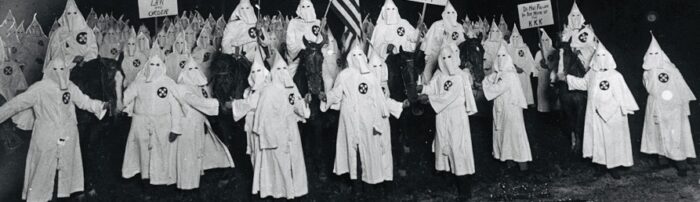
Within a decade of its founding, the fortunes of the Klan were on the wane. Its decline moved into terminal territory in 1928, with membership plummeting to 1,300. By 1944, the Klan was quietly dissolved.
The demise of the Klan did not spell finis to right-wing movements in the United States. William Dudley Pelley’s Silver Shirts arose in the 1930s. And from the 1950s onward, the American Nazi Party, the Ku Klux Klan and Aryan Nations emerged.
It would appear that right-wing radicalism runs deep in the American psyche.